Sciatica Pain Relief Medicine: What Works, What Helps Long-Term, And What To Avoid
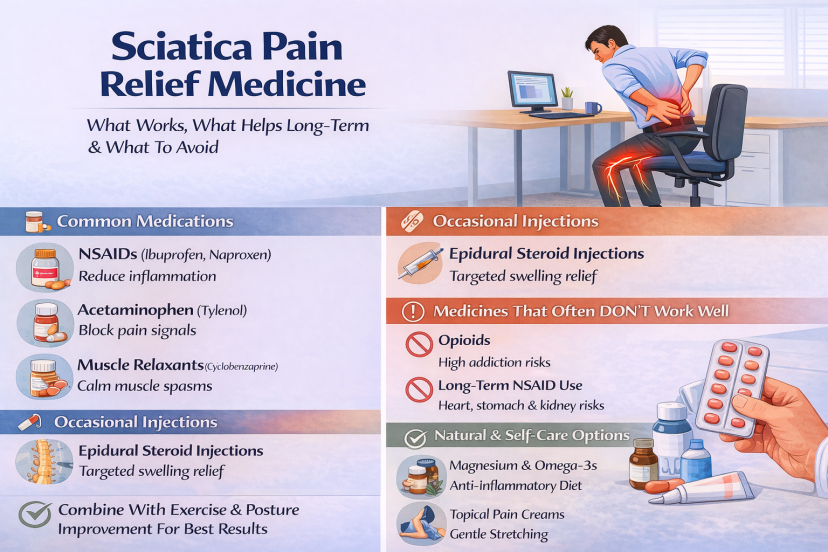
😣 When Sciatic Pain Sends You Searching For Relief
Sciatica pain has a way of stopping life in its tracks. One minute you’re fine—then suddenly there’s a sharp, burning pain running from your lower back down your leg. Sitting hurts. Standing hurts. Sleeping feels impossible.
It’s no surprise that many people immediately search for sciatica pain relief medicine to calm the pain fast.
But with so many options—over-the-counter pills, prescriptions, muscle relaxers, nerve medications, and injections—it can be hard to know what actually works, what’s safe, and what only masks the problem.
This guide breaks down the most common sciatica pain relief medicines, explains when they help (and when they don’t), and shows how to combine medication with smarter strategies for lasting relief.
⚡ What Is Sciatica Pain (And Why Medicine Helps—But Isn’t The Whole Answer)
Sciatica pain happens when the sciatic nerve is irritated or compressed, usually in the lower spine.
🧠 Common Causes Of Sciatic Nerve Pain
-
Herniated Or Bulging Discs
-
Spinal Stenosis
-
Tight Muscles (Piriformis Syndrome)
-
Poor Posture Or Prolonged Sitting
-
Injury Or Degenerative Changes
Medication can reduce pain and inflammation—but it doesn’t fix the root cause. That’s why understanding how sciatica pain relief medicine works is so important.
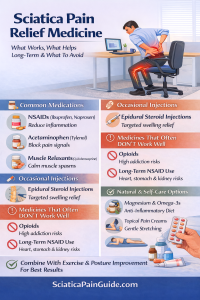
💊 Over-The-Counter Sciatica Pain Relief Medicine
For mild to moderate sciatica, many people start with OTC medications.
🟢 NSAIDs (Nonsteroidal Anti-Inflammatory Drugs)
Examples:
-
Ibuprofen (Advil, Motrin)
-
Naproxen (Aleve)
How They Help:
-
Reduce inflammation around the nerve
-
Decrease pain intensity
-
Improve mobility during flare-ups
Best For:
-
Early-stage sciatica
-
Pain triggered by inflammation
Limitations:
-
Not ideal for long-term daily use
-
Can irritate the stomach, kidneys, or heart
NSAIDs are one of the most commonly used forms of sciatica pain relief medicine, but they should be used carefully.
🟢 Acetaminophen (Tylenol)
How It Helps:
-
Reduces pain signals
-
Does not reduce inflammation
Best For:
-
People who can’t tolerate NSAIDs
-
Mild pain management
Limitations:
-
Less effective for nerve-related inflammation
-
Liver risk if overused
💊 Prescription Sciatica Pain Relief Medicines
When OTC options aren’t enough, doctors may prescribe stronger medications.
🔵 Muscle Relaxants
Common Types:
-
Cyclobenzaprine
-
Methocarbamol
How They Help:
-
Reduce muscle spasms
-
Relieve tension around the sciatic nerve
Best For:
-
Sciatica linked to muscle tightness
-
Short-term flare-ups
Side Effects May Include:
-
Drowsiness
-
Dizziness
Muscle relaxants are usually a short-term solution—not a long-term fix.
🔵 Nerve Pain Medications
These medications are often misunderstood but can be helpful for certain people.
Common Options:
-
Gabapentin
-
Pregabalin (Lyrica)
How They Help:
-
Calm overactive nerve signals
-
Reduce burning, tingling, and shooting pain
Best For:
-
Chronic nerve pain
-
Sciatica with numbness or tingling
Limitations:
-
Take time to work
-
Possible side effects, such as fatigue or brain fog
For persistent nerve symptoms, this category of sciatica pain relief medicine can be effective under medical supervision.
🔵 Oral Steroids
Examples:
-
Prednisone
How They Help:
-
Strong anti-inflammatory effect
-
Rapid reduction of nerve swelling
Best For:
-
Severe acute flare-ups
Limitations:
-
Short-term use only
-
Not suitable for frequent use
💉 Injections For Sciatica Pain Relief
When oral medication isn’t enough, injections may be considered.
🟠 Epidural Steroid Injections
How They Work:
-
Deliver anti-inflammatory medication directly near the nerve
-
Reduce swelling and pain
Best For:
-
Severe pain limiting daily function
-
Short-term relief while healing progresses
Important To Know:
-
Relief may be temporary
-
Not a cure
-
Limited number recommended per year
❌ Medicines That Often Don’t Help Sciatica Much
Not all pain medications are effective for nerve pain.
🚫 Opioid Painkillers
-
May dull pain temporarily
-
Do not treat nerve irritation
-
High risk of dependence
🚫 Long-Term Daily NSAID Use
-
Increased health risks
-
Does not correct the underlying issue
Medication should support recovery—not replace it.
🌿 Natural Sciatica Pain Relief Medicine Options
Many people prefer natural or complementary approaches, especially for long-term management.
🍃 Supplements That May Help
Common Options:
-
Magnesium (muscle relaxation)
-
Omega-3 Fatty Acids (inflammation support)
-
Turmeric (anti-inflammatory properties)
Always consult a healthcare provider before starting supplements, especially if you take other medications.
🌿 Topical Pain Relievers
Examples:
-
Menthol-based creams
-
Capsaicin creams
How They Help:
-
Improve circulation
-
Reduce localized discomfort
These can complement oral sciatica pain relief medicine for added comfort.
🧠 Why Medicine Alone Isn’t The Best Long-Term Solution
While medication can reduce pain, it rarely fixes the cause of sciatica.
❗ The Problem With Medication-Only Relief
-
Pain often returns when meds stop
-
Muscles weaken with inactivity
-
Posture issues remain uncorrected
The most effective approach combines medication with movement, posture correction, and strengthening.
🧘♀️ Combining Medicine With Physical Relief Strategies
Medication works best when paired with supportive habits.
✅ Smart Add-Ons That Improve Results
-
Gentle walking
-
Stretching tight hips and hamstrings
-
Core and glute strengthening
-
Posture improvement
-
Ergonomic sitting setup
This combination reduces reliance on sciatica pain relief medicine over time.
🌙 Sleep, Stress, And Sciatica Pain
Pain medicine often works better when lifestyle factors are addressed.
🛌 Sleep Tips
-
Side sleeping with a pillow between the knees
-
Back sleeping with a pillow under the knees
-
Avoid stomach sleeping
🧘 Stress Reduction
-
Deep breathing
-
Gentle yoga
-
Consistent sleep schedule
Stress increases nerve sensitivity and muscle tension.
🚑 When To See A Doctor About Sciatica Pain Medicine
Seek medical advice if:
-
Pain lasts longer than 6–8 weeks
-
Symptoms are worsening
-
You experience leg weakness
-
Numbness spreads
-
Medication is no longer helping
Urgent care is needed for:
-
Loss of bladder or bowel control
-
Numbness in the groin area
❓ FAQs: Sciatica Pain Relief Medicine
1. What is the best sciatica pain relief medicine?
There is no single best option. NSAIDs, nerve medications, and muscle relaxants may help depending on the cause.
2. Can sciatica be treated with medicine alone?
Medicine can reduce pain, but long-term relief usually requires movement and posture correction.
3. Are nerve pain medications safe?
They can be safe when prescribed and monitored by a healthcare provider.
4. Do steroid injections cure sciatica?
No. They reduce inflammation temporarily but do not fix the underlying problem.
5. Is it safe to take pain medicine daily for sciatica?
Long-term daily use should be avoided without medical guidance.
6. Can natural supplements replace sciatica medicine?
They may help support recovery, but usually work best alongside other treatments.
7. How long should I take sciatica pain relief medicine?
Typically short-term, while addressing the root cause through physical care.
🌈 Conclusion: Smart Use Of Sciatica Pain Relief Medicine Leads To Better Outcomes
Sciatica pain relief medicine can be an important tool—especially during painful flare-ups—but it works best as part of a bigger plan.
The most successful approach combines short-term pain relief with long-term strategies like movement, posture correction, strengthening, and stress management. As your body heals, your reliance on medication often decreases.
Relief isn’t just about numbing pain—it’s about restoring balance, movement, and nerve health so sciatica doesn’t control your life.
⚠️ Medical Disclaimer
This article is for educational purposes only and does not replace professional medical advice. Always consult a qualified healthcare provider before starting or changing medications, supplements, or treatment plans, especially if symptoms are severe or persistent.
 Explore more:
- Sciatica Pain Relief Pillow: How The Right Pillow
- What Is A Sciatica?
- What To Do About Sciatica Pain?