Sciatica Definition: What It Really Means and How to Find Natural Relief
Living with sharp pain that shoots from your lower back into your leg can feel exhausting. Many people with sciatica struggle to sit comfortably, drive long distances, sleep through the night, or even enjoy simple daily activities. If you’ve recently searched for the sciatica definition, you’re probably looking for answers—and maybe some relief too.
The good news is that understanding sciatica is the first step toward managing it. While sciatica can be frustrating, many people improve with consistent habits, posture changes, gentle movement, and realistic lifestyle adjustments.
This guide explains what sciatica is, why it happens, and what you can do to support your recovery naturally.
Quick Answer
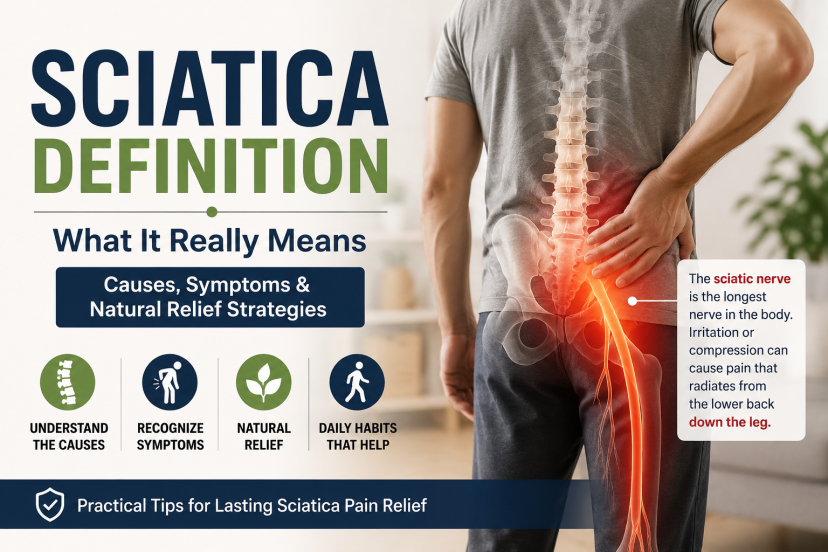
Sciatica is nerve pain caused by irritation or compression of the sciatic nerve, the largest nerve in the body. It typically starts in the lower back and travels through the buttock and down one leg. Symptoms may include pain, numbness, tingling, or weakness.
🔹 What Is the Sciatica Definition?
The simplest sciatica definition is:
Sciatica is a condition involving irritation, inflammation, or compression of the sciatic nerve that causes pain to travel from the lower back into the leg.
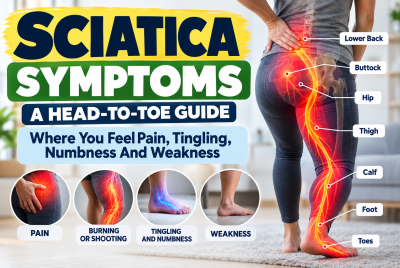
The sciatic nerve begins in the lower spine and extends through:
- The Buttocks
- The Hips
- The Back of the Legs
- The Feet
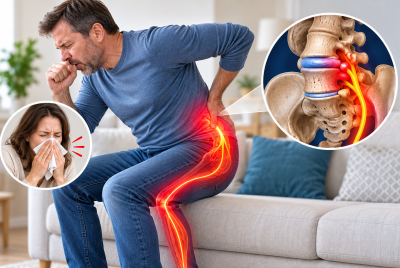
Unlike regular back pain, sciatica involves nerve symptoms. That’s why many people describe:
- Burning pain
- Electric shock sensations
- Tingling
- Pins and needles
- Leg weakness
- Numbness
Sciatica itself is not a disease. Instead, it is a symptom caused by another underlying problem.
🔥 Common Causes Behind the Sciatica Definition
Understanding the sciatica definition also means understanding what triggers the nerve irritation.
Herniated Disc
A bulging or ruptured spinal disc is the most common cause of sciatica in the United States.
Spinal Stenosis
This condition occurs when spaces inside the spine narrow and place pressure on nerves.
Degenerative Disc Disease
Age-related changes in the spine may contribute to nerve compression.
Piriformis Syndrome
The piriformis muscle in the buttock can irritate the sciatic nerve.
Bone Spurs
Extra bone growth can pinch nearby nerves.
Injury or Trauma
Falls, accidents, or sports injuries may trigger sciatica symptoms.
⚡ Symptoms Associated With Sciatica
People often discover the sciatica definition after experiencing unusual symptoms.
Common symptoms include:
- Sharp pain down one leg
- Lower back discomfort
- Buttock pain
- Tingling sensations
- Burning pain
- Numbness
- Muscle weakness
- Pain that worsens when sitting
Symptoms May Vary
Some people experience mild irritation, while others struggle with severe pain that interferes with work and daily activities.
🪑 Why Sitting Often Makes Sciatica Worse
One reason many people struggle with sciatica is prolonged sitting.
Sitting increases pressure on:
- The Lower spine
- The Discs
- The Sciatic nerve
People who work at desks or drive frequently may notice worsening symptoms.
Helpful Sitting Tips
- Use a lumbar support cushion.
- Sit with feet flat on the floor.
- Change positions every 30 minutes.
- Avoid slouching.
- Consider a standing desk.
Popular U.S. products many people use include:
- Memory foam lumbar cushions
- Adjustable standing desks
- Ergonomic office chairs
- Back support braces
🚶 Can Walking Help Sciatica?
For many people, yes.
Gentle walking promotes:
- Blood flow
- Flexibility
- Reduced stiffness
- Better spinal movement
Walking Tips for Sciatica
- Start slowly.
- Wear supportive shoes.
- Avoid steep hills initially.
- Stop if pain becomes severe.
- Build up gradually.
Consistency often matters more than intensity.
🧘 Gentle Stretches That May Help
Although stretching should never cause sharp pain, certain movements may help some people.
Knee-to-Chest Stretch
Helps loosen the lower back.
Hamstring Stretch
Reduces tightness in the back of the legs.
Pelvic Tilt Exercise
Supports spinal stability.
Child’s Pose
May relieve tension in surrounding muscles.
Piriformis Stretch
Can help if buttock tightness contributes to symptoms.
If symptoms worsen during any exercise, stop and consult a healthcare professional.
💪 Physical Therapy and Conservative Treatments
Many doctors recommend conservative treatments before considering invasive procedures.
These may include:
Physical Therapy
A therapist can create a customized exercise plan.
Heat and Ice Therapy
Alternating heat and cold may reduce discomfort.
Massage Therapy
May help ease muscle tension.
Chiropractic Care
Some people report improvement with spinal adjustments.
Anti-Inflammatory Medications
Over-the-counter options may provide temporary relief.
Activity Modification
Avoiding certain triggers can support recovery.
🌿 Natural Relief Strategies for Daily Life
Many people searching for the sciatica definition are also looking for practical ways to feel better naturally.
Improve Posture
Good posture reduces pressure on the spine.
Maintain a Healthy Weight
Less body weight often means less stress on the lower back.
Stay Active
Bed rest is no longer recommended for most cases.
Prioritize Sleep
Quality sleep supports healing.
Manage Stress
Stress may increase muscle tension and pain sensitivity.
Consider Supplements
Some people use:
- Turmeric
- Magnesium
- Omega-3 fatty acids
- Vitamin B12
Always talk with your healthcare provider before starting supplements.
🛏 Best Sleeping Positions for Sciatica
Poor sleep can make symptoms feel worse.
Side Sleeping With a Pillow Between the Knees
This position helps maintain spinal alignment.
Back Sleeping With a Pillow Under the Knees
Reduces lower back stress.
Avoid Sleeping on the Stomach
This position may increase strain on the spine.
Supportive mattresses and orthopedic pillows may also improve comfort.
🛡 Daily Habits That May Prevent Sciatica Flare-Ups
Preventing future episodes often involves small lifestyle adjustments.
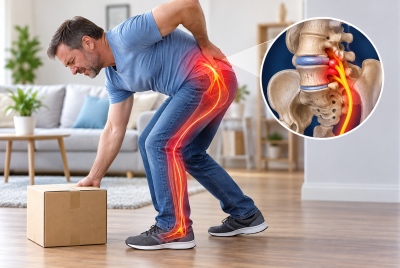
Lift Correctly
Use your legs rather than your back.
Take Frequent Breaks
Avoid sitting for hours at a time.
Strengthen Core Muscles
Strong abdominal muscles help support the spine.
Stay Flexible
Regular movement helps prevent stiffness.
Avoid Sudden Twisting
Quick movements can aggravate sensitive nerves.
Practice Good Ergonomics
Whether at home or work, body positioning matters.
📈 Recovery Expectations
Many people wonder how long sciatica lasts.
Recovery varies depending on the cause.
Some individuals improve within:
- A Few weeks
- Several months
- Longer periods for chronic conditions
Improvement often comes gradually rather than overnight.
Patience and consistency are key.
🚨 When to See a Doctor or Chiropractor
While mild cases often improve with conservative care, medical evaluation is important if you experience:
- Severe pain that continues worsening
- Weakness in the leg
- Loss of balance
- Difficulty walking
- Persistent numbness
- Symptoms lasting several weeks
- Pain after an accident
Seek Emergency Care Immediately If You Experience:
- Loss of bladder control
- Loss of bowel control
- Sudden severe weakness
- Numbness around the groin area
These symptoms may indicate a medical emergency.
❓ FAQs About Sciatica Definition
What is the medical definition of sciatica?
Sciatica is pain caused by irritation or compression of the sciatic nerve, usually affecting one side of the body.
Is sciatica a disease?
No. Sciatica is a symptom of another underlying condition, such as a herniated disc or spinal stenosis.
Can sciatica go away on its own?
Many mild cases improve over time with rest, gentle activity, and lifestyle changes.
Which leg does sciatica affect?
Sciatica usually affects one leg, although both sides can occasionally be involved.
What does sciatica pain feel like?
People commonly describe burning, shooting, tingling, or electric shock-like pain.
Can walking make sciatica better?
For many people, gentle walking helps reduce stiffness and improve circulation.
Is surgery always necessary?
No. Most people recover without surgery and respond well to conservative treatments.
✅ Final Thoughts
Understanding the sciatica definition is more than learning a medical term—it’s about understanding what your body is telling you.
Recovery from sciatica rarely happens overnight. Small daily habits, better posture, regular movement, and patience can make a meaningful difference over time.
Focus on progress rather than perfection. Many people living with sciatica find relief through consistency, smart lifestyle choices, and a willingness to listen to their bodies.
The journey may be gradual, but improvement is possible.
Medical Disclaimer
This article is for informational and educational purposes only and should not replace professional medical advice, diagnosis, or treatment. Always consult your physician, physical therapist, chiropractor, or other qualified healthcare provider regarding any medical condition or before beginning new exercises, supplements, or treatment programs. Seek immediate medical attention for severe symptoms or emergencies.
 Explore more:
- What Aggravates Sciatica?
- Why Yard Work Triggers Sciatica And Back Pain
- Physiotherapy For Sciatica In Germany