
Medical Disclaimer: This resource is for general educational and organizational purposes only and is not a diagnostic tool or a substitute for professional medical advice, diagnosis, or treatment.
A doctor’s appointment can go by quickly, especially when you’re trying to explain pain that has changed over time or travels from your lower back or buttock into your leg.
You may remember exactly what you want to discuss before the appointment, only to realize afterward that you forgot to mention the numbness in your foot, when the pain first started, which movements make it worse, or an important question about returning to your normal activities.
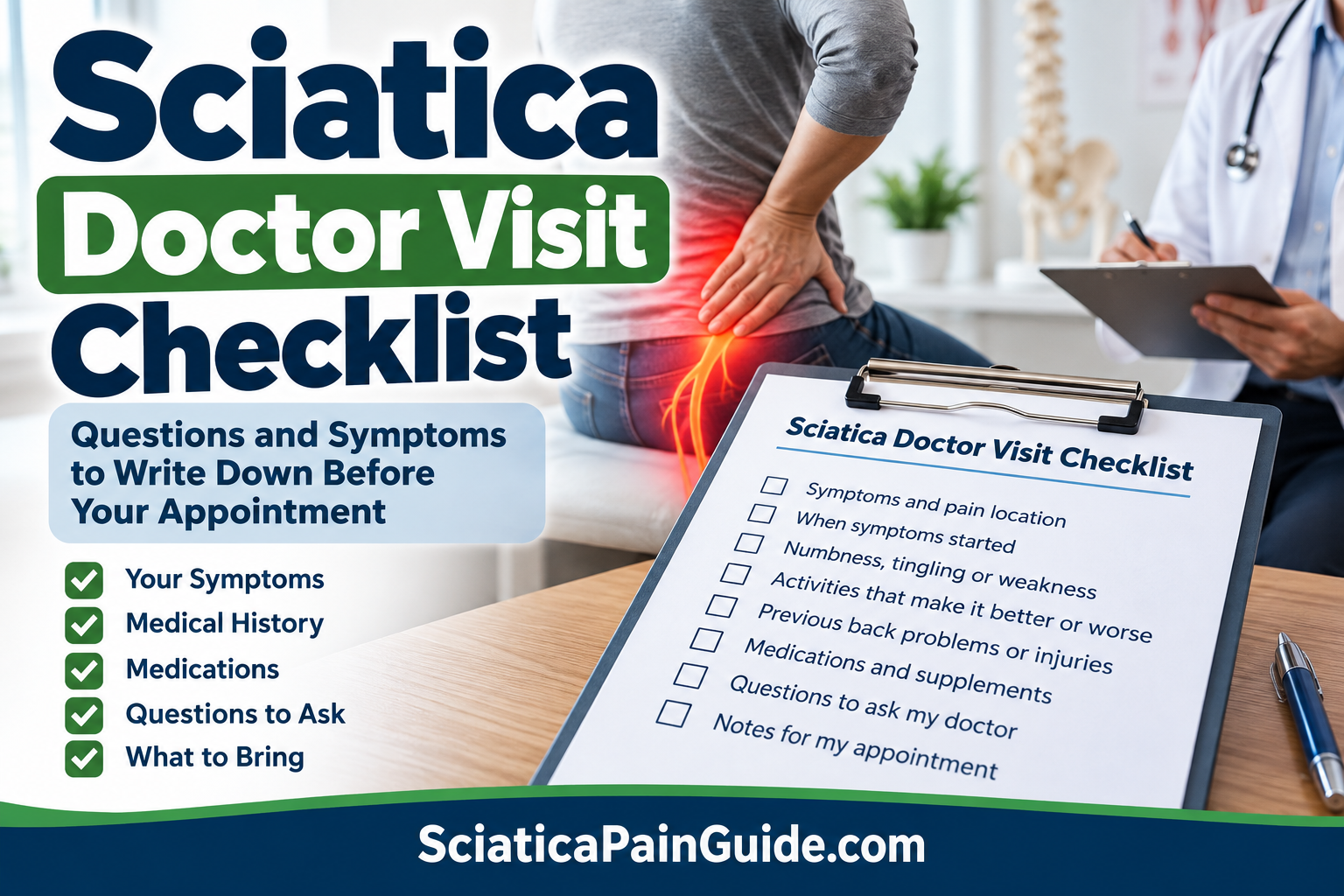
This Sciatica Doctor Visit Checklist is a simple, free resource designed to help you organize those details before your appointment.
You can use it to write down where you feel pain, which side is affected, whether you have numbness, tingling, or weakness, when your symptoms started, activities that seem to affect them, medications you’re taking, previous back problems or injuries, and questions you’d like to ask.
You don’t need to complete every section. Fill in the parts that apply to you and bring your notes to your appointment.
The checklist does not diagnose sciatica or determine what’s causing your symptoms. Its purpose is simply to help you remember and communicate information that may be useful to your healthcare professional.
Quick Answer: What Should I Write Down Before A Doctor Visit For Sciatica?
Before an appointment about sciatica or radiating leg pain, consider writing down when your symptoms began, where the pain starts and travels, which side is affected, what the pain feels like, whether you have numbness, tingling, or weakness, what makes your symptoms better or worse, how they affect walking, sitting, sleeping, and other daily activities, medications you’re taking, and questions you want to ask.
Healthcare professionals commonly ask about symptoms and medical history and may assess walking, strength, reflexes, and leg movement during an evaluation. Imaging or other tests aren’t necessarily required at the first visit and may be considered depending on the symptoms and clinical findings.
Key Takeaways
What should I record? Where your pain occurs, where it travels, when it started, numbness or tingling, weakness, activities that affect it, medications, injuries, and changes in everyday activities.
Do I need to complete everything? No. Complete the sections that apply to your experience. If you don’t know an answer, simply write “Not sure.”
Should I diagnose the problem myself? No. The sciatica doctor visit checklist is intended to organize your observations, not determine what is causing them.
What should I bring? Consider bringing the completed checklist, your medication list, relevant medical information, your Sciatica Symptom & Recovery Tracker if you’ve been using it, and questions you want answered.
Why Prepare For A Sciatica Appointment?
Sciatica can be difficult to explain because the symptoms aren’t always limited to one place.
Pain may occur along a pathway involving the lower back, buttock, and leg, while some people also experience tingling, numbness, or weakness.
You might also find that sitting is difficult, but walking feels different, or that symptoms change when you bend, cough, sneeze, or move in certain ways.
Writing down what you’ve actually experienced means you don’t have to rely entirely on memory during your appointment.
Your notes can organize information into a few basic areas:
- Where your symptoms occur
- When they started
- How they have changed
- What the pain feels like
- Whether you notice numbness or tingling
- Whether you notice weakness
- Activities or positions that seem to affect symptoms
- Previous injuries or back problems
- Medications and supplements
- How symptoms affect everyday life
- Questions you want to ask
Your healthcare professional can decide which details are medically relevant.
How To Use This Sciatica Doctor Visit Checklist
You can copy and paste the checklist below into Google Docs or Microsoft Word, print the page, write your answers on paper, or use the free printable PDF.
Download The Free Printable Sciatica Doctor Visit Checklist PDF
[DOWNLOAD FREE SCIATICA DOCTOR VISIT CHECKLIST PDF]
Don’t worry about providing perfect answers.
If you don’t remember exactly when something happened, write an approximate date.
If you aren’t sure, write: “Not sure.”
Most importantly, try to record what you’ve actually experienced rather than diagnosing the cause yourself. For example, instead of: My L5 nerve is compressed.
You could write: I have pain from my right buttock down the outside of my leg, with tingling in my foot. That gives your healthcare professional your observation without assuming the diagnosis.
Sciatica Doctor Visit Checklist
1. When Did Your Symptoms Start?
When did you first notice your current symptoms?
Date or approximate date:
Did they seem to begin:
☐ Suddenly
☐ Gradually
☐ After a particular activity
☐ After an injury
☐ I woke up with them
☐ I’m not sure
☐ Other: ________________________________
What were you doing around the time your symptoms started?
Have your symptoms changed since they began?
☐ Improving
☐ About the same
☐ Getting worse
☐ They come and go
☐ Not sure
If they have changed, what changed?
2. Where Do You Feel The Pain?
Check all areas that apply.
Left Side
☐ Lower back
☐ Buttock
☐ Hip area
☐ Back of thigh
☐ Front/side of thigh
☐ Knee area
☐ Calf
☐ Ankle
☐ Foot
☐ Toes
Right Side
☐ Lower back
☐ Buttock
☐ Hip area
☐ Back of thigh
☐ Front/side of thigh
☐ Knee area
☐ Calf
☐ Ankle
☐ Foot
☐ Toes
Where does the pain usually start?
Where does it travel?
Does it affect:
☐ Left side
☐ Right side
☐ Both sides
☐ Difficult to tell
Sciatica often affects one side and may radiate from the lower back or buttock down the leg, although symptom patterns vary.
3. What Does The Pain Feel Like?
Check any that apply.
☐ Aching
☐ Burning
☐ Sharp
☐ Shooting
☐ Electric-shock-like
☐ Stabbing
☐ Throbbing
☐ Cramping
☐ Pressure
☐ Other: ________________________________
Describe the pain in your own words:
Pain Level
Pain right now: ____ / 10
Pain at its mildest: ____ / 10
Pain at its worst: ____ / 10
A pain score is personal. The goal here isn’t to compare your pain with somebody else’s; it’s simply to give your healthcare professional another way of understanding your experience.
4. Do You Have Numbness Or Tingling?
☐ No
☐ Tingling
☐ Pins and needles
☐ Numbness
☐ Reduced sensation
☐ Burning sensation
☐ Other unusual sensation: _______________
Where do you notice it?
☐ Buttock
☐ Thigh
☐ Calf
☐ Foot
☐ Toes
☐ Other: ________________________________
Which side?
☐ Left
☐ Right
☐ Both
Does it:
☐ Stay fairly constant
☐ Come and go
☐ Seem to be increasing
☐ Seem to be decreasing
☐ Not sure
Pain, tingling, and numbness can occur with sciatica, including symptoms extending into the foot or toes.
5. Have You Noticed Weakness?
This section is about weakness you’ve noticed during normal activities. You don’t need to perform your own strength tests.
☐ No weakness noticed
☐ Leg feels weak
☐ Foot feels weak
☐ Difficulty lifting the front of my foot
☐ Difficulty walking normally
☐ Difficulty climbing stairs
☐ Leg feels as though it may give way
☐ Difficulty standing from a chair
☐ Other: ________________________________
Which side?
☐ Left
☐ Right
☐ Both
When did you first notice it?
Has it changed?
☐ Improving
☐ About the same
☐ Worsening
☐ Not sure
Muscle weakness is an important symptom to mention. Sudden or worsening weakness can require prompt medical assessment rather than waiting for a routine appointment.
6. What Seems To Make Your Symptoms Worse?
Check anything you’ve noticed.
☐ Sitting
☐ Standing
☐ Walking
☐ Driving
☐ Bending forward
☐ Bending backward
☐ Lifting
☐ Twisting
☐ Stairs
☐ Getting out of bed
☐ Getting out of a chair
☐ Coughing
☐ Sneezing
☐ Exercise
☐ Housework
☐ Work activities
☐ Lying down
☐ No obvious pattern
☐ Other: ________________________________
Describe what you notice:
7. What Seems To Make Your Symptoms Better?
Again, you’re simply recording observations—not deciding what treatment you need.
☐ Changing position
☐ Standing up
☐ Sitting down
☐ Walking
☐ Lying down
☐ Rest
☐ Gentle movement
☐ Heat
☐ Cold
☐ Medication
☐ Exercises I’ve been given
☐ Nothing seems to help
☐ Other: ________________________________
What seems most helpful?
8. How Are Your Symptoms Affecting Daily Life?
Check anything that has become more difficult.
☐ Sitting
☐ Standing
☐ Walking
☐ Sleeping
☐ Driving
☐ Working
☐ Getting dressed
☐ Putting on shoes/socks
☐ Stairs
☐ Cooking
☐ Housework
☐ Grocery shopping
☐ Lifting/carrying
☐ Exercise
☐ Social activities
☐ Caring for children/family
☐ Symptoms currently have little effect on daily activities
The biggest difficulty my symptoms cause me is:
This section can be particularly helpful because it tells your healthcare professional not only that you have pain, but what the symptoms are preventing or making difficult.
9. Recent Injuries Or Changes
Think about the period before your symptoms started or became worse.
Have you recently experienced:
☐ Fall
☐ Car accident
☐ Sports injury
☐ Lifting injury
☐ Work injury
☐ Sudden twisting movement
☐ New exercise/activity
☐ Increased lifting
☐ Long period of sitting or driving
☐ Recent surgery
☐ Pregnancy
☐ Recent illness
☐ No event that I remember
☐ Other: ________________________________
What happened and approximately when?
Mayo Clinic specifically recommends noting recent accidents or injuries when preparing for an appointment about radiating lower-back pain.
10. Previous Back Or Leg Problems
Have you had similar symptoms before?
☐ Yes
☐ No
☐ Not sure
If yes, approximately when?
Previous diagnosis, if any:
Have you previously had:
☐ Lower-back pain
☐ Sciatica
☐ Herniated disc
☐ Spinal stenosis
☐ Back injury
☐ Back surgery
☐ Hip problem
☐ Leg/foot nerve problem
☐ Physical therapy for your back
☐ Previous spinal injection
☐ Other: ________________________________
You don’t need to know whether an old problem is related to your current symptoms. Simply record the history and let your healthcare professional evaluate its relevance.
11. Treatments Or Strategies You’ve Already Tried
What have you tried for your current symptoms?
☐ Rest
☐ Walking
☐ Gentle movement
☐ Stretching
☐ Heat
☐ Cold
☐ Over-the-counter pain medication
☐ Prescription medication
☐ Physical therapy
☐ Chiropractic care
☐ Massage
☐ Injection
☐ Exercise program
☐ Nothing yet
☐ Other: ________________________________
What seemed helpful?
What didn’t seem helpful?
Did anything make your symptoms worse?
This section records what you’ve already tried. It isn’t a recommendation to use any particular treatment.
12. Medications And Supplements
Bring an up-to-date medication list if you have one.
Include prescription medicines, over-the-counter medicines, vitamins and supplements.
| # | Medication / Supplement | Dose (If Known) | How Often | When Started |
|---|---|---|---|---|
| 1 | ||||
| 2 | ||||
| 3 | ||||
| 4 | ||||
| 5 | ||||
| 6 |
Do not stop, start, or change medications because of this checklist. Discuss medication questions with an appropriately qualified healthcare professional.
Questions To Ask Your Doctor About Sciatica
You don’t need to ask every question below.
Choose the ones that matter to you and add your own.
☐ What might be causing my symptoms?
☐ Do my symptoms appear consistent with sciatica, or should other causes be considered?
☐ Is there anything about my symptoms that concerns you?
☐ Do I need any tests?
☐ Would an X-ray, MRI, or another imaging test be useful in my situation?
☐ Do I need a referral to a specialist?
☐ Would physical therapy be appropriate?
☐ What types of movement or exercise are appropriate for me right now?
☐ Are there activities I should temporarily modify or avoid?
☐ What can I safely do when symptoms flare up?
☐ What treatment options should I consider?
☐ How long might improvement take in my situation?
☐ What signs would suggest that I’m improving?
☐ What symptoms should make me contact you sooner?
☐ What symptoms would require urgent medical attention?
☐ When should I schedule a follow-up?
Mayo Clinic similarly suggests preparing questions about possible causes, testing, treatment, restrictions, self-care, and prevention before an appointment for radiating lower-back pain.
My Own Questions
1. ________________________________________
2. ________________________________________
3. ________________________________________
4. ________________________________________
5. ________________________________________
What To Bring To Your Appointment
Before leaving home, consider taking:
☐ This completed Sciatica Doctor Visit Checklist
☐ Your current medication and supplement list
☐ Your 30-Day Sciatica Symptom & Recovery Tracker, if you’ve completed one
☐ Relevant medical records you’ve been asked to bring
☐ Information about previous back injuries or treatment
☐ Previous imaging/test information, if your healthcare professional has asked for it
☐ Your list of questions
☐ Pen or phone for taking notes
☐ A family member or friend, if you’d find that helpful
Mayo Clinic recommends writing down symptoms and when they began, listing medications and supplements, noting recent injuries, preparing questions and, when possible, considering bringing someone who can help you remember information from the appointment.
You don’t need to arrive with your own diagnosis.
The purpose of preparing is simply to make it easier to explain what you’ve experienced.
When Not To Wait For A Routine Appointment
This checklist is intended to help you prepare for an appointment. It shouldn’t be used to decide that potentially urgent symptoms can wait.
Seek immediate medical attention for symptoms such as new bowel or bladder control problems, sudden significant numbness or muscle weakness in a leg, or sciatica-type pain following a serious traumatic injury. Mayo Clinic identifies these as reasons for immediate medical care.
Cleveland Clinic likewise identifies muscle weakness and loss of bowel or bladder control among serious sciatica symptoms.
If your symptoms are severe, rapidly worsening, or you believe you may be experiencing a medical emergency, seek appropriate medical care rather than waiting to complete this checklist.
After Your Appointment
Keep your checklist if you think it may be useful later.
You can use this section to record what you want to remember.
Date of appointment: ______________________
Healthcare professional: ___________________
Things I Want To Remember
Tests Or Follow-Up Discussed
Next Appointment Or Follow-Up
Questions I Still Have
Medical Disclaimer
This Sciatica Doctor Visit Checklist is provided for general informational, educational, and personal organizational purposes only.
It is not a medical questionnaire, screening test, diagnostic tool, or substitute for professional medical advice, diagnosis, or treatment. Completing this checklist cannot determine whether you have sciatica, what is causing your symptoms, or whether you have another medical condition.
The questions and checkboxes are provided simply to help you organize information you may wish to discuss with an appropriately qualified healthcare professional.
Do not start, stop, or change medications, exercises, treatment, or other medical care based on this checklist or information on SciaticaPainGuide.com without consulting an appropriately qualified healthcare professional.
If you have back pain, leg pain, numbness, tingling, weakness, or other symptoms that concern you, seek professional medical advice. Seek immediate medical attention for serious or rapidly changing symptoms or whenever you believe you may be experiencing a medical emergency.
Make Your Appointment A Little Easier
You don’t need to remember several weeks of sciatica symptoms while sitting in the doctor’s office.
Take a few minutes beforehand to write down when your symptoms started, where the pain travels, which side is affected, what the pain feels like, whether you’ve noticed numbness, tingling or weakness, which activities seem to affect your symptoms, what you’ve already tried, medications you take, and the questions you want answered.
If you’ve been using the Sciatica Symptom & Recovery Tracker, bring that too. It can provide a simple record of how your symptoms and everyday activities have changed over time.
That’s all this Sciatica Doctor Visit Checklist is designed to do: help you arrive at your appointment with your observations and questions organized so you can spend more of your visit discussing what matters to you.
Download The Free Printable Sciatica Doctor Visit Checklist PDF
Sources & Further Reading: We checked the medical background for this resource against current patient guidance from Mayo Clinic’s sciatica resources and Cleveland Clinic’s sciatica guide.
Explore more tools: