Can Sciatica Affect Both Legs? Causes, Symptoms, And What It Means For Recovery
😣 When Sciatica Pain Isn’t Just On One Side
Most people think of sciatica as pain shooting down one leg—and often, that’s true. But what if you feel pain, tingling, or numbness in both legs? That can be alarming and confusing, especially if symptoms seem to shift from side to side or affect both legs at once.
If you’re asking, can sciatica affect both legs, you’re not alone. Many people experience bilateral symptoms and worry that it means something more serious.
The short answer: yes, sciatica can affect both legs—but it doesn’t always mean permanent damage or the worst-case scenario. Understanding why it happens and what to do next can help you take the right steps toward relief and recovery.
⚡ What Is Sciatica And How It Normally Presents
Sciatica is a symptom, not a diagnosis. It refers to pain caused by irritation or compression of the sciatic nerve.
🧠 The Sciatic Nerve Explained
The sciatic nerve:
-
Starts in the lower spine (L4–S3 nerve roots)
-
Runs through the hips and buttocks
-
Travels down each leg
Most cases of sciatica affect one side because only one nerve root is compressed. However, certain conditions can impact both sides, leading to bilateral symptoms.
❓ Can Sciatica Affect Both Legs?
Yes—sciatica can affect both legs, though it’s less common than one-sided sciatica.
Bilateral sciatica usually means:
-
More than one nerve root is involved
-
Central spinal structures are affected
-
Posture, disc issues, or spinal narrowing impact both sides
It’s important to understand the cause, because treatment strategies may differ slightly from typical one-sided sciatica.
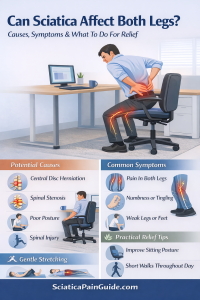
⚠️ Common Causes Of Sciatica In Both Legs
Several underlying conditions can explain why sciatica affects both legs.
🧠 Central Disc Herniation
A centrally bulging or herniated disc can compress nerve roots on both sides of the spine.
-
Often worsens with sitting
-
Pain may alternate between legs
-
May cause bilateral tingling or weakness
🦴 Spinal Stenosis
Spinal stenosis is a narrowing of the spinal canal, often age-related.
-
Common in adults over 50
-
Symptoms worsen with standing or walking
-
Relief often occurs when sitting or bending forward
This condition is a frequent answer to can sciatica affect both legs in older adults.
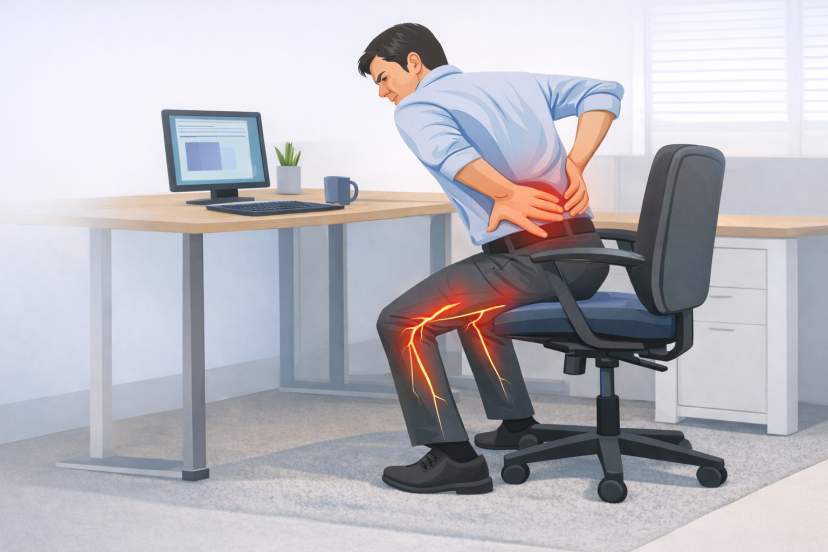
🪑 Poor Posture And Prolonged Sitting
A sedentary lifestyle can irritate both sides of the lower spine.
-
Tight hip flexors
-
Weak glute muscles
-
Increased disc pressure
Over time, this can trigger bilateral sciatic nerve pain.
🪢 Muscle-Related Compression
Tight muscles—especially the piriformis—can compress the sciatic nerve on both sides, particularly in people who sit for long hours.
🚗 Trauma Or Spinal Injury
Car accidents, falls, or repetitive strain can affect multiple spinal levels, leading to bilateral symptoms.
🔍 Symptoms Of Sciatica Affecting Both Legs
Bilateral sciatica may feel different from classic one-sided pain.
⚡ Common Symptoms Include:
-
Pain Radiating Down Both Legs
-
Tingling Or “Pins And Needles”
-
Numbness In Feet Or Calves
-
Muscle Weakness
-
Pain Worse With Sitting Or Standing
-
Tightness Across The Lower Back
Symptoms may be symmetrical or worse on one side at times.
🚨 When Bilateral Sciatica Is More Concerning
While many cases are manageable, certain symptoms require immediate medical attention.
🚑 Seek Urgent Care If You Have:
-
Sudden Loss Of Bladder Or Bowel Control
-
Numbness In The Groin Or Inner Thighs
-
Progressive Weakness In Both Legs
-
Difficulty Walking Or Standing
These can be signs of cauda equina syndrome, a medical emergency.
🧘♀️ What To Do If Sciatica Affects Both Legs
The approach to relief is similar to one-sided sciatica—but with extra attention to balance and spinal stability.
✅ Immediate Steps For Relief
-
Avoid Prolonged Sitting
-
Change Positions Frequently
-
Use Heat Or Ice As Needed
-
Sleep In A Neutral Position
Gentle movement is usually better than bed rest.
🪑 Posture Fixes For Bilateral Sciatica
Posture plays a major role when sciatica affects both legs.
💺 Sitting Tips
-
Sit With Lumbar Support
-
Keep Feet Flat On The Floor
-
Avoid Slouching Or Leaning To One Side
-
Take Breaks Every 30–45 Minutes
Balanced posture helps reduce nerve compression on both sides.
🧘♀️ Gentle Stretches That Help Both Legs
Stretching can relieve muscle tension contributing to bilateral sciatica.
🌿 Safe Stretches To Try
-
Knee-To-Chest Stretch
-
Seated Figure-4 (Both Sides)
-
Hamstring Stretch
-
Pelvic Tilts
Move slowly and stop if pain increases.
💪 Strengthening Exercises For Long-Term Relief
Weak core and glute muscles increase spinal stress.
🏋️♀️ Key Muscles To Strengthen
-
Core Stabilizers
-
Glute Muscles
-
Hip Abductors
Helpful exercises include:
-
Bird Dogs
-
Side-Lying Leg Raises
Strengthening both sides evenly is especially important for bilateral symptoms.
🚶♂️ Walking And Movement For Sciatica
Walking is one of the safest activities for most people with sciatica in both legs.
🧠 Why Walking Helps
-
Improves Blood Flow
-
Reduces Disc Pressure
-
Prevents Muscle Stiffness
Start with short walks and increase gradually.
🌙 Sleep Positions That Reduce Bilateral Sciatica
Sleep posture can either help or worsen symptoms.
🛌 Best Sleeping Positions
-
Back Sleeping With Pillow Under Knees
-
Side Sleeping With Pillow Between Knees
-
Avoid Stomach Sleeping
A supportive mattress can also reduce nighttime pain.
🌿 Natural Support Options For Sciatic Nerve Health
Some people benefit from complementary approaches.
🍃 Common Natural Options
-
Heat Or Ice Therapy
-
Magnesium Supplements
-
Omega-3 Fatty Acids
-
Anti-Inflammatory Diet
Always consult a healthcare provider before starting supplements.
🧠 Stress And Bilateral Sciatica Pain
Chronic stress tightens muscles and sensitizes nerves.
🧘 Stress-Reduction Strategies
-
Deep Breathing
-
Gentle Yoga
-
Mindfulness Practices
-
Adequate Sleep
A calmer nervous system supports healing.
🏥 Physical Therapy For Sciatica In Both Legs
Physical therapy is often recommended for bilateral sciatica.
💡 How Physical Therapy Helps
-
Improves Postural Balance
-
Strengthens Weak Muscles
-
Reduces Nerve Compression
-
Prevents Recurrence
A physical therapist can tailor exercises to your specific cause.
🚑 When To See A Doctor
You should consult a healthcare provider if:
-
Pain Persists Longer Than 6–8 Weeks
-
Symptoms Are Worsening
-
You Have Progressive Weakness
-
Home Care Isn’t Helping
Imaging or further evaluation may be needed to identify the cause.
❓ FAQs: Can Sciatica Affect Both Legs?
1. Can sciatica really affect both legs?
Yes. While less common, sciatica can affect both legs when multiple nerve roots or central spinal structures are involved.
2. Is bilateral sciatica more serious?
Not always, but it should be evaluated—especially if symptoms are severe or worsening.
3. Can poor posture cause sciatica in both legs?
Yes. Prolonged sitting and poor posture can irritate both sides of the lower spine.
4. Does spinal stenosis cause bilateral sciatica?
Yes. Spinal stenosis is a common cause of sciatica affecting both legs, especially in older adults.
5. Can exercise help bilateral sciatica?
Yes. Gentle movement, stretching, and strengthening often improve symptoms.
6. Should I avoid walking if both legs hurt?
In most cases, walking is helpful—but start slowly and stop if pain worsens.
7. Will bilateral sciatica go away?
Many cases improve with conservative care, posture changes, and time.
✅ Conclusion: Understanding Both-Sided Sciatica Leads To Better Relief
So, can sciatica affect both legs? Yes—and while it can feel unsettling, it doesn’t automatically mean severe or permanent damage.
Bilateral sciatica often reflects posture issues, spinal changes, or muscle imbalances that can be addressed with the right approach. By staying gently active, improving posture, strengthening supportive muscles, and seeking professional care when needed, many people find lasting relief.
Healing takes patience—but informed, consistent action makes recovery possible.
⚠️ Medical Disclaimer
This article is for educational purposes only and does not replace professional medical advice. Always consult a qualified healthcare provider before starting new treatments, exercises, or supplements, especially if symptoms are severe, worsening, or affecting both legs.
 Explore more:
- How To Unpinch A Sciatic Nerve
- How to Prevent Sciatica Flare-Ups Naturally
- Sciatica Self-Care: At-Home Techniques To Manage Pain