Does Sciatic Nerve Pain Go Away? Understanding Healing Times And What To Expect

Sciatic nerve pain can feel relentless. One moment you’re fine, and the next you’re dealing with sharp, burning pain shooting from your lower back down your leg. Sitting hurts. Standing hurts. Sleeping feels impossible. Many people living with this pain ask the same anxious question: does sciatic nerve pain go away, or is this something they’ll have to live with forever?
The short answer is yes—sciatic nerve pain often does go away, but recovery depends on the cause, how quickly it’s treated, and the habits you follow during healing. This guide breaks down realistic recovery timelines, explains acute vs chronic sciatica, and gives you practical, natural steps to support healing safely and effectively.
⚡ What Is Sciatic Nerve Pain And Why It Happens
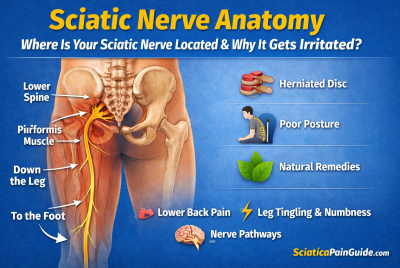
Sciatica isn’t a diagnosis—it’s a symptom caused by irritation or compression of the sciatic nerve. This nerve starts in your lower spine and runs through your hips, glutes, and down each leg.
Common Causes Of Sciatica
-
Herniated or bulging discs pressing on nerve roots
-
Spinal stenosis narrows the spinal canal
-
Piriformis syndrome, where tight glute muscles irritate the nerve
-
Degenerative disc diseaseis related to aging
-
Injury or sudden strain from lifting or twisting
Understanding the cause matters because it directly affects how long sciatica lasts and whether sciatic nerve pain goes away on its own or needs structured care.
🧠 Does Sciatic Nerve Pain Go Away On Its Own?
In many cases, yes. Mild to moderate sciatica often improves with conservative care and time.
Typical Recovery Outcomes
-
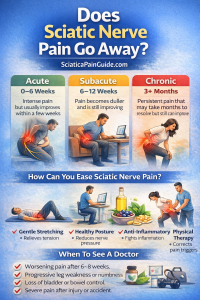
Acute sciatica: Often resolves within weeks
-
Subacute sciatica: Improves over several months
-
Chronic sciatica: May persist longer, but can still improve
Studies suggest that over 70% of people with acute sciatica recover within 6–12 weeks using non-surgical approaches like movement therapy, posture changes, and pain management.
⏳ How Long Does Sciatica Last? Realistic Timelines
Recovery timelines vary, but understanding the general phases can ease anxiety and set realistic expectations.
🟢 Acute Sciatica (0–6 Weeks)
This is the most common form and often the most painful at first.
-
Cause: Disc irritation, muscle tightness, inflammation
-
Pain level: Sharp, intense, radiating
-
Recovery outlook: Very good
Most people see noticeable improvement within 2–4 weeks with proper self-care.
🟡 Subacute Sciatica (6–12 Weeks)
Pain may linger, but it becomes more manageable.
-
Cause: Incomplete healing or ongoing mechanical stress
-
Pain level: Dull, intermittent, activity-related
-
Recovery outlook: Good with guided rehab
This phase benefits most from physical therapy and lifestyle changes.
🔴 Chronic Sciatica (3+ Months)
Chronic sciatica doesn’t mean permanent—but it does require patience.
-
Cause: Long-term nerve compression or poor movement patterns
-
Pain level: Persistent or recurring
-
Recovery outlook: Still possible, but slower
Even chronic sciatica can improve when inflammation is reduced and nerve health is supported consistently.
🌿 What Slows Down Sciatic Nerve Recovery?
If you’re wondering why your pain isn’t improving, these factors may be interfering.
-
Prolonged sitting, especially on soft couches
-
Poor posture while working or driving
-
Lack of movement or fear-based inactivity
-
Ignoring early symptoms
-
High stress and poor sleep, which increase inflammation
Addressing these barriers can significantly shorten how long sciatica lasts.
🧘♀️ Natural Ways To Help Sciatic Nerve Pain Go Away Faster
While time matters, what you do during recovery matters more.
Gentle Movement And Stretching
-
Walking daily improves circulation and nerve healing
-
Hamstring and hip stretches reduce nerve tension
-
Pelvic tilts and core activation stabilize the spine
Avoid aggressive stretching early on—gentle and consistent wins.
Posture And Ergonomics
-
Use a lumbar cushion when sitting
-
Switch to a standing desk part-time
-
Keep screens at eye level to avoid spinal strain
Small posture fixes can dramatically reduce nerve pressure.
Anti-Inflammatory Lifestyle Support
-
Cold therapy during flare-ups
-
Magnesium and omega-3 supplements (U.S. widely available)
-
Anti-inflammatory foods like berries, leafy greens, and fish
These support recovery without masking symptoms.
💪 Physical Therapy And Structured Rehab
Physical therapy is one of the most effective ways to help sciatic nerve pain go away.
What Physical Therapy Helps With
-
Restoring mobility without triggering pain
-
Strengthening core and glutes
-
Correcting movement patterns that caused sciatica
Most U.S. patients begin noticing improvement within 3–6 sessions.
🌱 Can Chronic Sciatica Still Improve?
Yes. Chronic sciatica doesn’t mean the nerve is permanently damaged.
Why Chronic Sciatica Persists
-
Long-standing inflammation
-
Repeated mechanical stress
-
Fear-based avoidance of movement
With consistent rehab, posture correction, and nerve-friendly habits, many people see meaningful pain reduction even after months or years.
🛑 When To See A Doctor Or Specialist
While most cases improve naturally, some symptoms require medical attention.
Seek Care If You Experience
-
Worsening pain after 6–8 weeks
-
Progressive leg weakness or numbness
-
Loss of bladder or bowel control (medical emergency)
-
Severe pain after injury or accident
A primary care doctor, orthopedic specialist, or chiropractor can guide the next steps safely.
❓ Frequently Asked Questions About Sciatic Nerve Pain
1. Does sciatic nerve pain go away permanently?
In many cases, yes—especially when the underlying cause is addressed, and healthy habits are maintained.
2. How long does sciatica usually last?
Most acute cases improve within 4–8 weeks, while chronic sciatica may take several months.
3. Can walking make sciatica worse?
Gentle walking usually helps, but overdoing it or walking with poor posture can aggravate symptoms.
4. Is bed rest good for sciatica?
No. Prolonged bed rest often delays recovery. Light movement is better.
5. What sleeping position is best for sciatica?
Side sleeping with a pillow between the knees, or back sleeping with a knee support, works best.
6. Can sciatica come back after it goes away?
Yes, especially if posture, lifting habits, or muscle imbalances aren’t corrected.
7. Is surgery the only option if sciatica lasts a long time?
No. Surgery is typically a last resort after conservative treatments fail.
✅ Key Takeaway: Patience And Consistency Matter
So, does sciatic nerve pain go away? For most people, the answer is yes—but healing isn’t instant. Recovery depends on understanding your timeline, reducing inflammation, restoring movement, and staying consistent even when progress feels slow.
Sciatica recovery isn’t about pushing through pain—it’s about working with your body, one small habit at a time. With patience and the right approach, relief is not only possible—it’s likely.
⚠️ Medical Disclaimer
This content is for informational purposes only and does not constitute medical advice. Always consult a qualified healthcare professional before starting any treatment, exercise program, or supplement, especially if symptoms are severe or worsening.
 Explore more: