Sciatica Pain Relief Pillow: How The Right Pillow Can Reduce Nerve Pain And Improve Sleep
❓ When Sciatica Pain Ruins Your Sleep
If you live with sciatica, nighttime can feel like the worst part of the day. You lie down hoping for relief—only to feel burning, aching, or shooting pain down your leg. Tossing, turning, and waking up stiff or sore becomes the norm.
That’s why so many people search for a sciatica pain relief pillow.
The right pillow won’t cure sciatica—but it can make a meaningful difference by supporting spinal alignment, reducing pressure on the sciatic nerve, and allowing your muscles to relax while you sleep.
This guide explains how sciatica pillows work, which types are most effective, how to use them correctly, and how to choose the best option for your sleep position and pain pattern.
⚡ Why Sciatica Pain Often Gets Worse At Night
To understand how a sciatica pain relief pillow helps, it’s important to know why sciatica often flares up during sleep.
🧠 What Happens To Your Spine When You Sleep
While sleeping:
-
Muscles relax
-
Posture control is lost
-
The spine depends on support surfaces
If your spine twists, arches, or collapses into poor alignment, pressure increases on the lower back, hips, and sciatic nerve.
Common nighttime triggers include:
-
Side sleeping without knee support
-
Back sleeping with an arched lower back
-
Uneven hip or pelvic positioning
-
Soft or unsupportive mattresses
A well-designed sciatica pain relief pillow helps correct these issues.
🛏️ What Is A Sciatica Pain Relief Pillow?
A sciatica pain relief pillow is designed to:
-
Support proper spinal alignment
-
Reduce pressure on the hips and lower back
-
Prevent nerve compression during rest
Unlike standard bed pillows, these are shaped to support specific body areas—such as the knees, legs, hips, or lower back.
They don’t treat the underlying cause of sciatica, but they reduce irritation while your body heals.
🌙 How A Sciatica Pain Relief Pillow Works
A sciatica pillow works by improving sleep posture and reducing mechanical stress on the nerve.
✅ Key Benefits
-
Keeps hips and pelvis aligned
-
Reduces spinal twisting
-
Lowers pressure on discs and joints
-
Relaxes tight muscles
-
Improves sleep quality
Better sleep posture often leads to less morning pain, reduced stiffness, and fewer nighttime flare-ups.
🧘♀️ Best Types Of Sciatica Pain Relief Pillows
Not all pillows are created equal. The best type depends on how you sleep.
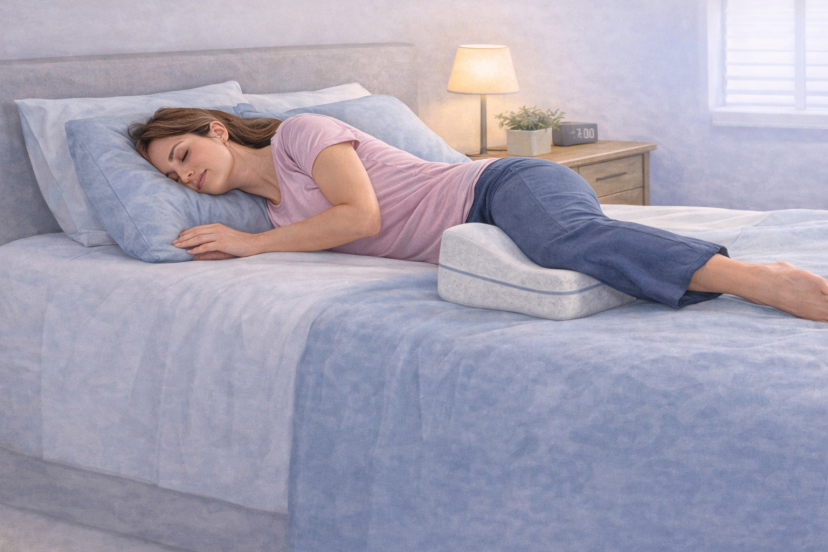
🛌 Knee Pillow (Side Sleepers)
This is one of the most popular and effective options.
🟢 How It Helps
-
Keeps knees separated
-
Prevents hip rotation
-
Maintains neutral spine alignment
🧠 Best For
-
Side sleepers
-
Pain that worsens at night
-
Hip and leg-dominant sciatica
A knee pillow is often the best sciatica pain relief pillow for side sleepers.
🛏️ Leg Elevation Pillow (Back Sleepers)
Designed to sit under the knees while lying on your back.
🟢 How It Helps
-
Reduces arching of the lower back
-
Decreases disc pressure
-
Relaxes lumbar muscles
🧠 Best For
-
Back sleepers
-
Lower-back–focused sciatica
-
Morning stiffness
🪑 Lumbar Support Pillow (Sleeping Or Sitting)
Some sciatica pillows are designed to support the lower back directly.
🟢 How It Helps
-
Maintains natural lumbar curve
-
Prevents spine collapse
-
Reduces nerve compression
🧠 Best For
-
Combination sleepers
-
People who wake with back pain
-
Use in bed or while sitting
🧊 Contoured Memory Foam Pillows
Memory foam adapts to your body shape.
🟢 Benefits
-
Custom pressure relief
-
Even weight distribution
-
Long-lasting support
Look for breathable, high-density foam for the best results.
🧠 Choosing The Best Sciatica Pain Relief Pillow
Before buying, consider these key factors.
🔍 1. Sleep Position
-
Side sleepers → Knee pillow
-
Back sleepers → Leg elevation pillow
-
Combo sleepers → Adjustable or contoured pillow
🔍 2. Firmness
-
Too soft = poor support
-
Too firm = pressure points
-
Medium-firm usually works best
🔍 3. Size And Shape
-
Must fit comfortably between knees or under legs
-
Should not force awkward positioning
🔍 4. Material
-
Memory foam for contouring
-
Hypoallergenic covers
-
Breathable fabrics to prevent overheating
❌ Common Mistakes When Using A Sciatica Pillow
Even the best pillow won’t help if used incorrectly.
⚠️ Mistakes To Avoid
-
Pillow too thin or flat
-
Incorrect placement
-
Using a pillow without posture awareness
-
Expecting an instant cure
A sciatica pain relief pillow works best as part of a bigger recovery plan.
🧠 How To Use A Sciatica Pain Relief Pillow Correctly
🛌 Side Sleeping Setup
-
Lie on your side
-
Place a pillow fully between your knees
-
Keep knees, hips, and shoulders stacked
🛏️ Back Sleeping Setup
-
Place a pillow under both knees
-
Allow the lower back to relax into the mattress
Consistency is key—use the pillow every night.
🌿 Combining A Sciatica Pillow With Other Relief Strategies
Pillows work best when paired with healthy habits.
✅ Supportive Add-Ons
-
Gentle stretching before bed
-
Warm shower or heat therapy
-
Anti-inflammatory sleep position
-
Consistent bedtime routine
During the day:
-
Avoid prolonged sitting
-
Improve posture
-
Stay gently active
🏥 Can A Sciatica Pain Relief Pillow Replace Treatment?
No, but it can significantly improve comfort.
🧠 What A Pillow Can Do
-
Reduce nighttime pain
-
Improve sleep quality
-
Support healing
❌ What It Can’t Do
-
Fix herniated discs
-
Cure spinal stenosis
-
Replace physical therapy
Think of a pillow as support, not a standalone treatment.
🧠 When A Pillow Helps The Most
A sciatica pain relief pillow is especially helpful if:
-
Pain worsens at night
-
You wake up stiff or sore
-
Pain improves with posture correction
-
Symptoms are mild to moderate
If pain is severe or worsening, medical evaluation is important.
🚑 When To See A Doctor
Seek professional care if you experience:
-
Progressive leg weakness
-
Numbness spreading
-
Pain lasting longer than 6–8 weeks
-
Loss of bladder or bowel control
These symptoms require medical assessment beyond pillow support.
❓ FAQs: Sciatica Pain Relief Pillow
1. Does a sciatica pain relief pillow really work?
Yes, for many people, it reduces pressure and improves sleep comfort.
2. What pillow is best for sciatica side sleepers?
A knee pillow designed to keep hips aligned works best.
3. Can I use a regular pillow instead?
Regular pillows often flatten and lose support. Specialty pillows are more effective.
4. How long does it take to notice improvement?
Many people notice better sleep within a few nights.
5. Can a sciatica pillow make pain worse?
If poorly sized or placed incorrectly, yes. Proper fit matters.
6. Should I use the pillow every night?
Yes. Consistent use provides the best results.
7. Can I use a sciatica pillow during the day?
Some lumbar pillows work well for sitting and driving.
💡 Conclusion: A Small Change That Can Bring Big Nighttime Relief
A sciatica pain relief pillow may seem like a simple solution—but for many people, it’s a game-changer for sleep quality and nighttime comfort.
By supporting spinal alignment and reducing nerve pressure, the right pillow helps your body rest, recover, and heal more effectively. While it won’t cure sciatica on its own, it can significantly reduce pain triggers that slow recovery.
If sciatica pain keeps you up at night, improving how you sleep may be one of the easiest—and most overlooked—steps toward lasting relief.
⚠️ Medical Disclaimer
This content is for educational purposes only and does not replace professional medical advice. Always consult a qualified healthcare provider before starting new treatments or if sciatica symptoms are severe, persistent, or worsening.
 Explore more:
- How To Unpinch A Sciatic Nerve
- Can Sciatica Affect Both Legs?
- Nerve Glides for Sciatica: A Complete Guide