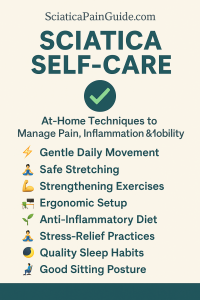
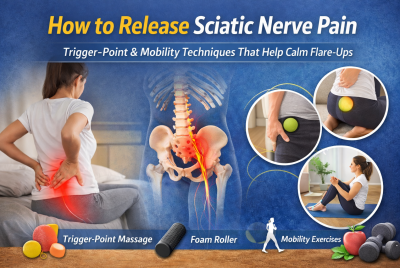
Sciatica Self-Care: At-Home Techniques To Manage Pain, Inflammation & Mobility

💡 When Sciatica Becomes Part Of Daily Life
If you’re searching for sciatica self-care, you’re probably dealing with more than just occasional back pain. Sciatica can turn simple tasks — sitting, driving, sleeping, bending — into constant challenges. Some days feel manageable. Other days, even getting dressed hurts.
The good news is that effective self-care for nerve pain doesn’t require expensive treatments or extreme measures. With the right habits, movement strategies, posture fixes, and lifestyle adjustments, many people successfully manage sciatica at home and reduce flare-ups long-term.
This guide gives you a practical, realistic sciatica home management plan you can follow daily — focused on relief and prevention.
🔍 Understanding Sciatica And Why Self-Care Matters
Sciatica occurs when the sciatic nerve becomes irritated or compressed, usually in the lower spine, hips, or deep glute muscles.
🌿 Common Causes Include
-
Herniated or bulging discs
-
Spinal stenosis
-
Tight piriformis muscles
-
Poor posture
-
Prolonged sitting
-
Weak core and hip muscles
Because many triggers are habit-related, sciatica self-care plays a major role in long-term improvement.
⚡ Core Principles Of Effective Sciatica Self-Care
Before diving into techniques, it helps to understand what actually works.
✅ Successful Self-Care Focuses On
-
Reducing nerve irritation
-
Improving circulation
-
Supporting spinal alignment
-
Preventing stiffness
-
Strengthening support muscles
Self-care isn’t about “doing everything.” It’s about doing the right things consistently.
🧘♀️ Daily Movement For Sciatica Home Management
Movement is one of the most powerful forms of self-care for nerve pain.
🚶 Why Gentle Movement Helps
-
Reduces pressure on the sciatic nerve
-
Improves blood flow
-
Prevents muscle tightness
-
Supports healing
🌿 Best Low-Impact Options
-
Walking (10–30 minutes daily)
-
Swimming or water therapy
-
Gentle cycling
-
Light yoga or mobility work
Avoid long periods of inactivity — even on painful days.
🧘♀️ Stretching For Sciatica Self-Care (Done Safely)
Stretching helps relieve muscle tension that compresses the nerve.
🌿 Most Helpful Stretch Targets
-
Piriformis muscles
-
Hamstrings
-
Hip flexors
-
Lower back
🛑 Stretching Rules
-
Stretch into mild tension only
-
Never force pain
-
Breathe slowly
-
Hold 20–30 seconds
Stretching should calm symptoms, not worsen them.
💪 Strengthening Exercises That Support Long-Term Relief
Weak muscles allow poor posture and nerve compression to continue.
🧱 Key Muscle Groups To Strengthen
-
Core muscles
-
Glutes
-
Hip stabilizers
🌿 Beginner-Friendly Exercises
-
Glute bridges
-
Bird dogs
-
Clamshells
-
Wall sits
These exercises are a critical part of reducing flare-ups over time.
🪑 Ergonomic Adjustments For Everyday Sciatica Self-Care
Many flare-ups are caused by how we sit, work, and rest.
💺 Sitting Adjustments
-
Use a lumbar cushion
-
Keep feet flat on the floor
-
Sit with hips slightly higher than knees
-
Avoid slouching
🧍 Standing And Workstation Tips
-
Alternate sitting and standing
-
Use a standing desk if possible
-
Keep screens at eye level
-
Take movement breaks every 30–40 minutes
For U.S. desk workers, these changes are often game-changers.
🛏️ Sleep Strategies For Sciatica Home Management
Poor sleep worsens inflammation and pain sensitivity.
😴 Best Sleep Positions
-
On your back with a pillow under your knees
-
On your side with a pillow between your legs
🚫 Sleep Positions To Avoid
-
Stomach sleeping
-
Twisting the spine
🛌 Helpful Sleep Tools
-
Medium-firm mattress
-
Supportive pillow
-
Knee or body pillow
Quality sleep is essential for nerve healing.
❄️ Heat And Ice As Part Of Sciatica Self-Care
Temperature therapy supports pain control.
🧊 Ice Is Best For
-
Sharp pain
-
Recent flare-ups
-
Inflammation
🔥 Heat Is Best For
-
Muscle stiffness
-
Chronic tightness
-
Morning pain
Many people benefit from alternating heat and ice.
🌿 Nutrition And Supplements For Nerve Pain Support
What you eat affects inflammation levels.
🥗 Anti-Inflammatory Foods
-
Leafy greens
-
Berries
-
Fatty fish
-
Turmeric
-
Olive oil
-
Nuts
💊 Supplements Some U.S. Adults Use
-
Magnesium (muscle relaxation)
-
Omega-3 fish oil (inflammation support)
-
Vitamin B12 (nerve health)
-
Turmeric curcumin
Always check with a healthcare provider before starting supplements.
🧠 Stress Reduction And Mind-Body Care
Stress increases muscle tension and pain sensitivity.
🌿 Helpful Stress-Reducing Practices
-
Deep breathing
-
Meditation
-
Gentle yoga
-
Short walks outdoors
-
Progressive muscle relaxation
Reducing stress is often overlooked in self-care for nerve pain, but it matters.
⚡ Creating A Daily Sciatica Self-Care Routine
Consistency matters more than intensity.
🌞 Morning Routine
-
Gentle stretching
-
Heat for stiffness
-
Short walk
🪑 Daytime Routine
-
Posture checks
-
Movement breaks
-
Ergonomic support
🌙 Evening Routine
-
Light stretching
-
Relaxation breathing
-
Heat or warm shower
This structure supports sciatica home management without overwhelm.
🌿 Habits That Help Reduce Sciatica Flare-Ups
Small daily habits add up.
✅ Helpful Habits
-
Stay hydrated
-
Avoid prolonged sitting
-
Use proper lifting techniques
-
Maintain a healthy weight
-
Keep moving consistently
These habits significantly help reduce flare-ups over time.
🚨 When Sciatica Self-Care Is Not Enough
Self-care works for many people — but not all cases.
⚠️ Seek Medical Care If You Have
-
Pain lasting longer than 2–4 weeks
-
Increasing leg weakness
-
Numbness spreading
-
Trouble walking
-
Loss of bladder or bowel control (emergency)
-
Sciatica after a fall or injury
🩺 When To See A Doctor Or Physical Therapist
Professional care may include:
-
Physical therapy
-
Imaging (MRI or X-ray)
-
Targeted injections
-
Medication adjustments
Early intervention can prevent chronic issues.
❓ FAQs About Sciatica Self-Care
1. Can Sciatica Be Managed At Home?
Yes. Many people successfully manage sciatica with consistent self-care habits.
2. How Long Does Sciatica Take To Improve With Self-Care?
Many cases improve within 4–8 weeks with proper care.
3. Is Walking Good For Sciatica?
Yes. Walking improves circulation and reduces nerve pressure.
4. Should I Rest Or Stay Active?
Gentle activity is usually better than prolonged rest.
5. Can Self-Care Prevent Sciatica From Coming Back?
Yes. Posture, movement, and strength habits greatly reduce recurrence.
6. Are Home Remedies Enough For Severe Sciatica?
Sometimes, but severe or worsening symptoms need medical evaluation.
7. What Is The Most Important Self-Care Habit?
Consistent movement combined with good posture.
🎯 Conclusion: Consistent Self-Care Leads To Real Relief
Effective sciatica self-care isn’t about quick fixes — it’s about building supportive habits that help your body heal and stay resilient. With gentle movement, smart ergonomics, quality sleep, stress reduction, and patience, many people regain comfort and confidence.
Start small. Stay consistent. Your daily choices matter more than you think — and lasting relief is possible.
⚕️ Medical Disclaimer
This article is for informational purposes only and does not replace professional medical advice. Always consult a qualified healthcare provider before starting or changing any treatment for sciatica or nerve-related pain.
 Explore more:
- How To Get Rid Of Sciatic Nerve Pain
- How to Prevent Sciatica Flare-Ups Naturally
- How To Alleviate Sciatic Nerve Pain