What Is A Sciatica? Causes, Symptoms, And How To Find Lasting Relief
😣 When Back Pain Turns Into Something More
You may have heard the term sciatica used to describe sharp leg pain, lower back problems, or nerve pain that just won’t go away. But many people still wonder: what is a sciatica, really—and why does it hurt so much?
Sciatica can feel alarming. The pain may shoot down one leg, cause burning or tingling sensations, or make sitting and sleeping miserable. For some, it comes on suddenly. For others, it builds slowly over time.
Understanding what sciatica actually is—and what it isn’t—is the first step toward effective, lasting relief. This guide explains sciatica in clear, practical terms and shows what you can do to calm the pain and protect your nerve health.
⚡ What Is A Sciatica?
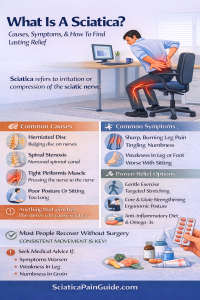
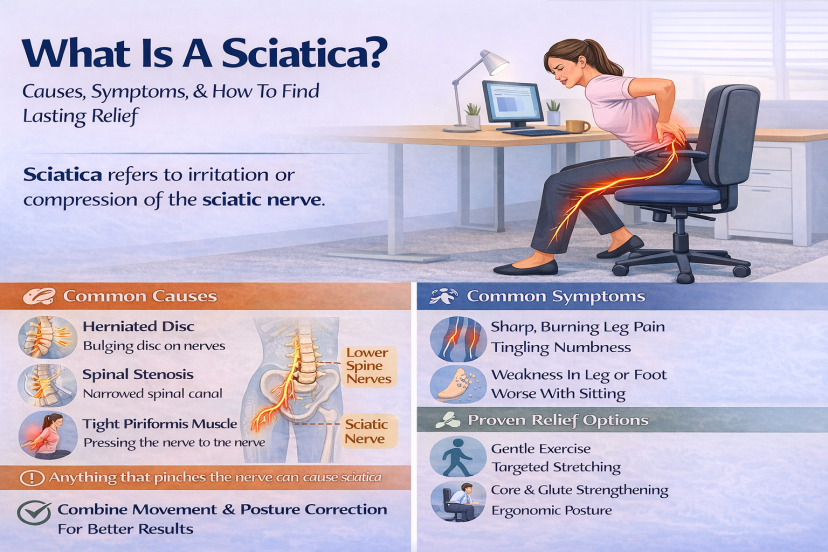
Sciatica refers to pain caused by irritation or compression of the sciatic nerve, the largest and longest nerve in the human body.
Despite how it’s commonly used, sciatica is not a medical diagnosis. It’s a symptom that points to an underlying issue affecting the nerve.
In simple terms:
-
Sciatica = sciatic nerve pain
-
Not a disease, but a warning signal
That’s why treatment focuses on addressing the cause of the nerve irritation—not just the pain itself.]
🧠 Understanding The Sciatic Nerve
To fully answer what is a sciatica, it helps to know how the sciatic nerve works.
🧬 The Sciatic Nerve Pathway
The sciatic nerve:
-
Starts in the lower spine (L4–S3 nerve roots)
-
Travels through the hips and buttocks
-
Runs down the back of each leg
-
Extends to the feet
Because it’s so long, irritation anywhere along this pathway can cause pain far from the source—often in the leg rather than the back.
⚠️ What Causes Sciatica?
Sciatica happens when something places pressure on the sciatic nerve or nearby nerve roots.
🔍 Common Causes Of Sciatica
🦴 Herniated Or Bulging Disc
-
Disc material presses on the nerve
-
The most common cause of sciatica
-
Pain often worsens with sitting
🪑 Spinal Stenosis
-
Narrowing of the spinal canal
-
More common with aging
-
May affect one or both legs
🪢 Muscle Compression (Piriformis Syndrome)
-
Tight muscles compress the nerve
-
Often linked to prolonged sitting
🧍 Poor Posture Or Sedentary Lifestyle
-
Increased disc pressure
-
Weak core and glutes
-
Reduced spinal support
🚗 Injury Or Trauma
-
Falls, accidents, or repetitive strain
-
Can affect multiple spinal levels
Understanding the cause helps determine the best treatment approach.
🔥 Common Sciatica Symptoms
Sciatica symptoms can vary widely from person to person.
⚡ Typical Symptoms Include:
-
Sharp Or Burning Pain
-
Pain Radiating Down One Leg
-
Tingling Or “Pins And Needles”
-
Numbness In The Leg Or Foot
-
Muscle Weakness
-
Pain Worse With Sitting
Most people feel symptoms on one side, but sciatica can sometimes affect both legs.
❓ What Is A Sciatica Flare-Up?
A flare-up is a sudden increase in sciatic nerve pain, often triggered by:
-
Sitting Too Long
-
Lifting Incorrectly
-
Sudden Twisting Movements
-
Poor Sleep Position
-
Stress Or Muscle Tension
Flare-ups don’t necessarily mean the condition is worsening—but they do signal irritation.
🪑 How Sciatica Affects Daily Life
Sciatica can interfere with nearly every part of daily living.
😣 Common Challenges
-
Difficulty Sitting At Work
-
Pain While Driving
-
Trouble Sleeping
-
Reduced Mobility
-
Fear Of Movement
These limitations can lead to inactivity, which often makes symptoms worse over time.
🧘♀️ Is Sciatica Serious?
In most cases, sciatica is not dangerous and improves with conservative care. However, there are situations where sciatica needs urgent medical attention.
🚑 Seek Immediate Care If You Have:
-
Loss Of Bladder Or Bowel Control
-
Numbness In The Groin Area
-
Progressive Weakness In The Legs
-
Difficulty Walking Or Standing
These may indicate a rare but serious condition called cauda equina syndrome.
🧠 What Is The Difference Between Sciatica And Lower Back Pain?
Many people confuse the two—but they’re not the same.
🆚 Sciatica vs. Lower Back Pain
-
Lower Back Pain: Localized discomfort
-
Sciatica: Radiating nerve pain down the leg
You can have back pain without sciatica—and sciatica with minimal back pain.
🧘♀️ What Helps Relieve Sciatica Pain?
The best relief strategies focus on reducing nerve pressure and improving spinal support.
🚶♂️ Gentle Movement Is Essential
One of the biggest myths is that rest is best for sciatic pain.
✅ Why Movement Helps
-
Improves Blood Flow
-
Reduces Inflammation
-
Prevents Muscle Stiffness
Walking is often one of the safest and most effective activities.
🧘♀️ Stretching For Sciatic Nerve Relief
Stretching can relieve muscle tension around the nerve.
🌿 Helpful Stretches
-
Knee-To-Chest Stretch
-
Seated Figure-4 Stretch
-
Hamstring Stretch
-
Hip Flexor Stretch
Stretch gently and stop if pain worsens.
💪 Strengthening For Long-Term Relief
Weak muscles place more strain on the spine.
🏋️♀️ Key Areas To Strengthen
-
Core Muscles
-
Glute Muscles
-
Hip Stabilizers
Strong support muscles reduce future flare-ups.
🪑 Posture And Ergonomics Matter
Poor posture is a major contributor to sciatica.
💺 Sitting Tips
-
Use Lumbar Support
-
Keep Feet Flat On The Floor
-
Avoid Slouching
-
Take Breaks Every 30–45 Minutes
Simple adjustments often bring noticeable relief.
❄️ Ice Vs 🔥 Heat For Sciatica
Both can help—depending on the situation.
❄️ Ice
-
Best For Acute Inflammation
-
Use 15–20 Minutes
🔥 Heat
-
Best For Muscle Tightness
-
Helps Relax Spasms
Many people alternate between them.
💊 Medication And Sciatica
Medication can help manage pain—but it doesn’t cure sciatica.
⚠️ Common Options
-
NSAIDs
-
Muscle Relaxants
-
Nerve Pain Medications
Medication works best when combined with movement and posture correction.
🏥 Physical Therapy For Sciatica
Physical therapy is one of the most effective treatments.
💡 Benefits Of Physical Therapy
-
Identifies Root Cause
-
Improves Movement Patterns
-
Strengthens Weak Muscles
-
Reduces Recurrence Risk
A personalized program is often more effective than self-guided exercise.
🌿 Natural Support For Sciatic Nerve Health
Some people benefit from complementary approaches.
🍃 Common Natural Options
-
Magnesium
-
Omega-3 Fatty Acids
-
Anti-Inflammatory Diet
-
Massage Therapy
Always consult a healthcare provider before starting supplements.
🌙 Sleep Positions That Help Sciatica
Sleep posture can either help or worsen symptoms.
🛌 Best Sleep Positions
-
Side Sleeping With Pillow Between Knees
-
Back Sleeping With Pillow Under Knees
-
Avoid Stomach Sleeping
A supportive mattress also plays a role.
❓ FAQs: What Is A Sciatica?
1. What is sciatic pain exactly?
Sciatica is pain caused by irritation or compression of the sciatic nerve.
2. Is sciatic pain a condition or a symptom?
It’s a symptom—not a disease.
3. Does sciatic pain go away on its own?
Many cases improve within weeks with proper care.
4. Can sciatic pain affect both legs?
Yes, but it’s less common and should be evaluated.
5. Is walking good for sciatic pain?
Yes. Walking often reduces nerve pressure.
6. Can sciatic pain become chronic?
Yes, if the underlying cause isn’t addressed.
7. What worsens sciatica?
Prolonged sitting, poor posture, inactivity, and stress.
📌 Conclusion: Understanding Sciatic Pain Leads To Better Relief
So, what is a sciatica? It’s your body’s way of telling you that the sciatic nerve is under stress—and it needs attention, not avoidance.
The good news is that most people recover without surgery by staying active, improving posture, strengthening supportive muscles, and managing daily habits. The sooner you understand the cause, the faster you can move toward relief.
Sciatic pain doesn’t have to control your life. With the right approach, healing is not only possible—it’s likely.
⚠️ Medical Disclaimer
This content is for educational purposes only and does not replace professional medical advice. Always consult a qualified healthcare provider before starting new treatments, exercises, or supplements, especially if symptoms are severe, persistent, or worsening.
 Explore more:
- Sciatica Pain Relief Pillow: How The Right Pillow
- Can Sciatica Affect Both Legs?
- Nerve Glides for Sciatica: A Complete Guide