Where Is Your Sciatic Nerve Located? A Beginner’s Guide To Anatomy & Pain Triggers
❓ Why Sciatic Pain Feels So Confusing
If you’ve ever felt a sharp, burning, or electric pain shoot from your lower back down your leg, you’ve probably asked yourself: where is your sciatic nerve located — and why does it hurt so much?
Sciatica can feel mysterious and frightening, especially when pain seems to appear in your hip, thigh, knee, calf, or even your foot. Many people worry the pain is “moving,” spreading, or coming from the wrong place altogether.
The truth is simpler — and understanding it is empowering. Once you know the sciatic nerve position, its nerve pathway, and where sciatic pain starts, you can better understand what’s happening in your body and what steps actually help.
This guide breaks it all down in plain English, so you can stop guessing and start healing.
🔍 Where Is Your Sciatic Nerve Located In The Body?
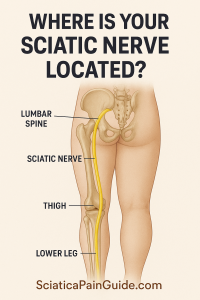
The sciatic nerve is the largest and longest nerve in the human body. It runs from your lower spine all the way down to your feet.
Here’s the simple explanation:
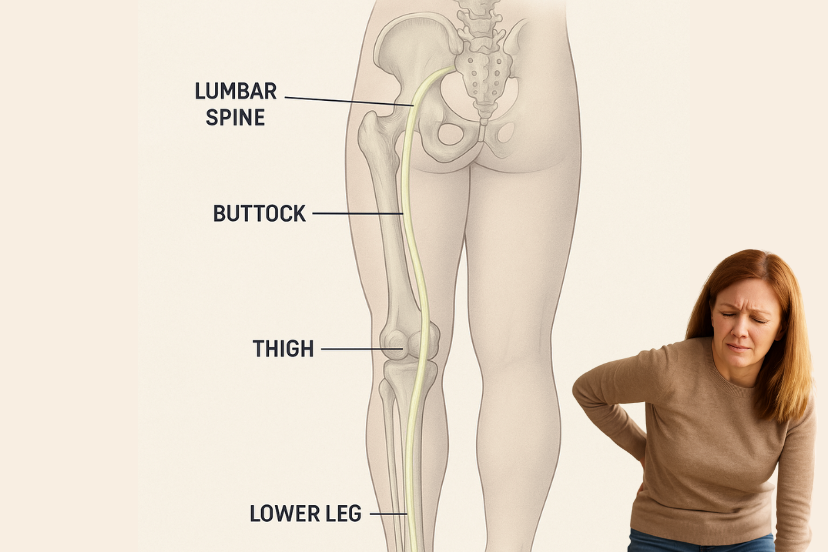
The sciatic nerve starts in your lower back and travels through your hips, buttocks, and down each leg.
More specifically, it begins at the lumbar spine (L4–L5) and sacral spine (S1–S3). These nerve roots join together to form one thick nerve — the sciatic nerve.
From there, the nerve pathway follows this route:
- Lower spine
- Buttock (deep under the glute muscles)
- Back of the thigh
- Knee area
- Calf
- Foot and toes
This long pathway explains why pain can show up far away from your back — even if your back doesn’t hurt much at all.
🧠 Understanding The Sciatic Nerve Pathway Step By Step
To really understand where your sciatic nerve is located, it helps to visualize its journey.
🧍♂️ Lower Back (Lumbar And Sacral Spine)
This is where sciatic pain often starts, even if you don’t feel it here.
- Disc bulges
- Herniated discs
- Spinal narrowing
- Arthritis
Any of these can compress the nerve roots that form the sciatic nerve.
🍑 Buttocks And Hip Area
After leaving the spine, the sciatic nerve passes under or through the piriformis muscle, a small but powerful muscle deep in your glutes.
Tightness here can squeeze the nerve and trigger pain — a condition often called piriformis syndrome.
🦵 Back Of The Thigh
This is one of the most common places people feel sciatic pain.
Pain here often feels:
- Burning
- Achy
- Tight
- Electric
This is where many people first notice symptoms.
🦶 Lower Leg, Foot, And Toes
As the nerve continues downward, it branches into smaller nerves that control sensation and movement in your lower leg and foot.
That’s why sciatica can cause:
- Tingling in toes
- Numbness in the foot
- Weakness when lifting the foot
❓ Where Does Sciatic Pain Start — And Why Does It Travel?
One of the most confusing things about sciatica is where sciatic pain starts versus where it’s felt.
🌿 Where Sciatic Pain Starts
In most cases, sciatic pain begins at:
- The lower spine
- The sacroiliac area
- The deep buttock
This is where the nerve gets irritated or compressed.
⚡ Why Pain Travels Down The Leg
Nerves send signals along their entire length. When the sciatic nerve is irritated at one point, pain can appear anywhere along its pathway.
That’s why someone might feel:
- Calf pain from a back issue
- Foot tingling from a hip problem
- Thigh pain without back pain
This “referred pain” is a hallmark of nerve irritation.
⚙️ Common Causes Of Sciatic Nerve Irritation
Understanding the anatomy helps explain what causes sciatica in the first place.
💥 Disc Problems
- Herniated discs
- Bulging discs
- Degenerative disc disease
These are among the most common causes in U.S. adults.
🧘♀️ Muscle Tightness
Tight glutes, piriformis muscles, or hamstrings can compress the nerve.
🪑 Prolonged Sitting
Long hours at a desk, especially without lumbar support, increase nerve pressure.
🧱 Poor Posture
Slouching, forward head posture, and pelvic tilt can stress the lower spine.
🤰 Pregnancy
Weight shifts and pelvic changes can alter sciatic nerve position temporarily.
⚡ Symptoms That Match Sciatic Nerve Location
Because of the nerve’s long pathway, symptoms vary widely.
🚨 Common Sciatica Symptoms
- Pain in one leg (rarely both)
- Shooting or electric sensations
- Numbness or tingling
- Muscle weakness
- Pain that worsens with sitting
Symptoms usually follow the nerve pathway, not random areas.
🌟 How Knowing Sciatic Nerve Location Helps Treatment
Once you understand where your sciatic nerve is located, treatment makes more sense.
🧘♀️ Targeted Stretching
Stretching the hips, glutes, and hamstrings reduces pressure on the nerve.
Helpful stretches include:
- Figure-4 stretch
- Piriformis stretch
- Hamstring stretch
- Hip flexor stretch
💪 Strengthening The Right Muscles
Strong core and glute muscles support the spine and reduce nerve compression.
🪑 Ergonomic Adjustments
Using lumbar cushions, standing desks, and supportive chairs reduces irritation at the nerve’s origin.
🌿 Natural Relief Strategies Based On Nerve Anatomy
Understanding anatomy allows smarter self-care.
❄️ Ice And Heat
- Ice helps reduce inflammation near the spine
- Heat relaxes tight muscles along the nerve pathway
🧴 Topical Relief
Menthol, capsaicin, and lidocaine creams can calm nerve signals locally.
🌀 Gentle Movement
Walking encourages blood flow and prevents stiffness in the nerves.
⚡ Preventing Sciatic Nerve Irritation Long-Term
Prevention focuses on protecting the nerve at its most vulnerable points.
✅ Daily Habits That Help
- Avoid sitting longer than 30–40 minutes
- Use proper lifting technique
- Stretch hips daily
- Strengthen core muscles
- Maintain a healthy body weight
🪑 Smart Workspace Setup
For U.S. desk workers:
- Lumbar support pillow
- Monitor at eye level
- Feet flat on the floor
- Sit-stand desk, if possible
🚨 When To See A Doctor About Sciatic Nerve Pain
Seek medical care if you experience:
- Pain lasting longer than 2–4 weeks
- Progressive leg weakness
- Severe numbness
- Loss of bladder or bowel control (emergency)
- Sciatica after trauma or a fall
Imaging may be needed to confirm nerve compression.
❓ FAQs About Where Your Sciatic Nerve Is Located
1. Where Exactly Is The Sciatic Nerve Located?
It starts in the lower spine and runs through the buttocks, down the back of the leg, and into the foot.
2. Does Sciatic Pain Always Start In The Back?
No. Pain may start in the hip or leg, even though the irritation begins in the spine.
3. Can Sciatic Nerve Pain Affect The Foot?
Yes. Tingling, numbness, or pain in the foot is common.
4. Is Sciatica Usually On One Side?
Yes. Most cases affect only one side of the body.
5. Can Tight Muscles Cause Sciatic Pain?
Absolutely. Tight glutes and piriformis muscles can compress the nerve.
6. Why Does Sitting Make Sciatica Worse?
Sitting increases pressure on the lower spine and sciatic nerve roots.
7. Does Sciatic Nerve Pain Mean Nerve Damage?
Not usually. Most cases involve irritation rather than permanent damage.
🎯 Conclusion: Understanding Leads To Relief
Knowing where your sciatic nerve is located removes much of the fear and confusion around sciatica. Pain follows a logical pathway — and when you understand that pathway, you can treat the problem more effectively.
With the right stretches, posture habits, movement, and patience, most people find relief and regain confidence in their bodies. Knowledge is the first step toward healing — and you’ve just taken it.
⚕️ Medical Disclaimer
This content is for educational purposes only and does not replace professional medical advice. Always consult a qualified healthcare provider for diagnosis or treatment of sciatic nerve pain or related conditions.
 Explore more:
- What Can I Take for Sciatica Pain?
- Lower Back Stiffness Sciatica Exercises
- How to Reduce Sciatica Pain