Why Is My Sciatica Worse After Sitting All Day? (Real Reasons + Fixes)

🔥 When Sitting Turns a Normal Workday Into Sciatic Pain
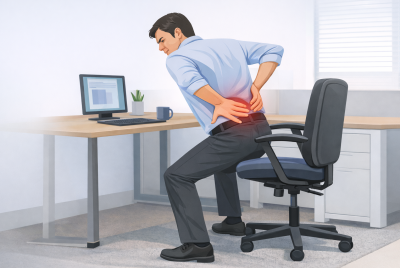
If you’ve ever stood up after a long workday and felt a sharp, burning, or shooting pain down your lower back, hip, or leg, you’re not alone. Many U.S. adults with sciatica say the worst flare-ups happen after sitting too long at work, in the car, or even relaxing at home. You may wonder: “Why is my sciatica worse after sitting all day?”
This guide explains exactly why sitting aggravates sciatica, how a sedentary lifestyle contributes to nerve compression, and — most importantly — the specific habits, posture fixes, micro-breaks, and stretches that help you feel relief quickly.
Let’s break it down in a clear, practical, and science-backed way.
⚡ Quick Answer — Why Sciatica Gets Worse After Sitting
Sciatica gets worse after sitting all day because:
-
Compresses the lower spine
-
Tightens hip and glute muscles
-
Reduces blood flow to the sciatic nerve
-
Increases disc pressure by up to 40%
-
Stresses the piriformis muscle (a common nerve irritator)
If you’re dealing with sciatica sitting too long, the combination of nerve pressure, muscle tightness, and reduced circulation often leads to intense flare-ups when you stand up or change positions.
But the good news? Small adjustments can make a huge difference.
🧠 Why Sitting Aggravates Sciatica (The Science)
Prolonged sitting is one of the biggest contributors to sciatica and sedentary lifestyle–related pain.
Here’s what happens inside your body:
1. Forward pelvic tilt compresses the nerve
Most people slump when they sit. This pushes the pelvis backward, increasing pressure on:
-
The lumbar discs
-
The sciatic nerve roots (L4–S1)
-
Surrounding muscles
2. Disc pressure increases dramatically
Research shows:
-
Standing = baseline disc pressure
-
Sitting = 40% higher disc pressure
-
Sitting slouched = 85% higher disc pressure
More pressure → more irritation → more pain.
3. Piriformis muscle tightens
Sitting shortens and tightens the piriformis, a small hip muscle that can compress the sciatic nerve.
This is known as piriformis syndrome, and it’s extremely common in office workers.
4. Reduced blood flow slows healing
A pinched or irritated sciatic nerve needs oxygen and nutrients. But when you sit:
-
Blood flow drops
-
Inflammation increases
-
Nerve sensitivity worsens
This explains why getting up can trigger that sharp, stabbing pain.
5. Hip flexors shorten, pulling the spine out of alignment
Tight hip flexors cause an anterior pelvic tilt, which increases compression on the lumbar spine.
All of these create the perfect storm for sciatica worse after sitting all day.
🧘♀️ Symptoms That Sitting Is Making Your Sciatica Worse
You may notice:
-
Pain when standing up after sitting
-
Numbness or tingling down the leg
-
Deep ache in the buttock
-
Burning or electric shock sensations
-
Pain after driving
-
Tight hamstrings or hip stiffness
-
Difficulty straightening your leg
If these flare up after long sitting sessions, your posture and daily habits are contributing.
💺 Ergonomic Fixes for Desk Workers (U.S. Office-Friendly Tips)
Small ergonomic changes dramatically reduce sciatic nerve compression.
🪑 1. Choose the right chair
Look for:
-
Adjustable lumbar support
-
Seat depth that fits your legs
-
Firm cushion (avoid deep, soft sofas)
-
Ability to sit with knees at 90 degrees
Affordable U.S. options:
-
AmazonBasics ergonomic chairs
-
HON Ignition office chairs
-
Lumbar cushions from Everlasting or LoveHome
📏 2. Fix screen height
The monitor should be at eye level to avoid slouching.
🦵 3. Feet flat on the floor
Avoid:
-
Leg crossing
-
Tucking your feet under your chair
-
Sitting on one foot
These all rotate the pelvis and irritate nerve roots.
💺 4. Use a lumbar support cushion
This maintains the natural curve of your spine and prevents low-back collapse.
🧍♂️ 5. Switch to a sit-stand desk
U.S. PTs recommend alternating every 30–45 minutes.
Popular options:
-
VariDesk
-
FlexiSpot
-
Uplift Desk
⏱️ Micro-Breaks: The #1 Habit That Reduces Sciatica Pain
Even with great posture, sitting too long aggravates sciatica.
Movement is the key.
Use the “30-2 Rule”:
Every 30 minutes, stand up and move for 2 minutes.
Examples:
-
Walk to the kitchen
-
Do standing hip extensions
-
March in place
-
Do gentle side bends
-
Perform a 20-second sciatic nerve glide
These tiny breaks restore blood flow and decompress the nerve.
🧘♂️ Best Stretches to Undo “Sitting Damage”
These stretches release tension from muscles that compress the sciatic nerve.
1. Piriformis Stretch
Helps reduce pressure in the buttock and hip.
2. Seated Hamstring Stretch
Great for people with tight posterior chain muscles.
3. Hip Flexor Lunge Stretch
Reverses the shortening caused by sitting.
4. Cat-Cow Mobility
Improves spinal mobility and reduces stiffness.
5. Knees-to-Chest
Decompresses the lower spine gently.
When to Stretch
-
During micro-breaks
-
Before work
-
After work
-
Before bed
Stretching for 5–10 minutes daily can significantly reduce flare-ups.
🔄 Nerve Glides: A Must-Do for Sedentary Sciatica Pain
Nerve gliding (nerve flossing) restores mobility to the sciatic nerve itself.
Simple Sciatic Nerve Glide
-
Sit tall
-
Straighten one leg
-
Flex foot up
-
Look upward
-
Then look downward while relaxing your foot
-
Repeat 10–15 times
This technique reduces nerve irritation without overstretching it.
💪 Strengthening Exercises to Prevent Sciatica From Sitting
Weak glutes and weak core muscles contribute to poor posture and nerve compression.
Best exercises:
-
Glute bridges
-
Bird-dog
-
Clamshells
-
Planks
-
Hip hinging practice
-
Side steps with a resistance band
Strengthening these stabilizers prevents sciatica flare-ups long-term.
🌿 Home Remedies That Reduce Pain & Inflammation
🔥 Heat therapy:
Loosens stiff muscles after sitting.
🧊 Ice therapy:
Reduces inflammation when pain is sharp.
🌿 Supplements some U.S. adults use:
-
Turmeric (curcumin)
-
Omega-3
-
Magnesium glycinate
-
Vitamin D
💆 Massage tools:
-
Lacrosse ball for glutes
These help release tight tissues that irritate the nerve.
🧑⚕️ When to See a Doctor or PT
Seek medical care if you notice:
-
Pain lasting more than 6 weeks
-
Numbness increasing
-
Weakness in the foot or leg
-
Loss of bladder or bowel control (emergency)
-
Sciatica after an injury
-
Pain severe enough to limit walking
A medical provider may recommend:
-
Physical therapy
-
Imaging (MRI or X-ray)
-
Cortisone injections
-
Chiropractic care
❓ 7 FAQs Related to Sciatica Worse After Sitting All Day
1. Why is my sciatica worse after sitting?
Because sitting increases pressure on the lumbar discs and sciatic nerve.
2. Does sitting too long damage the sciatic nerve?
It can irritate the nerve, especially if muscles are tight or posture is poor.
3. What’s the best sitting position for sciatica?
Neutral spine, feet flat, hips slightly above knees, lumbar support.
4. Does walking help after sitting?
Yes — walking restores blood flow and reduces nerve compression.
5. Should I use heat or ice after sitting all day?
Heat for stiffness, ice for sharp pain.
6. Is a standing desk good for sciatica?
Yes — alternating between sitting and standing reduces nerve irritation.
7. Can a sedentary lifestyle make sciatica chronic?
Yes, inactivity weakens stabilizing muscles and worsens compression.
🌟 Conclusion: Small Daily Changes Bring Big Sciatica Relief
If your sciatica is worse after sitting all day, you’re not alone — but you’re also not stuck.
With better ergonomics, micro-breaks, stretching, nerve gliding, and posture awareness, you can dramatically reduce pain and prevent future flare-ups.
Healing doesn’t require major changes — just consistent small steps.
⚠️ Medical Disclaimer
This content is for informational purposes only and does not substitute for medical advice. Always consult a qualified healthcare professional before starting new exercises or treatments.
 Explore more: