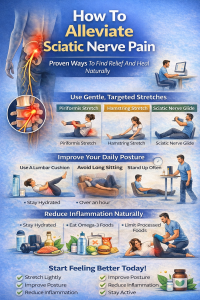
How To Alleviate Sciatic Nerve Pain: Proven Ways To Find Relief And Heal Naturally

Sciatic nerve pain can turn everyday life into a constant struggle. Sitting too long hurts. Standing feels unstable. Walking sends sharp, electric pain down your leg. Sleep becomes broken, and even simple tasks feel exhausting. If you’re here, you’re likely asking the same question millions of Americans search every year: how to alleviate sciatic nerve pain safely and effectively—without rushing into extreme treatments.
The good news is that most sciatica cases can improve with the right combination of movement, posture correction, inflammation control, and patience. This guide walks you step by step through science-backed, real-world strategies to reduce pain, calm the nerve, and support long-term healing.
⚡ What Is Sciatic Nerve Pain And Why It Hurts So Much
Sciatic nerve pain—often called sciatica—happens when the largest nerve in the body becomes irritated or compressed. The sciatic nerve starts in the lower spine and runs through the hips, glutes, and down each leg.
Common Causes Of Sciatic Nerve Pain
-
Herniated or bulging discs pressing on nerve roots
-
Tight glute or piriformis muscles
-
Spinal stenosis or age-related degeneration
-
Prolonged sitting and poor posture
-
Sudden lifting, twisting, or injury
Because nerves heal more slowly than muscles, sciatica pain can feel intense and unpredictable—especially when inflammation is involved.
🧠 How To Alleviate Sciatic Nerve Pain Starts With Calming The Nerve
Before stretching aggressively or pushing through workouts, the first goal is to reduce nerve irritation.
Immediate Pain-Calming Strategies
-
Short walking breaks instead of long sitting sessions
-
Cold therapy during flare-ups to reduce inflammation
-
Neutral spine positioning when resting or sleeping
Avoid complete bed rest. Gentle, controlled movement improves blood flow and speeds nerve recovery.
🧘♀️ Gentle Movements That Help Alleviate Sciatic Nerve Pain
Movement is one of the most powerful tools for sciatica relief—when done correctly.
Safe Daily Movements
-
Walking 10–20 minutes on flat ground
-
Pelvic tilts to reduce lower-back tension
-
Seated nerve glides (slow, controlled motions)
These movements help “re-educate” the nerve without overstretching it.
Movements To Avoid Early On
-
Deep forward bends
-
Twisting under load
-
High-impact exercises
Pain is a signal—not something to ignore.
🌿 Targeted Stretches To Reduce Sciatic Nerve Pressure
Stretching can be helpful, but only when done gently and consistently.
Most Helpful Sciatica Stretches
-
Piriformis stretch to reduce glute compression
-
Hamstring stretch to lower nerve tension
-
Hip flexor stretch to improve pelvic alignment
Hold stretches lightly for 20–30 seconds. Never bounce or force range of motion.
💪 Strengthening Exercises That Support Long-Term Relief
One reason sciatic nerve pain returns is weak support muscles around the spine and hips.
Key Muscles To Strengthen
-
Core muscles for spinal stability
-
Glutes to offload the lower back
-
Hip stabilizers for balanced movement
Examples include:
-
Glute bridges
-
Bird dogs
Stronger muscles reduce pressure on the sciatic nerve over time.
🪑 Posture Fixes That Make A Big Difference
Poor posture is one of the most common reasons people struggle to alleviate sciatic nerve pain.
Sitting Posture Tips
-
Use a lumbar cushion to support the lower back
-
Keep feet flat on the floor
-
Avoid crossing legs for long periods
Workstation Improvements
-
Standing desk or sit-stand setup
-
Monitor at eye level
-
The keyboard is close to the body
Small posture corrections can dramatically reduce daily nerve irritation.
🌙 How To Sleep With Sciatic Nerve Pain
Sleep is when healing happens—but sciatica can make it difficult.
Best Sleeping Positions For Sciatica
-
Side sleeping with a pillow between the knees
-
Back sleeping with a pillow under the knees
Avoid stomach sleeping, which increases spinal stress.
A medium-firm mattress often provides better nerve support than very soft surfaces.
🌱 Natural Ways To Reduce Inflammation And Support Nerve Healing
Inflammation plays a major role in sciatic nerve pain.
Anti-Inflammatory Habits
-
Stay hydrated to support nerve conductivity
-
Eat omega-3-rich foods like salmon and walnuts
-
Limit processed foods and excess sugar
Common Supplements Used In The U.S.
-
Magnesium for muscle relaxation
-
Omega-3 fatty acids for inflammation
-
B-vitamins to support nerve health
Always consult a healthcare provider before starting supplements.
🧠 Stress Management And Sciatica Pain
Stress increases muscle tension and inflammation, which can worsen sciatica.
Helpful Stress-Reduction Techniques
-
Deep breathing
-
Gentle yoga or stretching routines
-
Mindfulness or guided relaxation
Reducing stress doesn’t just help mentally—it directly affects pain perception.
🩺 Physical Therapy: A Proven Way To Alleviate Sciatic Nerve Pain
Physical therapy is one of the most effective non-surgical treatments for sciatica.
How Physical Therapy Helps
-
Identifies movement imbalances
-
Strengthens weak areas safely
-
Teaches nerve-friendly movement patterns
Many people notice improvement within 3–6 sessions when therapy is done consistently.
🚫 Common Mistakes That Delay Sciatica Recovery
Even with good intentions, some habits can slow healing.
-
Pushing through sharp pain
-
Overstretching irritated nerves
-
Sitting for long hours without breaks
-
Ignoring posture outside of workouts
Consistency matters more than intensity.
🛑 When To See A Doctor Or Specialist
Most sciatic nerve pain improves naturally, but some symptoms need medical evaluation.
Seek Professional Care If You Have
-
Worsening pain after 6–8 weeks
-
Progressive leg weakness or numbness
-
Loss of bladder or bowel control (emergency)
-
Severe pain after injury or accident
Early evaluation can prevent long-term nerve damage.
❓ FAQs: How To Alleviate Sciatic Nerve Pain
1. How long does it take to alleviate sciatic nerve pain?
Many people feel improvement within 2–6 weeks, depending on the cause and consistency of care.
2. Can walking help sciatic nerve pain?
Yes. Gentle walking improves circulation and often reduces stiffness and nerve irritation.
3. Is heat or ice better for sciatica?
Ice helps during flare-ups; heat can relax tight muscles once inflammation calms.
4. Can sciatica heal without medication?
Yes. Many cases improve with movement, posture correction, and lifestyle changes alone.
5. Should I stretch every day?
Light stretching is helpful, but avoid aggressive stretching when pain is sharp.
6. Does sitting make sciatica worse?
Prolonged sitting often aggravates sciatica, especially without lumbar support.
7. Can sciatic nerve pain come back?
Yes, but maintaining strength, posture, and movement habits reduces recurrence risk.
✅ Final Takeaway: Relief Is Possible With The Right Approach
Learning how to alleviate sciatic nerve pain isn’t about finding one miracle fix—it’s about combining smart movement, posture awareness, inflammation control, and patience. Most people can reduce pain significantly and return to normal activities without surgery when they stay consistent.
Listen to your body. Move gently. Support your spine daily. With time and the right habits, sciatic nerve pain can become manageable—and often, a thing of the past.
⚠️ Medical Disclaimer
This article is for educational purposes only and does not replace professional medical advice. Always consult a qualified healthcare provider before starting new exercises, treatments, or supplements, especially if symptoms are severe or worsening.
 Explore more: