Best Recliner Position For Sciatica: How To Sit Comfortably And Reduce Nerve Pain
Living with sciatica can make even relaxing at home feel uncomfortable. Many people look forward to sitting in their favorite recliner after a long day, only to find that their leg starts burning, tingling, or aching within minutes. If that sounds familiar, you’re not alone.
The good news is that a recliner itself usually isn’t the problem. In fact, the best recliner position for sciatica can help reduce pressure on the lower back and sciatic nerve, making it easier to rest and recover. The key is knowing how to position your body correctly and avoiding common sitting habits that can make symptoms worse.
In this guide, you’ll learn the best recliner angles, posture tips, stretches, and daily habits that may help relieve sciatica naturally and improve your comfort at home.
⭐ Quick Answer: Best Recliner Position For Sciatica
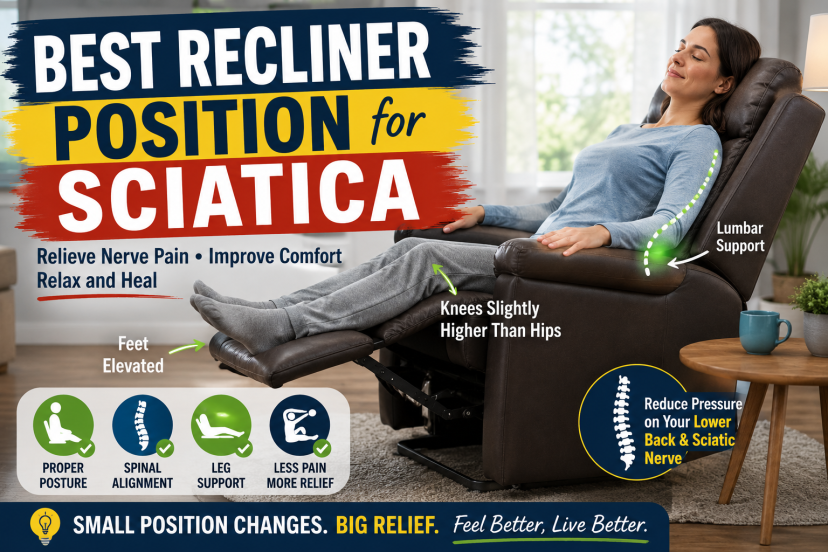
The best recliner position for sciatica is usually a slight recline of about 100–110 degrees with your lower back fully supported, hips level, knees slightly higher than your hips, and feet comfortably elevated. This position helps reduce pressure on the lumbar spine while allowing the sciatic nerve to relax.
🛋️ Why The Best Recliner Position For Sciatica Matters
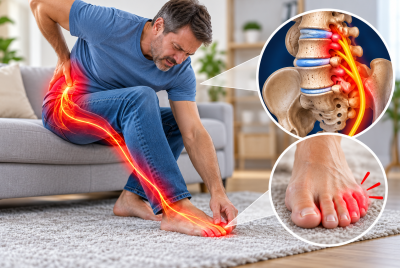
Sciatica develops when the sciatic nerve becomes irritated or compressed, often due to conditions such as:
- Herniated discs
- Spinal stenosis
- Degenerative disc disease
- Piriformis syndrome
- Bone spurs
Because the sciatic nerve begins in the lower back, your sitting position directly affects how much pressure is placed on the nerve.
A properly adjusted recliner helps:
- Reduce spinal compression
- Relax tight lower back muscles
- Improve circulation
- Decrease muscle tension
- Reduce pressure on irritated nerves
Even small adjustments can make a noticeable difference.
✅ Best Recliner Position For Sciatica Relief
Finding the best recliner position for sciatica is about supporting your entire spine rather than simply leaning back.
Recline Slightly Instead Of Fully Flat
Many people assume lying almost flat is best.
However, a moderate recline of approximately 100–110 degrees often places less stress on the lumbar spine than sitting completely upright or reclining all the way back.
This position allows your back muscles to relax while maintaining healthy spinal alignment.
Keep Your Lower Back Supported
Your lower back should remain in contact with the chair.
If there’s a gap behind your lumbar spine, use:
- A lumbar cushion
- A rolled towel
- A small orthopedic pillow
Proper lumbar support helps maintain the natural curve of your spine.
Elevate Your Legs Slightly
Raising your feet helps reduce pressure on your lower back.
Ideally:
- Knees should be slightly higher than hips.
- Legs should feel supported without locking the knees.
- Feet should rest comfortably.
Many power recliners make these adjustments easier.
🚫 Recliner Mistakes That Can Make Sciatica Worse
Even a high-quality recliner can increase discomfort if used incorrectly.
Avoid these common mistakes.
Sitting Too Long
Remaining in one position for hours allows muscles to stiffen and joints to become less mobile.
Aim to:
- Stand every 30–45 minutes.
- Walk for 2–5 minutes.
- Stretch gently.
Movement is one of the best natural treatments for sciatica.
Slouching
Sliding down in the chair rounds your lower back and increases pressure on spinal discs.
Instead:
- Sit back fully.
- Keep your hips against the backrest.
- Support your lumbar curve.
Crossing Your Legs
Crossing your legs may rotate the pelvis and increase nerve irritation.
Keep both feet supported evenly whenever possible.
🧘 Gentle Stretches To Do Before Sitting
Stretching before using your recliner may help reduce stiffness.
Knee-To-Chest Stretch
This stretch gently loosens the lower back.
Hold each side for 20–30 seconds.
Figure-4 Stretch
Helpful for relaxing the piriformis muscle, which can contribute to sciatic nerve irritation.
Move only until you feel a comfortable stretch.
Cat-Cow Stretch
This gentle yoga movement improves spinal mobility.
Perform 8–10 slow repetitions.
Hamstring Stretch
Tight hamstrings often increase tension on the lower back.
Stretch gently without bouncing.
💪 Strengthening Exercises That Support Long-Term Relief
While the best recliner position for sciatica may ease symptoms, strengthening your body helps reduce future flare-ups.
Helpful exercises include:
- Bird Dog
- Bridges
- Side Planks
- Dead Bug
- Clamshells
- Standing Hip Extensions
Focus on proper form rather than intensity.
A physical therapist can recommend exercises tailored to your condition.
🌿 Natural Ways To Reduce Sciatica While Relaxing
Several home remedies can complement good recliner posture.
Heat Therapy
Applying heat for 15–20 minutes before sitting may relax tight muscles.
Avoid falling asleep on a heating pad.
Ice Therapy
If inflammation is causing symptoms, ice packs may provide temporary relief.
Use for 15 minutes with a towel between the ice and skin.
Gentle Massage
Massage may reduce muscle tension surrounding the hips and lower back.
Foam rollers can also help some people when used carefully.
Deep Breathing
Stress often increases muscle tension.
Slow breathing while reclining can help your body relax and reduce pain sensitivity.
🪑 Choosing The Best Recliner For Sciatica
Not every recliner provides the same level of support.
Look for features such as:
- Adjustable lumbar support
- Power reclining
- Independent leg elevation
- Firm seat cushions
- Easy exit assistance (lift chairs)
- Adjustable headrest
Many adults also benefit from memory foam seat cushions for added comfort.
💼 Daily Habits That Support Sciatica Recovery
The time you spend outside your recliner matters just as much.
Avoid Sitting All Day
Even the best recliner position for sciatica can’t overcome hours of inactivity.
Alternate between:
- Walking
- Standing
- Sitting
- Gentle stretching
Improve Workplace Ergonomics
If you work at a desk, consider:
- Standing desks
- Lumbar cushions
- Ergonomic office chairs
- Adjustable monitor height
- Footrests
Better posture throughout the day often reduces evening symptoms.
Maintain A Healthy Weight
Excess weight places additional stress on the lower spine.
Even modest weight loss may reduce pressure on the sciatic nerve.
Stay Hydrated
Healthy spinal discs rely on adequate hydration.
Drink water consistently throughout the day.
🩺 Physical Therapy And Medical Treatments
If home care isn’t enough, a healthcare provider may recommend additional treatment.
Physical therapy often includes:
- Stretching
- Core strengthening
- Nerve gliding exercises
- Balance training
- Walking programs
- Posture correction
Other treatments may include:
- Anti-inflammatory medications
- Muscle relaxants
- Chiropractic care (when appropriate)
- Epidural steroid injections
- Imaging studies if symptoms persist
Surgery is generally reserved for severe cases involving significant nerve compression or progressive weakness.
🚨 When To See A Doctor Or Chiropractor
Seek medical evaluation if:
- Pain lasts longer than several weeks.
- Symptoms continue getting worse.
- Walking becomes difficult.
- Leg weakness develops.
- Numbness spreads into the foot.
- Home treatments provide little improvement.
Seek emergency medical care immediately if you experience:
- Loss of bladder or bowel control
- Numbness around the groin or saddle area
- Sudden severe weakness
- Severe pain after a fall or accident
- Fever with back pain
These symptoms require prompt medical attention.
❓ FAQs: Best Recliner Position For Sciatica
1. Is a recliner better than a couch for sciatica?
Often, yes. A supportive recliner allows better spinal positioning and leg elevation than many soft couches.
2. Should my feet be elevated with sciatica?
Slight elevation is often helpful because it reduces pressure on the lower back while improving comfort.
3. Can sitting in a recliner too long make sciatica worse?
Yes. Even in the best recliner position, sitting for extended periods can increase stiffness and nerve irritation.
4. Is a lift chair good for sciatica?
Many people find lift chairs helpful because they make standing easier and reduce strain on the lower back.
5. Should I sleep in a recliner if I have sciatica?
Some people experience temporary relief sleeping in a recliner, especially during severe flare-ups. However, a supportive bed is usually better for long-term sleep.
6. Can lumbar cushions help in a recliner?
Yes. A lumbar cushion or rolled towel can help maintain the natural curve of your lower back and improve spinal alignment.
7. What recline angle is best for sciatica?
A recline of about 100–110 degrees is often considered the most comfortable because it reduces pressure on the lumbar spine without flattening it completely.
🌟 Final Thoughts
Finding the best recliner position for sciatica can make relaxing at home much more comfortable. A slight recline, proper lumbar support, gentle leg elevation, and good posture can all help reduce pressure on the sciatic nerve and ease everyday discomfort.
Remember that a recliner is only one part of managing sciatica. Staying active, stretching regularly, strengthening your core, maintaining healthy posture, and avoiding long periods of sitting all play an important role in long-term relief.
Progress often comes from small, consistent changes rather than one quick fix. By combining smart sitting habits with healthy daily routines, you can give your body the best chance to heal and reduce future flare-ups.
Medical Disclaimer: This article is for educational purposes only and is not intended as medical advice. Always consult your physician or another qualified healthcare professional for diagnosis and treatment of sciatica, back pain, or any persistent or worsening symptoms. Never ignore professional medical advice or delay seeking care because of information you have read online.
Explore more:
- Sciatica Pain When Bending Forward
- Why Sciatica Can Cause Numb Toes
- Sciatica Pain When Coughing And Sneezing