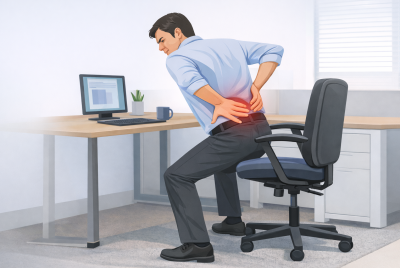
How to Prevent Sciatica Flare-Ups Naturally: Daily Habits, Posture Tips & Stretching Routines That Stop Recurring Pain

⚡ The Frustration of Recurring Sciatica Pain
Sciatica rarely appears just once. Many people deal with repeated flare-ups — pain that fades for weeks, only to return during stressful periods, long days at work, hours of sitting, or even after a poor night’s sleep.
If you’ve felt that familiar, sharp burn run down your lower back or leg and thought, “Here we go again…” — you’re not alone.
Sciatica flare-ups can be frustrating, limiting, and exhausting.
But there’s good news: You can prevent most flare-ups naturally by changing the way you sit, stand, stretch, sleep, and move throughout the day.
Small daily habits protect your sciatic nerve far more than people realize.
This guide shows you how to prevent sciatica flare-ups naturally using safe, simple, and science-backed lifestyle strategies — no medications or extreme treatments needed.
🧠 Why Sciatica Flare-Ups Happen (and How Daily Habits Affect Nerve Pain)
Sciatica pain occurs when the sciatic nerve becomes irritated, compressed, or inflamed.
Flare-ups happen when pressure increases on this nerve due to:
-
Tight hip and leg muscles
-
Weak core
-
Inactivity
-
Poor sleep positions
-
Repetitive strain
Most flare-ups don’t come from one bad movement.
👉 They come from accumulated habits that gradually irritate the nerve.
The good news?
Changing your daily routine can dramatically reduce flare-up frequency.
🪑 Improve Your Posture Habits to Prevent Sciatica Flare-Ups Naturally
Poor posture is one of the most common triggers for sciatica recurrence. It increases pressure on the lower spine and surrounding muscles, squeezing the nerve roots.
🧍♀️ Standing Posture Tips
-
Stand tall with your shoulders relaxed
-
Distribute weight evenly on both feet
-
Avoid leaning on one hip
-
Slightly engage your core throughout the day
🪑 Sitting Posture Tips
Most U.S. adults sit 6–9 hours a day — a major sciatica trigger.
For safer sitting:
-
Keep your feet flat on the floor
-
Use a lumbar support pillow (ComfiLife is a top-rated brand)
-
Sit with your hips slightly above knee height
-
Keep your back supported and avoid slouching
-
Don’t cross your legs — it twists the pelvis and irritates the nerve
😴 Sleep Posture Tips
Good nighttime posture reduces morning pain dramatically.
-
Side sleepers: Put a pillow between your knees
-
Back sleepers: Place a pillow under your knees
-
Avoid stomach sleeping — it strains your lower back
🧘♂️ Build a Daily Stretching Routine to Reduce Nerve Pressure
Daily stretching is one of the most powerful natural methods to prevent sciatica flare-ups.
Here are the top recommended stretches:
🌿 Piriformis Stretch (Most Important)
The piriformis is a small muscle that often traps or irritates the sciatic nerve.
-
Lie on your back
-
Cross one ankle over the opposite knee
-
Pull the lower leg toward your chest
-
Hold 20–30 seconds
🌿 Hamstring Stretch
Tight hamstrings pull the pelvis out of alignment, worsening nerve pressure.
Try:
-
Sitting on the floor
-
Extending one leg
-
Leaning forward gently
🌿 Hip Flexor Stretch
Great for those who sit a lot.
-
Kneel on one leg
-
Push hips forward gently
-
Stretch the front of the hip
🌿 Cat-Cow
This yoga movement lubricates the spine and eases stiffness.
🌿 Child’s Pose
Gently lengthens the lower back and hips.
⏱️ Best routine:
Stretch 5–8 minutes every morning or evening.
Consistency matters more than intensity.
💪 Strengthen Your Core and Hips for Long-Term Sciatica Prevention
Weak core and glute muscles are a major cause of chronic sciatica.
When core muscles cannot support the spine, your lower back absorbs too much pressure.
💼 Why Strength Helps Prevent Flare-Ups
-
Improves spinal stability
-
Reduces pressure on discs
-
Supports a healthier posture
-
Prevents nerve compression
💪 Best Strengthening Exercises
Do these 3–4 times per week:
-
Glute bridges – strengthen hips and lower back
-
Bird-dog – improves spinal stability
-
Side leg lifts – strengthen hip abductors
-
Pelvic tilts – reduce stiffness
-
Modified planks – build core strength safely
If you sit all day, consider a standing desk (FlexiSpot E7 is popular in the U.S.).
🏡 Make Home & Work Ergonomic Changes to Stop Sciatica Naturally
Your environment plays a big role in nerve pain.
🖥️ Workstation Alignment Tips
-
Monitor at eye level
-
Chair with firm lower-back support
-
Elbows at 90 degrees
-
Feet flat, hips slightly above knees
-
Take micro-breaks every 30 minutes
🏠 Home Ergonomics Tips
-
Avoid deep soft couches
-
Use a lumbar cushion
-
Work at a desk rather than from bed or sofa
-
Use a laptop riser for better alignment
Helpful tools:
-
Adjustable chair
-
Lumbar pillow
-
Footrest
-
Standing mat
These small upgrades prevent hours of poor posture.
🥗 Use Anti-Inflammatory Foods to Reduce Sciatica Flare-Ups Naturally
Inflammation around the sciatic nerve increases pain sensitivity.
Eating anti-inflammatory foods can reduce flare-ups.
🌿 Foods That Reduce Inflammation
-
Salmon, tuna, sardines
-
Olive oil
-
Leafy greens
-
Berries
-
Turmeric & ginger
-
Nuts and seeds
-
Avocado
🍔 Foods to Avoid
-
Processed meats
-
Sugary drinks
-
Fried foods
-
Excess salt
-
Refined carbs
Supplements U.S. readers often use:
-
Magnesium glycinate
-
Turmeric + black pepper
-
Fish oil (omega-3s)
😌 Reduce Stress — A Hidden Trigger for Sciatica
Stress tightens the muscles in your lower back, hips, and glutes — the exact area connected to sciatica pain.
🧘♀️ Stress-Reduction Habits That Work
-
Deep breathing exercises
-
Meditation apps (Calm, Headspace)
-
Walking outdoors
-
Stretch breaks during work
-
Heat therapy in the evening
Even just 5 minutes can significantly help.
🚶♂️ Stay Active — Avoid Long Periods of Sitting
Sitting compresses your lower back and sciatic nerve, especially on long workdays.
🚶 Daily Movement Goals
-
Walk 20–30 minutes every day
-
Stand up every 30–45 minutes
-
Do ankle circles while sitting
-
Stretch once per hour
-
Alternate between sitting and standing
Movement keeps the nerve gliding smoothly.
🧊 Use Heat and Ice Therapy to Calm Early Flare-Ups
When you feel a flare-up starting:
-
Heat relaxes tight muscles
-
Ice reduces inflammation
Some people alternate between both.
Heated lumbar pads or cold therapy packs work well during early flare-ups.
⚠️ When to See a Doctor or Chiropractor
You should seek professional help if:
-
Pain lasts more than 4–6 weeks
-
You experience weakness or numbness
-
The pain worsens instead of improving
-
You cannot sit or walk comfortably
-
You have bladder or bowel issues (emergency)
Doctors may recommend physical therapy, imaging, or spinal alignment treatments.
❓ FAQs About Preventing Sciatica Flare-Ups Naturally
1. What is the best way to prevent sciatica naturally?
Daily stretching, good posture, and staying active are the top strategies.
2. Does walking reduce sciatica flare-ups?
Yes — walking boosts circulation and reduces inflammation.
3. Which foods reduce sciatica pain?
Leafy greens, omega-3s, berries, turmeric, and nuts.
4. Is yoga good for preventing sciatica?
Gentle yoga improves mobility and reduces nerve irritation.
5. Can stress really trigger sciatica pain?
Yes — stress tightens muscles and increases nerve sensitivity.
6. Does sitting too long cause flare-ups?
Absolutely. Sitting compresses the sciatic nerve and irritates spinal discs.
7. Are mattresses important for sciatica prevention?
Yes — medium-firm mattresses typically offer the best spinal support.
🌈 Conclusion: Natural Prevention Starts With Consistency
Sciatica flare-ups don’t happen overnight — and neither does healing.
The key to preventing recurring pain is daily consistency:
-
Move often
-
Stretch your hips and legs
-
Maintain good posture
-
Eat anti-inflammatory foods
-
Reduce stress
-
Upgrade your ergonomics
Small steps add up to major improvements.
💬 “Your habits are your medicine — build the ones that protect your spine.”
With the right routine, you can significantly reduce flare-ups and regain mobility, comfort, and control over your life.
⚕️ Medical Disclaimer
This article is for informational purposes only and is not medical advice. Always consult a healthcare provider before starting new exercise routines, treatments, or supplements for sciatica or chronic pain.
 Explore more:
- How To Get Rid Of Sciatic Nerve Pain
- Where Is Your Sciatic Nerve Located?
- How To Alleviate Sciatic Nerve Pain