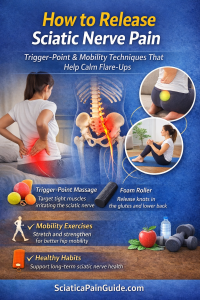
How to Release Sciatic Nerve Pain: Trigger-Point and Mobility Techniques That Help Calm Flare-Ups
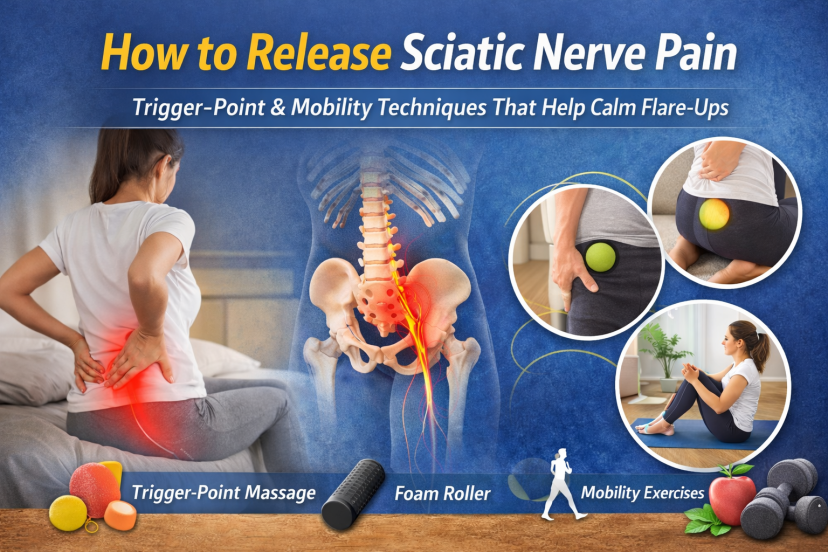
Sciatic nerve pain can feel overwhelming. One moment, you’re sitting normally — the next, a sharp shooting pain travels down your leg. You might feel burning in your lower back, tingling in your calf, numbness in your foot, or even weakness when trying to stand.
For many people, simple activities become difficult:
-
Sitting at a desk for long periods
-
Driving more than a few minutes
-
Walking up stairs
-
Getting comfortable at night
Sciatica happens when the sciatic nerve becomes irritated or compressed, often due to tight muscles, disc pressure, or inflammation near the spine or hips.
The good news is that many people find relief when they learn how to release sciatic nerve pain through targeted trigger-point work, gentle mobility exercises, and daily movement habits.
This guide explains practical techniques that can help reduce nerve irritation and support healthier movement.
⚡ Quick Answer: How to Release Sciatic Nerve Pain
If you’re wondering how to release sciatic nerve pain, these approaches are commonly recommended:
• Trigger-point massage for tight hip muscles
• Gentle piriformis and glute stretches
• Foam rolling around the hips and hamstrings
• Core-strengthening mobility exercises
• Posture and movement adjustments during the day
These methods help reduce pressure on the sciatic nerve, improve circulation, and support recovery from flare-ups.
🧠 What Causes Sciatic Nerve Pain?
Understanding the cause helps you learn how to release sciatic nerve pain more effectively.
The sciatic nerve runs from the lower spine through the hips and down each leg. When tissues around this nerve become tight or inflamed, they can compress the nerve and trigger symptoms.
Common causes include:
Herniated discs
A bulging or ruptured spinal disc can press against nerve roots.
Tight piriformis muscle
This small muscle deep in the hip can irritate the sciatic nerve.
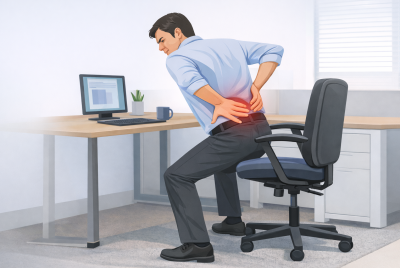
Prolonged sitting
Long hours in a chair can tighten hip muscles and compress nerves.
Degenerative spine changes
Age-related changes can reduce the space around nerves.
Muscle trigger points
Knots in the glutes or lower back may refer pain along the sciatic pathway.
Many people find that learning how to release sciatic nerve pain involves addressing muscle tension around the hips and spine.
⚠️ Common Symptoms of Sciatica
Sciatica symptoms vary from person to person.
Typical signs include:
• Sharp or electric pain down the leg
• Burning sensation in the lower back or hip
• Tingling or numbness in the calf or foot
• Muscle weakness in the leg
• Pain that worsens when sitting
• Discomfort when standing up
Symptoms often affect one side of the body.
If symptoms become severe or persistent, medical evaluation is recommended.
💪 Trigger-Point Techniques to Release Sciatic Nerve Pain
Trigger points are tight knots in muscle fibers that may press on nearby nerves.
Learning how to release sciatic nerve pain often involves relaxing these tight areas.
Foam rolling for the glutes
Foam rolling helps loosen tight hip muscles.
Steps:
-
Sit on a foam roller
-
Cross one ankle over the opposite knee
-
Lean slightly toward the painful side
-
Roll slowly for 30–60 seconds
Focus on tender spots in the glutes.
Tennis ball trigger-point massage
A tennis ball works well for deeper pressure.
How to do it:
-
Stand with your back against a wall
-
Place a tennis ball between the wall and your glute
-
Slowly lean into the ball
-
Hold pressure on tight spots for 20–30 seconds
This technique can help reduce muscle tension around the sciatic nerve.
Piriformis muscle release
The piriformis is a common source of sciatic irritation.
To release it:
-
Sit on a massage ball
-
Lean slightly toward the painful hip
-
Apply gentle pressure for 20 seconds
Regular trigger-point work may improve circulation and mobility.
🧘♀️ Mobility Exercises That Help Release Sciatic Nerve Pain
Mobility exercises help restore movement and reduce nerve pressure.
Here are several exercises often recommended when learning how to release sciatic nerve pain.
Knee-to-chest stretch
This stretch reduces lower back pressure.
Steps:
-
Lie on your back
-
Pull one knee toward your chest
-
Hold for 20 seconds
-
Switch sides
Repeat 3–4 times.
Figure-4 stretch
This stretch targets the piriformis muscle.
Steps:
-
Lie on your back
-
Cross one ankle over the opposite knee
-
Pull the bottom leg toward your chest
-
Hold for 20–30 seconds
Cat-cow spine mobility
This movement improves spinal flexibility.
Steps:
-
Start on hands and knees
-
Arch your back upward
-
Slowly drop your belly down
-
Repeat 10 times
Regular mobility exercises can help support how to release sciatic nerve pain naturally.
🌿 Daily Habits That Help Prevent Sciatica Flare-Ups
Daily habits play a major role in preventing flare-ups.
If you’re working on how to release sciatic nerve pain, these lifestyle adjustments can help.
Take movement breaks
Sitting too long increases nerve pressure.
Try:
• Standing every 30 minutes
• Short walking breaks
• Gentle hip stretches
Improve sitting posture
Posture influences nerve compression.
Helpful adjustments:
• Keep feet flat on the floor
• Use lumbar support
• Avoid slouching forward
Strengthen core muscles
A stronger core stabilizes the spine.
Good exercises include:
• Bird dog
• Glute bridges
• Side planks
These movements support long-term nerve health.
👩💻 Real-Life Scenario: Releasing Sciatic Pain from Desk Work
Consider Mark, a 45-year-old graphic designer who spends most of his day sitting.
After months of leg pain and tingling, he began researching how to release sciatic nerve pain.
He introduced several simple changes:
• Foam rolling his glutes each evening
• Performing a 5-minute stretch routine twice daily
• Standing every 30 minutes during work
• Using a lumbar support cushion
Within several weeks, his flare-ups became less frequent, and his mobility improved.
While experiences vary, consistent habits often make a noticeable difference.
✅ Self-Assessment Checklist
Use this checklist to see if your habits might be contributing to sciatic pain.
Ask yourself:
- Do I sit more than 6 hours per day?
- Do I rarely stretch my hips or glutes?
- Do I experience tightness in my lower back?
- Do I feel pain when standing after sitting?
- Do I lack regular mobility or strength exercises?
If several answers are yes, learning how to release sciatic nerve pain through movement and muscle care may help.
⚖️ Expectation vs Reality: Treating Sciatica
Many people expect instant relief.
But real recovery often looks different.
Expectation
• One stretch fixes the problem
• Pain disappears overnight
• A single massage solves everything
Reality
• Muscle tension takes time to release
• Multiple strategies work best together
• Consistency produces the best results
Understanding this helps people approach how to release sciatic nerve pain with patience and realistic expectations.
🩺 When to Seek Medical Help
While many cases improve with conservative care, certain symptoms require medical attention.
Contact a healthcare provider if you experience:
• Severe leg weakness
• Loss of bladder or bowel control
• Numbness in the groin area
• Pain lasting longer than several weeks
Doctors may recommend:
• Physical therapy
• Anti-inflammatory medications
• Imaging tests such as MRI
• Targeted injections
Most cases improve without surgery.
❓ FAQs About How to Release Sciatic Nerve Pain
What is the fastest way to release sciatic nerve pain?
Gentle stretching, heat therapy, and trigger-point massage may help reduce muscle tension and relieve pressure on the sciatic nerve.
Can massage release sciatic nerve pain?
Massage may help relax tight muscles around the sciatic nerve, particularly the glutes and piriformis muscle.
Does walking help sciatic nerve pain?
Light walking can improve circulation and reduce stiffness, making it a helpful part of learning how to release sciatic nerve pain.
Can tight muscles cause sciatica?
Yes. Tight hip muscles — especially the piriformis — may compress the sciatic nerve and trigger symptoms.
How long does sciatic nerve pain last?
Mild cases may improve within a few weeks, while persistent cases may require medical evaluation and physical therapy.
🌟 Conclusion
Sciatic nerve pain can feel limiting, but many people regain comfort by focusing on the right movement habits.
Learning how to release sciatic nerve pain often involves a combination of:
• Trigger-point muscle release
• Mobility exercises
• Posture improvements
• Daily movement routines
Small, consistent actions can gradually reduce pressure on the nerve and improve flexibility.
If you’re dealing with sciatica, start slowly, stay consistent, and listen to your body. Many people find that these simple steps help them move more freely again.
Disclaimer
This article is for informational purposes only and does not constitute medical advice. Always consult a qualified healthcare professional before starting new exercise routines or treatments, especially if you have severe symptoms or existing medical conditions.
 Explore more:
- Sciatic Nerve Anatomy
- Numb Toes from Sciatica
- Chiropractic For Sciatica: Evidence-Based Pros and Cons