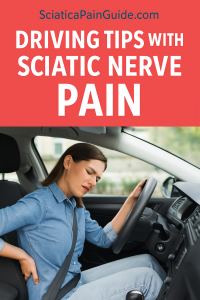
Driving Tips with Sciatica Nerve Pain: Stay Comfortable on the Road
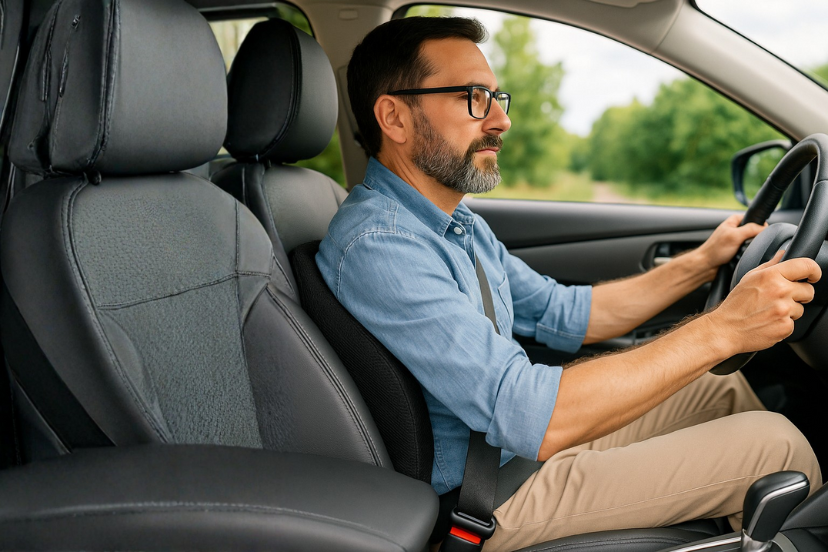
How to Drive Pain-Free with Smart Posture, Cushion Support, and Movement Breaks
⚡ The Challenge of Driving with Sciatica
If you live with sciatic nerve pain, you know that long drives can turn into long ordeals.
That burning, tingling, or shooting pain down your leg can start minutes after sitting behind the wheel — and worsen with every mile.
Driving puts your body in a fixed position that compresses the lower spine, hips, and legs. For anyone dealing with nerve inflammation, it’s like sitting on a pressure switch.
But here’s the good news: with the right setup, posture, and movement routine, you can drive comfortably — even during flare-ups.
This guide shares expert-approved driving tips for people with sciatica nerve pain, including how to adjust your seat, choose proper lumbar support, and protect your back during long road trips.
🧠 Why Driving Triggers Sciatic Nerve Pain
When you sit for long periods, your sciatic nerve — the longest nerve in the body — can become compressed by tight muscles, poor seat posture, or spinal pressure.
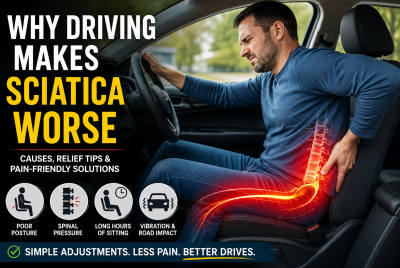
🔍 Key Causes of Sciatica Pain While Driving:
-
Poor seat posture: Slouching or leaning forward rounds the lower spine.
-
Unsupported lumbar region: Lack of lower-back support strains the discs.
-
Vibration and road impact: Continuous micro-vibrations irritate nerve roots.
-
Tight hip flexors and hamstrings: Reduce circulation and increase stiffness.
-
Long drives without breaks: Inactivity causes inflammation and nerve sensitivity.
🪑 Seat Setup: The Foundation of Pain-Free Driving
Proper seat alignment can make or break your comfort level. Small changes here drastically reduce nerve pressure and back strain.
✅ 1. Adjust Seat Height and Distance
Your knees should be slightly lower than your hips and bent at about 120° — not locked.
Move the seat close enough that you can press the pedals without leaning forward.
✅ 2. Support Your Lower Back
Use a lumbar support cushion or rolled-up towel at the small of your back.
It preserves the spine’s natural “S” curve and prevents slumping.
🛋️ Top U.S. picks:
-
ComfiLife Lumbar Support Pillow (for cars and office chairs)
-
Everlasting Comfort Seat Cushion Set (for long commutes)
✅ 3. Recline Slightly (Not Too Much)
A 100°–110° recline angle keeps the back relaxed while maintaining focus.
Too upright = spinal compression; too reclined = slouching.
✅ 4. Adjust Headrest and Steering Wheel
Position the headrest so the middle touches the back of your head, not your neck.
Bring the steering wheel close enough that your elbows stay slightly bent.
🧍♀️ Posture Tips During the Drive
Your posture determines how your spine distributes pressure — and whether pain worsens or fades.
🌿 Keep Your Back “Tall but Relaxed”
Sit with your shoulders slightly back and your chest open. Avoid tensing your upper back or neck.
💺 Sit Evenly on Both Hips
Favoring one side of your pelvis can worsen nerve irritation on that side. Shift gently every 10–15 minutes.
🦵 Move Your Legs Periodically
Flex your ankles, wiggle your toes, or straighten each leg slightly when safe to keep blood flowing.
🕐 Long-Drive Survival Tips for Sciatica Pain
Even with perfect posture, the key to comfort on long drives is movement.
Your sciatic nerve needs circulation and periodic relief from compression.
🚦 1. Take Frequent Stretch Breaks
Every 45–60 minutes, pull over safely and walk for 3–5 minutes.
Stretch your hamstrings, hip flexors, and glutes — these muscles directly affect the sciatic nerve.
Quick roadside stretches:
-
Knee-to-chest stretch
-
Standing hamstring stretch
-
Gentle side bends
🧊 2. Use Heat or Cold for Relief
-
Heat pads: Loosen tight muscles before long drives.
-
Cold packs: Calm inflammation after long trips.
(Use car-safe heated seat covers or reusable gel packs.)
🧴 3. Try a Massage Cushion
A vibration or shiatsu massage cushion can ease tension in the lower back and thighs.
Look for models that plug into your car’s 12-V outlet.
💡 Before You Start the Car: Pre-Drive Warm-Up
Think of driving like an endurance sport — warming up prevents strain.
🧘♂️ Do These 3 Quick Moves Before Getting In:
-
Pelvic Tilts – Loosen lower back muscles.
-
Hip Circles – Open tight hips and improve range of motion.
-
Hamstring Stretch – Reduce tension in the legs and glutes.
💬 Even 2–3 minutes of prep can dramatically reduce discomfort on the road.
🧰 Helpful Accessories for Sciatica-Friendly Driving
Small tools can make long trips far more manageable.
| Product Type | Benefit | Example |
|---|---|---|
| Lumbar Cushion | Supports natural back curve | ComfiLife Lumbar Pillow |
| Seat Wedge Cushion | Promotes hip alignment | Everlasting Comfort Wedge |
| Heated Seat Pad | Eases muscle tightness | Snailax Heated Pad |
| Massage Cushion | Relieves tension on long drives | Zyllion Shiatsu Back Massager |
| Portable Back Brace | Adds stability for long commutes | Mueller Lumbar Support Belt |
🧘♀️ Stretching After Driving: Reset Your Spine
After long drives, your muscles shorten and stiffen. Take five minutes to stretch once you reach your destination.
✅ 1. Standing Figure-4 Stretch
Cross one ankle over the opposite knee and bend slightly to release tension in the glutes.
✅ 2. Seated Forward Fold
Sit on the edge of a chair and lean gently forward to stretch your hamstrings.
✅ 3. Cat-Cow Stretch
On all fours, alternate arching and rounding your back — perfect for decompression after sitting.
✅ 4. Gentle Twist
Sit upright, place your right hand on your left knee, and twist slowly. Repeat the other side.
🌿 Tip: Pair stretches with deep breathing — it helps reduce nerve tension and stress hormones.
🧘♂️ Post-Drive Recovery Routine (At Home)
Your post-drive routine is as important as your driving posture.
These habits prevent stiffness from turning into recurring pain.
-
Use Heat Therapy: Apply a heating pad for 15–20 minutes.
-
Do Core Stretches: Try bridges or bird-dog exercises.
-
Foam Roll Your Glutes: Target trigger points that irritate the sciatic nerve.
-
Hydrate: Long drives dehydrate muscles — water keeps discs flexible.
-
Lie Flat on the Floor: Resting flat for 5–10 minutes resets spinal alignment.
⚠️ When to See a Doctor or Chiropractor
Occasional tightness is normal — but persistent or severe pain needs attention.
Seek medical help if:
-
Pain lasts longer than 2–3 weeks despite posture correction
-
You experience numbness or weakness in one leg or foot
-
Pain radiates below the knee or worsens when driving
-
You lose control of bladder or bowel functions
-
Sitting becomes painful even for short periods
A chiropractor, physical therapist, or orthopedic doctor can evaluate spinal alignment, check for herniated discs, and guide safe exercises.
❓ 7 Common FAQs About Driving with Sciatica Nerve Pain
1. What’s the best sitting position for driving with sciatica?
Keep hips slightly above knees, use lumbar support, and recline your seat 100–110°.
2. Is it safe to drive with sciatica nerve pain?
Yes, as long as pain is manageable and you take regular movement breaks. Avoid driving during severe flare-ups.
3. What car seat is best for sciatica?
Ergonomic seats with adjustable lumbar support and cushioning work best. Use portable support if your car lacks it.
4. Can I take pain medication before driving?
You can use over-the-counter NSAIDs, but avoid any medication that causes drowsiness. Always follow your doctor’s advice.
5. Does cruise control help reduce pain?
Yes — it allows you to relax your legs and shift position slightly during long drives.
6. Should I stretch while sitting in traffic?
Yes, gentle ankle rolls or glute squeezes help keep circulation moving without leaving your seat.
7. How can I prevent sciatica flare-ups on road trips?
Use a lumbar pillow, take breaks every hour, and stretch before and after long drives.
🌈 Conclusion: Drive Smart, Move Often, Stay Pain-Free
Driving with sciatica doesn’t have to mean suffering behind the wheel.
By combining lumbar support, mindful posture, frequent breaks, and simple stretching, you can protect your sciatic nerve and enjoy pain-free travel.
Remember — the goal isn’t just to manage pain, but to create lasting comfort through movement and awareness.
💬 “Drive with balance, not tension — every small adjustment adds up to big relief.”
⚕️ Medical Disclaimer
This article is for informational purposes only and does not replace medical advice. Always consult your doctor or physical therapist before making changes to your treatment, exercise, or driving routine.
 Explore more:
- Nerve Flossing vs Stretching: What’s Better for Sciatica?
- Stretches To Relieve Sciatic Nerve Pain
- How To Get Rid Of Sciatic Nerve Pain