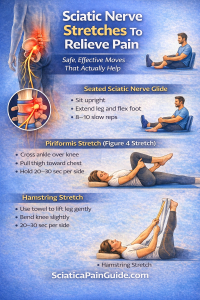
Sciatic Nerve Stretches To Relieve Pain: Safe, Effective Moves That Actually Help

Sciatic nerve pain can feel overwhelming. One wrong movement can send sharp, burning pain from your lower back down your leg, making sitting, walking, or even sleeping difficult. If you’re searching for sciatic nerve stretches to relieve pain, you’re likely looking for relief that doesn’t involve medications, injections, or surgery.
The good news is that the right stretches—done gently and consistently—can significantly reduce sciatic nerve pain by easing pressure, improving mobility, and calming irritated nerves. This guide explains which stretches help, which to avoid, and how to stretch safely so you support healing instead of making symptoms worse.
⚡ Understanding Sciatic Nerve Pain Before You Stretch
Sciatica occurs when the sciatic nerve becomes irritated or compressed. This nerve runs from your lower spine, through the hips and glutes, and down each leg. Stretching can help—but only if you understand why the nerve is irritated.
Common Causes Of Sciatic Nerve Pain
-
Tight piriformis or glute muscles
-
Herniated or bulging discs
-
Hamstring tightness
-
Poor posture and prolonged sitting
-
Weak core and hip muscles
Stretching works best when it reduces tension around the nerve, not when it aggressively pulls on it.
🧠 Why Gentle Sciatic Nerve Stretches Relieve Pain
Nerves are sensitive tissues. Unlike muscles, they don’t respond well to forceful stretching.
Benefits Of Proper Sciatic Nerve Stretches
-
Reduce nerve compression
-
Improve blood flow to the nerve
-
Decrease muscle tension
-
Restore natural movement patterns
When done correctly, sciatic nerve stretches to relieve pain help the nerve “glide” smoothly rather than remain trapped or inflamed.
🧘♀️ Safety Rules Before Starting Sciatic Nerve Stretches
Before jumping into any routine, follow these safety principles.
Stretching Guidelines
-
Stretch slowly and gently
-
Stop if pain shoots or sharpens
-
Breathe normally—never hold your breath
-
Stretch daily, not aggressively
Pain is a warning signal. Relief-focused stretching should feel mildly uncomfortable, not painful.
🌿 The Best Sciatic Nerve Stretches To Relieve Pain
These stretches are widely recommended by physical therapists and are safe for most people when done correctly.
💡 Seated Sciatic Nerve Glide (Beginner-Friendly)
This is one of the safest ways to start.
How To Do It
-
Sit upright in a chair
-
Extend one leg straight out
-
Flex your foot gently upward
-
Lower the leg and repeat
Why It Helps
-
Encourages nerve mobility
-
Reduces stiffness without overstretching
-
Ideal for acute sciatica
Repeat 8–10 slow reps per side.
🧘♀️ Piriformis Stretch (Figure-4 Stretch)
The piriformis muscle often compresses the sciatic nerve.
How To Do It
-
Lie on your back
-
Cross one ankle over the opposite knee
-
Gently pull the uncrossed leg toward your chest
Why It Helps
-
Reduces glute muscle tension
-
Frees trapped nerve pathways
Hold for 20–30 seconds, 2–3 times per side.
🌱 Hamstring Stretch (Modified And Safe)
Tight hamstrings can increase nerve tension.
How To Do It
-
Lie on your back
-
Lift one leg with a towel or strap
-
Keep knee slightly bent
-
Gently raise the leg until mild stretch
Why It Helps
-
Decreases the pull on the sciatic nerve
-
Improves leg mobility
Avoid locking the knee or forcing the range of motion.
🪑 Knee-To-Chest Stretch (Lower Back Relief)
This stretch reduces lower spine pressure.
How To Do It
-
Lie on your back
-
Pull one knee toward your chest
-
Keep the other leg relaxed
-
Switch sides
Why It Helps
-
Opens spinal spaces
-
Reduces nerve compression
Hold 20 seconds, repeat 2–3 times.
💪 Standing Hip Flexor Stretch (Posture Support)
Hip flexor tightness can worsen sciatic pain.
How To Do It
-
Step one foot forward into a lunge
-
Keep torso upright
-
Gently shift weight forward
Why It Helps
-
Improves pelvic alignment
-
Reduces lower-back strain
This stretch pairs well with posture correction.
🚫 Stretches To Avoid With Sciatic Nerve Pain
Not all stretches are helpful—some can make pain worse.
Avoid These Early On
-
Toe-touch stretches
-
Deep forward folds
-
Aggressive spinal twists
-
Ballistic or bouncing stretches
If a stretch increases leg pain, stop immediately.
🧠 How Often Should You Do Sciatic Nerve Stretches?
Consistency matters more than intensity.
Recommended Routine
-
1–2 sessions daily
-
5–10 minutes total
-
Focus on quality over quantity
Short, frequent stretching sessions are more effective than long, intense ones.
🪑 Posture And Movement Matter As Much As Stretching
Stretching alone won’t fix sciatica if daily habits keep irritating the nerve.
Posture Tips That Support Stretching
-
Use a lumbar cushion when sitting
-
Stand up every 30–45 minutes
-
Avoid slouching or leaning to one side
Stretching works best when combined with better posture.
🌿 Natural Support To Enhance Stretching Results
Reducing inflammation helps stretches work faster.
Helpful Lifestyle Habits
-
Stay hydrated for nerve conductivity
-
Eat anti-inflammatory foods (salmon, leafy greens)
-
Use cold therapy during flare-ups
Common U.S. Supplements People Use
-
Magnesium for muscle relaxation
-
Omega-3 fatty acids
-
B-complex vitamins
Always consult a healthcare provider before supplement use.
🩺 When Stretching Isn’t Enough
Stretching helps most cases—but not all.
Seek Medical Care If You Have
-
Pain worsening after 6–8 weeks
-
Progressive leg weakness
-
Numbness spreading down the leg
-
Loss of bladder or bowel control (emergency)
A physical therapist can tailor sciatic nerve stretches to relieve pain safely for your condition.
❓ FAQs: Sciatic Nerve Stretches To Relieve Pain
1. Do sciatic nerve stretches really work?
Yes, when done gently and consistently, they reduce nerve irritation and muscle tension.
2. Should I stretch during a sciatica flare-up?
Yes—but only gentle nerve glides and light stretches, never aggressive movements.
3. How long before stretches reduce pain?
Many people feel improvement within 1–3 weeks of daily practice.
4. Is walking better than stretching?
They work best together. Walking improves circulation; stretching reduces tension.
5. Can stretching make sciatica worse?
Yes, if stretches are too aggressive or poorly chosen.
6. Should I stretch in the morning or evening?
Both are helpful. Morning loosens stiffness; evening reduces tension from the day.
7. Can sciatic nerve pain go away completely?
In many cases, yes—especially when stretching is combined with posture and strength work.
✅ Final Takeaway: Stretch Smart, Not Hard
Using sciatic nerve stretches to relieve pain isn’t about pushing through discomfort—it’s about calming the nerve, reducing pressure, and restoring healthy movement. Gentle, consistent stretching paired with posture awareness and lifestyle support can dramatically reduce pain and prevent future flare-ups.
Listen to your body, move slowly, and stay consistent. Relief is possible—and often closer than you think.
⚠️ Medical Disclaimer
This article is for educational purposes only and does not substitute professional medical advice. Always consult a qualified healthcare provider before beginning any exercise or stretching program, especially if pain is severe, worsening, or accompanied by neurological symptoms.
 Explore more:
- Best Treatment For Sciatic Nerve Pain
- Driving Tips with Sciatica Nerve Pain
- Sharp Pain Down Leg: Sciatica Relief That Works