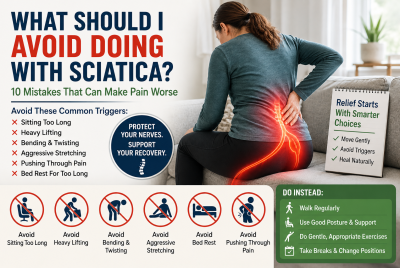
What Should I Avoid Doing With Sciatica? 15 Mistakes That Can Make It Worse
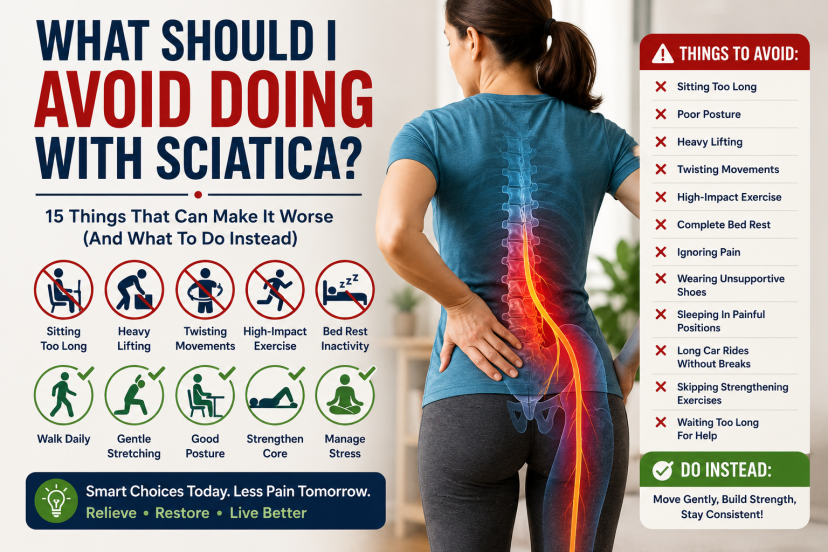
Sciatica has a way of turning simple daily activities into painful challenges. Sitting through a work meeting, driving to the grocery store, bending to tie your shoes, or even getting out of bed can suddenly become difficult. It’s natural to wonder if something you’re doing is making your symptoms worse.
If you’ve been asking, What should I avoid doing with sciatica? you’re asking one of the most important questions for recovery. While staying active is usually beneficial, certain habits, movements, and everyday routines can increase pressure on irritated nerves and slow healing.
The encouraging news is that many people experience significant improvement by avoiding common mistakes while replacing them with healthier movement habits. In this guide, you’ll learn what to avoid, what to do instead, and practical ways to reduce sciatic nerve irritation naturally.
⭐ Quick Answer
What should I avoid doing with sciatica? Avoid prolonged sitting, heavy lifting with poor technique, twisting your spine, high-impact exercise during flare-ups, extended bed rest, poor posture, and ignoring worsening symptoms. Gentle movement, proper body mechanics, and consistent self-care usually support recovery better than complete inactivity.
🚫 Why Certain Activities Can Make Sciatica Worse
Sciatica develops when one or more spinal nerve roots become irritated or compressed.
Common causes include:
- Herniated discs
- Spinal stenosis
- Degenerative disc disease
- Piriformis syndrome
- Spondylolisthesis
When nerves are already inflamed, unnecessary pressure or repeated irritation can increase:
- Pain
- Tingling
- Numbness
- Muscle weakness
- Burning sensations
Knowing what should I avoid doing with sciatica can help reduce unnecessary flare-ups while your body heals.
⚠️ 15 Things To Avoid With Sciatica
1. Sitting For Too Long
Extended sitting places pressure on the lumbar spine and sciatic nerve.
Instead:
- Stand every 30–45 minutes.
- Walk for a few minutes.
- Stretch gently.
A lumbar support cushion can improve comfort during work.
2. Poor Sitting Posture
Slouching increases stress on spinal discs.
Better posture includes:
- Feet flat
- Hips slightly above knees
- Supported lower back
- Relaxed shoulders
3. Heavy Lifting
Improper lifting often triggers sciatica flare-ups.
Always:
- Bend your knees.
- Keep objects close.
- Tighten your core.
- Avoid twisting.
4. Twisting While Carrying Weight
Twisting places additional pressure on irritated spinal discs.
Instead:
- Turn your whole body.
- Move your feet.
- Keep your shoulders aligned with your hips.
5. High-Impact Exercise During Flare-Ups
Activities such as:
- Sprinting
- Jumping
- Basketball
- Intense HIIT workouts
may temporarily worsen symptoms during acute inflammation.
Gentle walking is usually a better option.
6. Complete Bed Rest
Years ago, prolonged bed rest was often recommended.
Today, research generally supports gentle movement instead.
Too much inactivity can lead to:
- Muscle weakness
- Joint stiffness
- Slower recovery
7. Ignoring Pain Signals
Pain is your body’s way of asking for change.
Don’t repeatedly push through severe sciatic pain.
Instead:
- Modify activities.
- Rest briefly if needed.
- Resume gentle movement as tolerated.
8. Wearing Unsupportive Shoes
Old shoes or flat sandals may worsen posture and walking mechanics.
Choose:
- Good arch support
- Cushioned soles
- Stable walking shoes
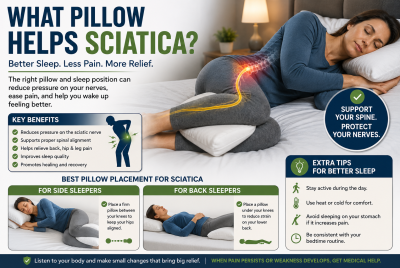
9. Sleeping In Painful Positions
Sleeping on your stomach often increases lumbar extension.
Try instead:
- Side sleeping with a pillow between your knees.
- Back sleeping with a pillow beneath your knees.
10. Lifting While Reaching
Avoid picking up objects far from your body.
Bring the object closer before lifting.
11. Long Car Rides Without Breaks
Driving often combines sitting, vibration, and limited movement.
If possible:
- Stop every hour.
- Walk briefly.
- Stretch gently.
A lumbar cushion may improve driving comfort.
12. Skipping Core Strengthening
Weak core muscles increase strain on the lower back.
A physical therapist can recommend safe exercises like:
- Pelvic tilts
- Bird dogs
- Bridges
- Modified planks
13. Poor Workstation Ergonomics
Working from home without proper support often aggravates sciatica.
Helpful upgrades include:
- Adjustable chair
- Standing desk
- Monitor at eye level
- Keyboard positioned comfortably
14. Smoking
Smoking reduces blood flow to spinal discs and may contribute to disc degeneration over time.
Quitting benefits both overall health and spinal health.
15. Waiting Too Long To Seek Help
Persistent symptoms deserve evaluation.
Early treatment often prevents problems from becoming more severe.
🏡 What To Do Instead
Avoiding harmful habits is only half the solution.
Healthy replacements often make the biggest difference.
Walk Daily
Walking improves:
- Circulation
- Joint mobility
- Muscle function
- Nerve movement
Start with short walks and gradually increase distance.
Stretch Gently
Helpful stretches include:
- Piriformis Stretch
- Figure Four Stretch
- Hamstring Stretch
- Hip Flexor Stretch
- Cat-Cow Stretch
Never force painful stretches.
Use Heat Or Ice
Ice may help:
- Acute flare-ups
- Swelling
- Sharp pain
Heat may help:
- Tight muscles
- Chronic stiffness
- Morning discomfort
Many people alternate both.
💪 Physical Therapy Can Speed Recovery
Physical therapy is one of the most evidence-supported treatments for sciatica.
Treatment often includes:
- Core strengthening
- Flexibility exercises
- Nerve gliding exercises
- Walking assessment
- Posture correction
- Hip strengthening
- Balance training
A therapist can also identify movement habits that may be keeping symptoms active.
🌿 Lifestyle Changes That Support Healing
Small daily habits often produce lasting improvements.
Maintain A Healthy Weight
Extra weight increases pressure on the spine.
Even modest weight loss may reduce symptoms.
Stay Hydrated
Healthy spinal discs rely on proper hydration.
Drink water consistently throughout the day.
Eat An Anti-Inflammatory Diet
Focus on foods like:
- Fruits
- Vegetables
- Fatty fish
- Whole grains
- Nuts
- Olive oil
Limit highly processed foods when possible.
Consider Supplements
Some people discuss these with their healthcare provider:
- Vitamin B12 (if deficient)
- Vitamin D (if deficient)
- Magnesium
- Omega-3 fatty acids
These are not cures but may support nerve and muscle health.
Manage Stress
Stress increases muscle tension and can amplify pain.
Helpful techniques include:
- Deep breathing
- Meditation
- Gentle yoga
- Mindfulness
- Relaxation exercises
🪑 Helpful Products For Daily Comfort
Many U.S. readers find these products useful alongside exercise and medical care:
- Ergonomic lumbar cushions
- Standing desks
- Adjustable office chairs
- Heating pads
- Reusable cold packs
- Foam rollers (used gently)
- Supportive walking shoes
- Temporary back braces during certain activities
Remember that products should support—not replace—healthy movement habits.
🩺 When To See A Doctor Or Chiropractor
Seek medical or chiropractic evaluation if:
- Pain lasts more than several weeks.
- Symptoms continue despite home treatment.
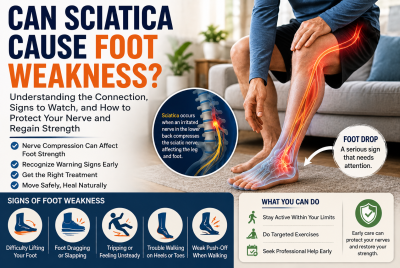
- Leg weakness develops.
- Walking becomes increasingly difficult.
- Numbness worsens.
- Pain repeatedly interrupts sleep.
- Daily activities become difficult.
Seek emergency medical care immediately if you develop loss of bladder or bowel control, numbness in the saddle area (around the groin and inner thighs), or rapidly worsening weakness in the leg or foot.
❓ Frequently Asked Questions
1. What should I avoid doing with sciatica during a flare-up?
Avoid prolonged sitting, heavy lifting, twisting motions, high-impact exercise, and pushing through severe pain. Gentle walking is often a better choice.
2. Is walking better than bed rest for sciatica?
For most people, yes. Gentle walking usually helps maintain mobility and reduce stiffness, while prolonged bed rest may slow recovery.
3. Can sitting all day make sciatica worse?
Yes. Sitting for extended periods increases pressure on the lower spine and may aggravate nerve irritation.
4. Should I stop exercising if I have sciatica?
Not necessarily. Low-impact exercise is often beneficial, but avoid activities that significantly increase pain. A physical therapist can help you choose safe exercises.
5. Does lifting heavy objects worsen sciatica?
It can, especially when lifting with poor technique. Always bend your knees and avoid twisting while lifting.
6. Can poor posture trigger sciatica pain?
Yes. Slouching and poor spinal alignment may increase pressure on irritated nerves.
7. Will sciatica eventually heal on its own?
Many cases improve with conservative care over several weeks or months, although recovery depends on the underlying cause and severity.
🎯 Final Thoughts
If you’ve been wondering, What should I avoid doing with sciatica?, the answer often comes down to protecting your spine while staying gently active. Avoid habits that increase pressure on irritated nerves—such as prolonged sitting, poor lifting technique, and complete inactivity—and replace them with healthier daily routines.
Healing from sciatica is rarely about finding one perfect exercise or one miracle product. Instead, consistent movement, good posture, smart body mechanics, and patience usually provide the greatest long-term benefits. Small changes practiced every day can add up to meaningful relief and help you get back to the activities you enjoy.
Medical Disclaimer: This article is for educational and informational purposes only and should not be considered medical advice. It is not intended to diagnose, treat, cure, or prevent any medical condition. Always consult your physician or another qualified healthcare professional for personalized guidance regarding persistent or worsening symptoms. Seek immediate emergency medical care if you experience loss of bladder or bowel control, numbness in the saddle area, or rapidly worsening leg weakness.
 Explore more:
- How To Release Sciatic Nerve Pain?
- 7 Hidden Sciatica Triggers Most People Ignore
- How To See A Sciatica Specialist In Germany?