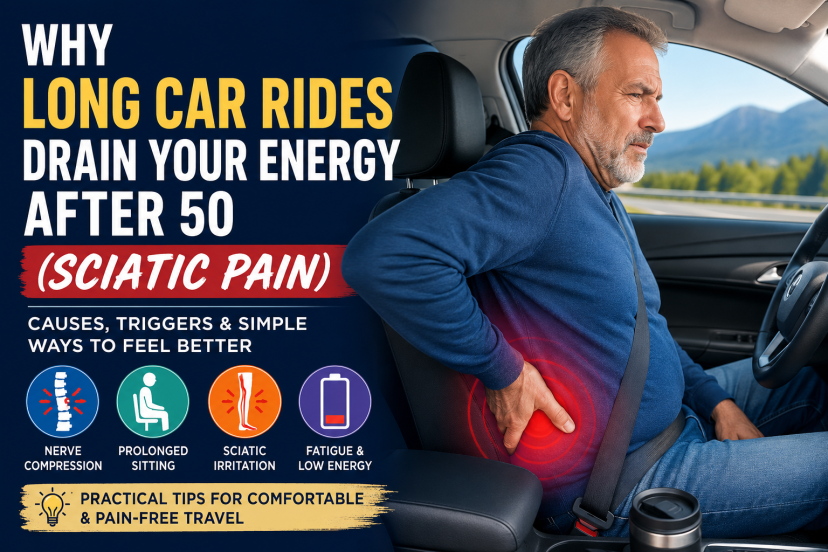
Why Long Car Rides Drain Your Energy After 50 (Sciatic Pain)
🚗The Exhausting Truth About Long Car Rides After 50
You leave for a road trip feeling fine. But after an hour or two in the car, your lower back tightens, your hips ache, and your legs feel heavy or numb. By the time you arrive, you feel completely drained — even though you were “just sitting.”
For many adults over 50, long car rides become surprisingly exhausting. And when sciatic pain is involved, the fatigue can feel even worse. What many people don’t realize is that sciatica doesn’t only affect the nerves in your back and legs. It can also drain your physical and mental energy.
Even simple trips to visit family, run errands, or take vacations can leave you sore, stiff, and unusually tired for the rest of the day.
The good news? There are real reasons this happens — and practical ways to reduce the strain on your body.
⚡Quick Answer
Long car rides can drain your energy after 50 because sitting for extended periods compresses the lower spine, reduces blood flow, tightens muscles, and irritates the sciatic nerve. Aging joints, weaker core muscles, poor posture, vibration from the road, and stress on the nervous system can all increase fatigue and pain during or after driving.
🧠 Why It Happens
The Sciatic Nerve Hates Prolonged Sitting
The sciatic nerve runs from the lower back through the hips and down each leg. Sitting for long periods — especially in bucket-style car seats — increases pressure on the lower spine and glute muscles.
This pressure may:
- Irritate already sensitive nerves
- Reduce circulation to the legs
- Tighten hip flexors and hamstrings
- Increase inflammation around spinal discs
Over time, the body becomes tense and fatigued trying to protect the painful area.
Aging Muscles Tire Faster
After 50, the body naturally loses some muscle strength and flexibility. Supporting muscles around the spine and pelvis may no longer stabilize the body as efficiently during long drives.
This can lead to:
- Faster muscle fatigue
- Poor posture
- Extra strain on the lower back
- More stiffness after sitting
Even holding the same seated position for too long can quietly exhaust the body.
Road Vibration Adds Hidden Stress
Many people overlook how much vibration affects the spine during driving.
Tiny road vibrations travel through:
- The seat
- The hips
- The lower spine
- The sciatic nerve area
Over several hours, this repeated stress can irritate nerves and increase inflammation.
Mental Fatigue Makes Physical Pain Worse
Driving also requires constant attention.
Long drives can increase:
- Mental stress
- Muscle tension
- Shallow breathing
- Neck and shoulder tightness
When the nervous system stays “on alert” for hours, the body burns more energy. Pain often feels stronger when the brain is tired.
🔍 Real-Life Triggers And Examples
Long Highway Trips Without Breaks
Many people try to “push through” a drive to save time. But sitting for 2–4 hours without stopping is one of the biggest sciatica triggers.
Common symptoms include:
- Burning pain in the buttocks
- Tingling down the leg
- Heavy or weak-feeling legs
- Lower back pressure
- Extreme tiredness afterward
Wallets, Phones, Or Thick Objects In Back Pockets
This small habit can put uneven pressure on the piriformis muscle and sciatic nerve.
Over time, this may create:
- Hip imbalance
- Nerve irritation
- Increased numbness during driving
Poor Seat Position
A seat tilted too far back or too close to the pedals can place extra stress on the lumbar spine.
Many drivers unknowingly sit with:
- Rounded shoulders
- Forward head posture
- Tight hips
- Flattened lower back curves
This posture increases strain hour after hour.
Dehydration During Travel
People often drink less water during trips to avoid bathroom stops.
Unfortunately, dehydration may contribute to:
- Muscle cramps
- Joint stiffness
- Fatigue
- Reduced spinal disc hydration
Small habits can have a surprisingly large effect during long rides.
🛠️ Practical Tips To Reduce Sciatic Fatigue During Car Rides
Adjust Your Seat Correctly
Seat position matters more than many people realize.
Try these adjustments:
- Keep knees slightly lower than hips
- Sit upright instead of reclining too far
- Support the lower back with a small lumbar cushion
- Move the seat close enough to avoid overreaching the pedals
A better posture often reduces pressure immediately.
Stop Every 45–60 Minutes
Frequent movement helps restore circulation and reduces nerve compression.
During stops:
- Walk for 2–5 minutes
- Gently stretch the hips
- Rotate the shoulders
- Loosen the legs
Even short movement breaks can make a major difference.
Use Heat Before Driving
Applying gentle heat before a trip may help relax tight muscles.
Helpful options include:
- Heating pads
- Warm showers
- Heated car seats
- Reusable heat wraps
Relaxed muscles place less stress on the sciatic nerve.
Strengthen Your Core And Glutes
Weak muscles force the spine to work harder during sitting.
Simple exercises may help support the lower back:
Gentle Exercises Often Recommended
- Glute bridges
- Pelvic tilts
- Walking
- Light stretching
- Bird-dog exercises
Consistency usually matters more than intensity.
Avoid Sitting On Thick Wallets
This simple change helps many people reduce uneven hip pressure during driving.
Keep pockets empty before long rides whenever possible.
Support Better Circulation
Poor circulation can increase leg fatigue and heaviness.
Helpful strategies include:
- Compression socks
- Regular ankle movements while sitting
- Staying hydrated
- Avoiding overly tight clothing
✅ Common Mistakes That Make Car-Ride Fatigue Worse
Waiting Until Pain Starts
Many people only stop once pain becomes severe.
Unfortunately, nerve irritation often builds gradually. Preventive breaks usually work better than waiting too long.
Stretching Aggressively
Overstretching irritated nerves can worsen symptoms.
Avoid:
- Sudden twisting
- Deep forward bends
- Forceful hamstring stretches
Gentle movement is usually safer.
Driving With A Tight Grip
Stress causes many drivers to tense their hands, shoulders, and jaw without noticing.
This tension can spread through the entire body and increase fatigue.
Ignoring Sleep Quality
Poor sleep and sciatica often create a vicious cycle.
If someone already feels tired before driving, long rides may feel dramatically harder on the body.
❓ FAQs
Why Does Sciatica Feel Worse During Long Car Rides?
Sitting increases pressure on the lower spine and sciatic nerve. Reduced movement and road vibration may also increase inflammation and stiffness.
Why Am I So Tired After Sitting In A Car All Day?
The body uses energy to stabilize posture, manage stress, and compensate for pain. Poor circulation and muscle tension can also contribute to fatigue.
Is Driving Bad For Sciatica?
Long periods of driving may aggravate sciatica in some people, especially without breaks or proper seat support.
How Often Should I Stop During A Road Trip?
Many experts recommend stopping every 45–60 minutes to move, stretch gently, and restore circulation.
Can Car Seats Cause Sciatic Pain?
Yes. Poorly designed or improperly adjusted seats may increase pressure on the hips and lower spine.
What Is The Best Sitting Position For Sciatica?
A neutral upright posture with lumbar support and slightly elevated hips often feels more comfortable for many people.
🌿 Final Thoughts
Long car rides after 50 can feel exhausting for reasons that go far beyond “just getting older.” When sciatic pain enters the picture, the combination of nerve pressure, muscle fatigue, stiffness, poor circulation, and mental stress can leave people drained for hours — or even days.
The encouraging part is that small adjustments often help more than expected.
Simple habits like better seat positioning, frequent breaks, gentle movement, hydration, and proper support can significantly reduce strain on the body during travel.
Many people discover that they do not necessarily need to stop traveling — they simply need smarter ways to support their spine and nerves along the way.
Disclaimer: This article is for informational purposes only and does not replace professional medical advice, diagnosis, or treatment. Always consult a qualified healthcare provider regarding persistent pain or medical concerns.
 Explore more:
- Hidden Sciatica Triggers Most People Ignore
- Why Sciatica Feels Worse In Grocery Stores
- How Long Will Sciatica Take To Heal?