Tight Jeans And Belt Pressure Triggering Sciatic Nerve Pain: 7 Easy Ways To Find Relief
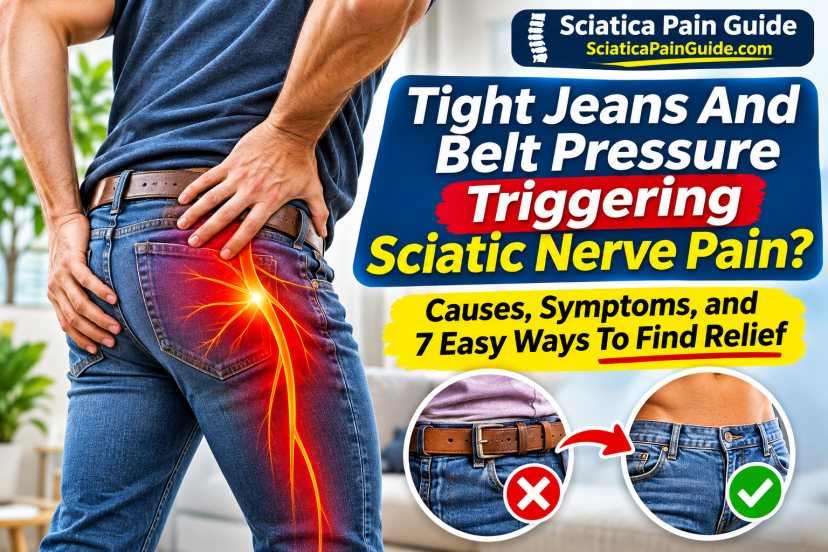
You might notice tingling after wearing skinny jeans all day, aching around your hips while driving, or a burning sensation beneath a tightly fastened belt.
These symptoms can be frustrating when you’re already managing lower-back or sciatic nerve pain.
Fortunately, you may not need special treatments or expensive products to feel more comfortable. Small clothing adjustments, better sitting habits, gentle movement, and appropriate stretches can help reduce unnecessary pressure.
The important first step is understanding whether your discomfort comes from tight clothing, irritated nerves around the hip, or an underlying spinal condition.
🧠 Can Tight Jeans And Belts Really Trigger Sciatic Nerve Pain?
Tight clothing can place pressure on nerves and soft tissues around the waist, pelvis, and upper thighs. However, not every burning or tingling sensation in this area is sciatica.
True sciatica generally develops when nerve roots in the lower spine become irritated or compressed.
Common causes include a herniated disc, age-related spinal changes, or narrowing around the spinal nerves.
Tight jeans and belts are more likely to aggravate existing discomfort or irritate a different nerve near the hip.
How Tight Waistbands Affect Your Hips And Pelvis
When jeans fit too tightly around your waist or hips, they may create constant pressure during sitting, bending, or walking.
This pressure can:
-
Compress Sensitive Tissues: Tight seams and waistbands press against the skin and underlying structures.
-
Restrict Comfortable Movement: Stiff denim may make bending and sitting less comfortable.
-
Increase Local Irritation: Pressure around the hip can aggravate already sensitive nerves.
-
Change Sitting Habits: You may lean, shift, or sit awkwardly to avoid discomfort.
These effects vary between individuals. A tight waistband does not automatically damage the sciatic nerve.
Meralgia Paresthetica: A Commonly Confused Condition
One important condition to understand is meralgia paresthetica.
It occurs when the lateral femoral cutaneous nerve becomes compressed near the front of the hip.
Tight belts, restrictive waistbands, and certain work equipment are recognized contributing factors.
Symptoms typically include burning, tingling, or numbness along the outer thigh.
Unlike the sciatic nerve, this nerve provides sensation rather than muscle movement.
That means meralgia paresthetica usually does not cause leg weakness.
Recognizing the difference can help you avoid treating the wrong problem.
⚠️ 5 Signs Your Clothing May Be Contributing To Nerve Discomfort
Tight jeans and belt pressure triggering sciatic nerve pain may be suspected when symptoms repeatedly appear while wearing restrictive clothing.
Watch for these patterns:
-
Burning Along The Outer Thigh: Especially near the hip or upper leg.
-
Tingling After Sitting: Symptoms become noticeable during long office hours or car journeys.
-
Pressure Around The Waist: A belt or waistband feels uncomfortable when seated.
-
Relief After Loosening Clothing: Symptoms ease when pressure is removed.
-
Discomfort With Certain Outfits: Tight jeans cause problems while looser pants feel comfortable.
These observations can provide useful clues, but they cannot confirm a diagnosis.
Clothing-Related Nerve Pain Vs. True Sciatica
| Feature | Clothing-Related Nerve Irritation | True Sciatica |
|---|---|---|
| Common Location | Outer thigh or hip | Buttock, back of leg, sometimes foot |
| Common Trigger | Tight waistbands or belts | Spinal nerve irritation |
| Tingling | Possible | Possible |
| Muscle Weakness | Unusual with meralgia paresthetica | Possible |
| Relief From Loose Clothing | Often helpful | Less predictable |
If pain travels below your knee or includes weakness, an underlying spinal problem becomes more important to investigate.
👖 7 Practical Ways To Relieve Tight Clothing-Related Nerve Pain
The simplest approach is to reduce pressure while maintaining comfortable movement throughout the day.
1. Switch To Relaxed-Fit Or Stretch Jeans
You do not necessarily need to stop wearing jeans.
Instead, choose styles that provide more room around your waist, hips, and thighs.
Look for:
-
Relaxed-Fit Or Straight-Leg Designs
-
Soft, Flexible Denim
-
Comfortable Waistbands
-
Enough Room To Sit And Bend
-
Minimal Pressure Around The Hip Crease
Stretch denim can be useful, but stretchy fabric may still compress your body if the jeans are too small.
Choose comfort over the size printed on the label.
2. Loosen Your Belt Before Sitting
A belt that feels comfortable while standing may become restrictive when you sit.
This is especially noticeable during driving, office work, or long meals.
Try loosening your belt slightly when seated.
You should be able to breathe comfortably, bend forward, and change positions without feeling pressure digging into your waist.
If you need a belt for work, consider an adjustable design that allows small changes throughout the day.
3. Avoid Tight Waistbands During Long Drives
Driving combines prolonged sitting with pressure around your waist and hips.
Before starting a long journey:
-
Loosen Restrictive Clothing.
-
Remove Bulky Objects From Your Back Pockets.
-
Adjust Your Seat For Comfortable Hip Support.
-
Keep Your Feet Within Easy Reach Of The Pedals.
-
Take Movement Breaks When Safe.
Avoid adjusting your belt or clothing while operating the vehicle.
If your symptoms worsen during driving despite these changes, the problem may involve more than clothing pressure.
4. Take Regular Movement Breaks
Remaining seated for long periods can aggravate existing sciatica and other nerve-related discomfort.
Try changing positions every 30–60 minutes.
Stand, walk briefly, or perform a few comfortable movements.
There is no perfect break schedule for everyone. The goal is to avoid remaining in one uncomfortable position for too long.
5. Apply Gentle Heat Or Cold
Heat may help relax tense muscles around your lower back and hips.
A wrapped cold pack may temporarily soothe a sore area.
Try either for 10–20 minutes, depending on what feels better.
Avoid placing heat or cold directly on your skin, especially if you have numbness or reduced sensation.
These methods may improve comfort, but they do not correct significant nerve compression.
6. Improve Your Sitting Setup
A supportive chair can reduce unnecessary strain during work.
Aim to keep both feet supported, your hips comfortable, and your lower back gently supported.
A small lumbar cushion may help if your chair lacks adequate support.
A sit-stand desk can also make it easier to change positions throughout the day.
However, no cushion or ergonomic accessory can replace removing restrictive clothing when it is causing pressure.
7. Consider Physical Therapy For Persistent Symptoms
If discomfort continues despite clothing changes, a physical therapist can assess your back, hips, strength, and movement patterns.
Depending on the diagnosis, treatment may involve gentle mobility exercises, strengthening, posture adjustments, or graded activity.
Physical therapy is particularly useful when symptoms involve recurring sciatica or movement-related pain.
🧘 Gentle Stretches And Movements That May Help
When tight jeans and belt pressure triggering sciatic nerve pain are suspected, gentle movement may improve comfort after prolonged sitting.
However, stretching is not a direct treatment for every compressed nerve.
Standing Hip Flexor Stretch
-
Stand with one foot slightly behind the other.
-
Hold a stable counter for balance.
-
Bend your front knee slightly.
-
Gently shift your pelvis forward without arching your back.
-
Hold for 15–20 seconds.
Repeat on the opposite side.
You should feel mild stretching near the front of the hip, not burning or shooting pain.
Gentle Seated Figure-Four Stretch
Sit on a sturdy chair with both feet supported.
Place one ankle across the opposite thigh.
Lean forward slightly from your hips until you feel a comfortable stretch in your buttock.
Hold for 15–20 seconds, then release.
Avoid this stretch if it increases tingling, numbness, or radiating pain.
Short Walking Sessions
Walking can help reduce stiffness and interrupt long periods of sitting.
Begin with five minutes at a comfortable pace.
Gradually increase your walking time if symptoms allow.
If walking consistently worsens outer-thigh burning or leg pain, stop and discuss the pattern with a healthcare professional.
🏠 Everyday Clothing And Lifestyle Changes That May Prevent Symptoms
Preventing clothing-related nerve irritation often involves making your daily routine less restrictive.
At Work: Choose pants that allow comfortable sitting. If your job requires a heavy utility belt, ask about alternative equipment arrangements that distribute weight more evenly.
At Home: Change into loose, comfortable clothing after work, particularly if your waist or hips feel irritated.
During Exercise: Avoid excessively tight waistbands or compression garments that reproduce tingling.
While Traveling: Wear flexible pants and adjust your seating position periodically.
During Sleep: Choose comfortable sleepwear without tight elastic around your waist or hips.
You do not need to avoid all fitted clothing. The important point is whether a particular garment repeatedly produces discomfort.
Do Back Braces Or Supplements Help?
A back brace is not a reliable solution for pressure caused by tight clothing. In some cases, an additional tight support around the waist could make symptoms worse.
Likewise, supplements have not been shown to reliably treat clothing-related nerve compression.
If you are considering a brace, medication, or supplement for persistent nerve pain, discuss the potential benefits and risks with your healthcare provider.
🩺 When To See A Doctor Or Chiropractor
Mild discomfort that improves after changing clothes may settle without specialized treatment.
However, persistent burning, numbness, or radiating pain should not automatically be blamed on your jeans.
Arrange a medical assessment if you experience:
-
Persistent Tingling Or Numbness
-
Pain That Continues Despite Wearing Loose Clothing
-
Symptoms Traveling Below The Knee
-
New Or Progressive Leg Weakness
-
Increasing Pain That Interferes With Daily Activities
A physician or physical therapist can help determine whether symptoms involve meralgia paresthetica, lumbar radiculopathy, or another condition.
If considering chiropractic treatment, choose a licensed professional who performs an appropriate examination and refers you for medical evaluation when neurological symptoms are present.
Seek emergency medical care if you develop new bladder or bowel control problems, numbness around the groin or saddle area, or severe or rapidly worsening leg weakness. These symptoms can indicate serious spinal nerve compression.
❓ Frequently Asked Questions About Tight Jeans And Sciatic Nerve Pain
Can Tight Jeans Actually Cause Sciatica?
Tight jeans are not a typical cause of true sciatica. However, they may aggravate existing discomfort or compress nerves around the hip, producing symptoms that resemble sciatica.
Can A Tight Belt Cause Tingling In Your Legs?
Yes. A tight belt can compress the lateral femoral cutaneous nerve near the front of the hip, potentially causing burning, numbness, or tingling along the outer thigh.
How Long Does Nerve Pain From Tight Clothing Last?
Mild pressure-related symptoms may improve after removing restrictive clothing. More persistent nerve irritation can take weeks or longer to settle. Ongoing symptoms deserve medical assessment.
Are Skinny Jeans Bad For Your Sciatic Nerve?
Skinny jeans do not automatically damage the sciatic nerve. However, very tight styles may create uncomfortable pressure around the hips and thighs, particularly during prolonged sitting.
Is Meralgia Paresthetica The Same As Sciatica?
No. Meralgia paresthetica affects a sensory nerve supplying the outer thigh. Sciatica generally involves nerve roots in the lower spine and may produce pain, tingling, numbness, or weakness farther down the leg.
Can Loosening Your Belt Relieve Nerve Pain?
Loosening a restrictive belt may reduce pressure on sensitive tissues and nerves near the waist or hip. If symptoms come from spinal nerve irritation, however, belt adjustments alone may not provide sufficient relief.
What Type Of Pants Are Best For People With Sciatica?
Comfortable pants with flexible fabric, adequate room around the hips, and nonrestrictive waistbands are sensible choices. There is no single medically proven clothing style that treats sciatica.
🌿 Your Next Step: Make One Comfortable Change Today
If tight jeans and belt pressure triggering sciatic nerve pain seem connected to your discomfort, start with a simple experiment. Wear relaxed-fit pants and avoid tight belts for several days. Notice whether sitting, driving, or walking becomes more comfortable.
Then add one easy habit: take short movement breaks during prolonged sitting.
Small changes can make daily life easier, especially when you are already managing nerve pain. If symptoms continue or worsen, seek professional guidance rather than assuming your clothing is the only cause.
Medical Disclaimer: The content in this article is for informational and educational purposes only and is not a substitute for professional medical advice, diagnosis, or treatment. Always consult a qualified healthcare provider or physical therapist before starting new stretches or exercises for sciatica pain.
Explore more:
- What Helps With Sciatica Pain?
- How Do You Live With Sciatica Pain?
- When Should I See A Doctor For Sciatica?