Sciatic Nerve Anatomy: Where Is Your Sciatic Nerve Located & Why It Gets Irritated
💡 Understanding The Pain Behind Sciatica
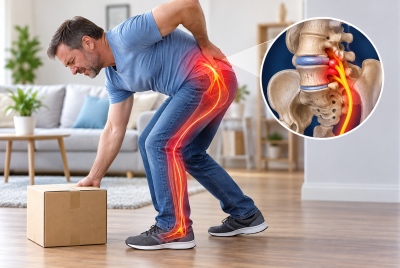
If you’ve ever felt sharp, burning, or electric-like pain shooting from your lower back down your leg, you know how frustrating sciatica can be. It can make sitting, standing, sleeping, or even walking feel impossible. Many people with sciatica feel confused, scared, and unsure what’s really causing their pain.
The first step to real relief is understanding what’s happening inside your body. Once you know where the sciatic nerve is located and why it gets irritated, everything starts to make more sense—and you can take smarter steps toward healing.
This guide will explain sciatic nerve anatomy in simple language, show you how nerve pathways work, and give you practical ways to protect and calm your nerve naturally.
⚡ What Is The Sciatic Nerve?
The sciatic nerve is the largest and longest nerve in the human body. It controls movement and feeling in much of your lower body.
It helps you:
-
Move your hips, thighs, knees, ankles, and feet
-
Feel touch, temperature, and pain in your legs and feet
-
Stay balanced while walking or standing
When this nerve becomes irritated, compressed, or inflamed, it causes the condition known as sciatica.
⚡ Where Is Your Sciatic Nerve Located?
If you’ve ever asked, “Where is the sciatic nerve located?”—here’s the simple answer:
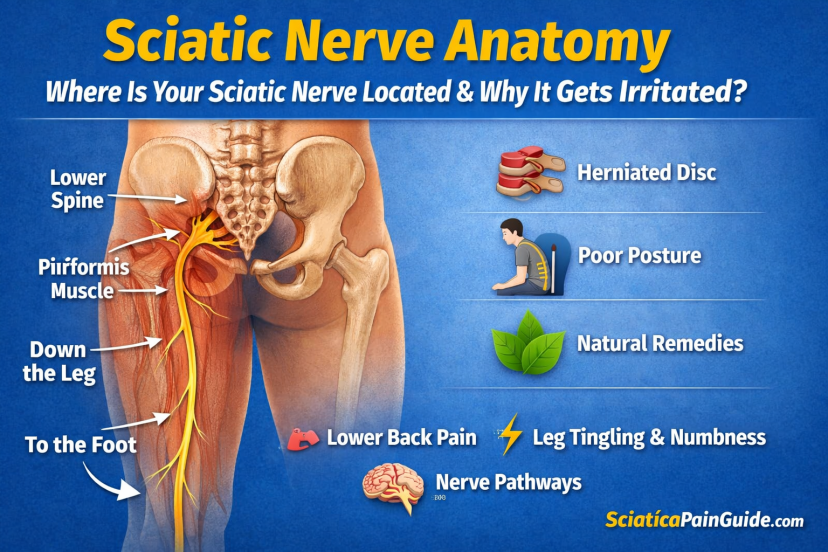
The sciatic nerve starts in your lower spine, runs through your hips and buttocks, and travels down the back of each leg to your feet.
🧠 Simple Path Of The Sciatic Nerve
Think of it like a long electrical cable:
-
Begins in the lower spine (lumbar and sacral area)
-
Passes through the pelvis
-
Travels deep in the buttocks
-
Goes down the back of the thigh
-
Splits near the knee into smaller nerves
-
Ends in the feet and toes
This long path is why pain can show up in many places—from your lower back to your calf or foot.
⚡ Sciatic Nerve Diagram (Explained In Words)
A typical sciatic nerve diagram shows:
-
The nerve roots starting at L4–S3 in the lower spine
-
The nerve forms one thick bundle
-
It passes under the piriformis muscle in the buttocks
-
Traveling behind the thigh muscles
-
Splitting into:
-
Tibial nerve
-
Peroneal nerve
-
These branches control your calf, ankle, foot, and toes.
Understanding this nerve pathway explains why lower back nerve pain often spreads into the leg—it’s all connected.
⚡ Nerve Pathways And Why Pain Travels
Nerves act like electrical wires. They carry messages from your brain to your muscles and from your body back to your brain.
When the sciatic nerve gets irritated:
-
Pain signals travel along the entire nerve
-
You may feel pain far away from the actual problem
-
Tingling, numbness, or weakness can appear in the leg or foot
That’s why someone with a spine issue can feel pain in the calf or toes—it’s following the nerve pathway.
⚡ Why The Sciatic Nerve Gets Irritated
Now that you know where your sciatic nerve is located, let’s talk about why it gets irritated.
💥 Common Causes Of Sciatic Nerve Irritation
-
Herniated or bulging discs
-
Spinal stenosis (narrowing of the spine)
-
Piriformis muscle tightness
-
Poor posture
-
Long hours of sitting
-
Weak core muscles
-
Heavy lifting with bad form
-
Pregnancy-related pressure
Any of these can press on or inflame the nerve, leading to sciatica.
⚡ Symptoms Of Sciatic Nerve Irritation
Sciatic pain feels different from regular back pain.
🔍 Common Symptoms
-
Sharp or burning pain in one leg
-
Pain that starts in the lower back or buttock
-
Tingling or “pins and needles.”
-
Numbness in the leg or foot
-
Muscle weakness
-
Pain is worse when sitting or standing too long
Some people feel mild aches, while others feel intense, shooting pain.
🧘♀️ How Posture Affects The Sciatic Nerve
Poor posture is one of the biggest triggers for sciatic nerve irritation.
❌ Bad Posture Habits
-
Slouching while sitting
-
Leaning to one side
-
Sitting on thick wallets
-
Looking down at phones for long periods
-
Sleeping on very soft mattresses
✅ Better Posture Tips
-
Sit with feet flat and back supported
-
Use a lumbar cushion
-
Keep screens at eye level
-
Change positions every 30–45 minutes
In the U.S., many people use lumbar pillows, standing desks, and ergonomic chairs to reduce lower back nerve pain.
💪 Exercises That Support Sciatic Nerve Health
Movement keeps your nerve pathways healthy.
🌿 Gentle Exercises
-
Walking 20–30 minutes daily
-
Pelvic tilts
-
Knee-to-chest stretch
-
Seated hamstring stretch
-
Piriformis stretch
🚫 Avoid If In Pain
-
Heavy squats
-
High-impact running
-
Twisting under load
-
Sitting too long without breaks
Always start slow and listen to your body.
🌿 Natural Ways To Calm Sciatic Nerve Pain
You don’t always need medication to feel better.
🌿 Home Relief Options
-
Ice packs for the first 48 hours
-
Heat pads for muscle tension
-
Epsom salt baths
-
Turmeric or magnesium supplements
-
Gentle yoga
-
Foam rolling (not directly on spine)
Many U.S. readers also use:
-
Heating pads from CVS or Walgreens
-
Lumbar braces from Amazon
-
Standing desk converters
⚡ Physical Therapy For Sciatica
Physical therapy focuses on:
-
Strengthening core muscles
-
Improving posture
-
Teaching safe movement
-
Reducing nerve pressure
A therapist may use:
-
Stretching
-
Manual therapy
-
Ultrasound
-
Exercise programs
This is one of the safest long-term solutions.
⚡ Lifestyle Habits That Protect The Sciatic Nerve
Your daily habits matter.
✅ Nerve-Friendly Habits
-
Sleep on your side with a pillow between your knees
-
Drink enough water
-
Eat anti-inflammatory foods
-
Take walking breaks
-
Maintain a healthy weight
🥗 Helpful Foods
-
Leafy greens
-
Fatty fish
-
Berries
-
Nuts and seeds
-
Olive oil
⚡ Lower Back Nerve Pain Vs Sciatica
Not all lower back nerve pain is sciatica.
🔍 Differences
-
Sciatica usually affects one leg
-
Back strain stays mostly in the back
-
Sciatica follows a nerve pathway
-
Muscle pain is often dull and sore
If pain shoots down your leg, it’s likely nerve-related.
⚠️ When To See A Doctor
You should seek medical or chiropractic care if:
-
Pain lasts longer than 6–8 weeks
-
Pain is severe or getting worse
-
You have numbness or weakness
-
You lose bladder or bowel control
-
Pain started after an injury or an accident
Doctors may use imaging, physical exams, or nerve tests to find the cause.
❓ FAQs – Where Is the Sciatic Nerve Located
1. Where is your sciatic nerve located exactly?
It starts in the lower spine, runs through the hips and buttocks, down the back of the leg, and into the feet.
2. Can you feel the sciatic nerve through the skin?
Not directly—it’s deep under the muscles, but pain follows its pathway.
3. Why does sciatic pain go down only in one leg?
Each leg has its own sciatic nerve. Usually, only one side is irritated.
4. What does sciatic nerve pain feel like?
Sharp, burning, tingling, or electric-like pain down the leg.
5. Can sitting too long cause sciatica?
Yes. Long sitting puts pressure on the lower spine and nerves.
6. Does walking help sciatica?
Gentle walking improves blood flow and reduces stiffness.
7. How long does sciatic nerve pain last?
It may last days to weeks, but chronic cases need treatment.
🌟 Conclusion: Knowledge Is Your First Step To Relief
Understanding where your sciatic nerve is located gives you power. When you know how nerve pathways work and why irritation happens, you can make smarter choices every day.
With good posture, gentle movement, healthy habits, and patience, many people find real relief. Healing takes time—but small daily actions add up to big change.
Stay consistent, stay hopeful, and listen to your body. Relief is possible.
⚕️ Medical Disclaimer
This content is for educational purposes only and is not a substitute for professional medical advice, diagnosis, or treatment. Always consult a qualified healthcare provider before starting any new exercise, supplement, or treatment program. If you experience severe pain, weakness, or loss of bladder or bowel control, seek immediate medical care.
 Explore more:
- Why Is My Sciatica Worse After Sitting All Day?
- Sciatica Pain Relief Medicine: OTC Vs Prescription Options
- Chiropractic For Sciatica: Evidence-Based Pros and Cons