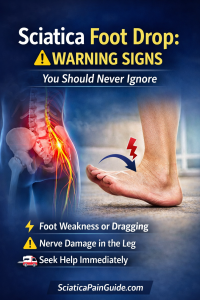
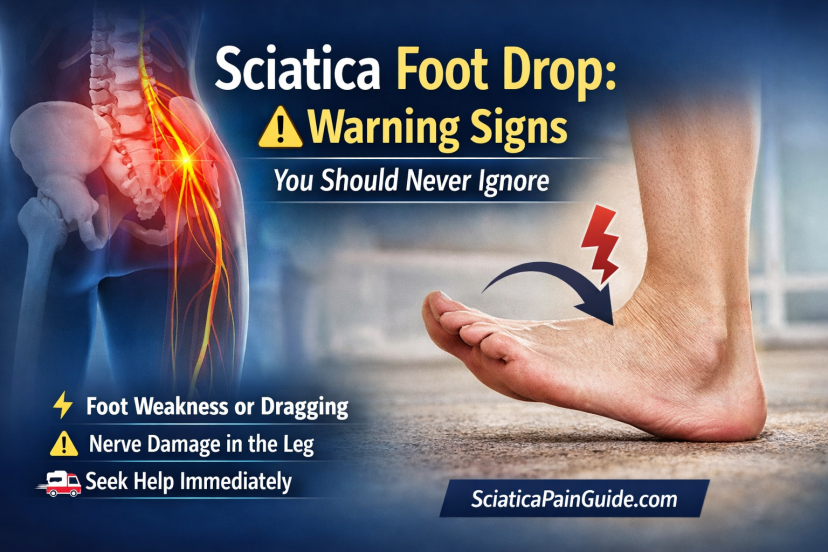
Sciatica Foot Drop: Warning Signs You Should Never Ignore
When Sciatica Becomes More Than “Just Pain”
What are the warning signs for sciatica foot drop? If you’ve been dealing with sciatica, you already know how exhausting it can be—sharp pain shooting down your leg, tingling, numbness, and that constant struggle just to sit, stand, or walk comfortably.
But what happens when your foot suddenly feels weak… or won’t lift properly?
This is where things can become more serious.
Sciatica foot drop is not just another symptom—it can be a warning sign of significant nerve damage in the leg. And while it can feel scary, understanding what’s happening (and what to do next) can make all the difference.
In this guide, you’ll learn:
- ⚠️ The early warning signs you should never ignore
- 🧠 What causes foot drop from sciatica
- 🏃 Immediate steps to protect your mobility
- 🌿 Natural and medical treatment options
- 💪 How to prevent long-term damage
⚡ What Is Sciatica Foot Drop?
Sciatica foot drop happens when the nerve signals that control your foot and ankle become disrupted—usually due to compression of the sciatic nerve or its branches.
⭐ Quick Answer: Sciatica Foot Drop
Foot drop means you have difficulty lifting the front of your foot, often causing dragging, tripping, or an abnormal walking pattern.
🧠 Why It Happens
The sciatic nerve branches into the peroneal nerve, which controls the muscles that lift your foot. When this nerve is compressed or damaged, the signal weakens or stops.
Key Takeaways
- Most likely cause: Nerve compression or injury affecting the muscles that lift the front of the foot, sometimes related to a lumbar disc problem or other cause of sciatic nerve symptoms.
- Usually serious? Potentially, yes. New or worsening foot weakness can indicate significant nerve involvement and deserves prompt medical evaluation rather than waiting to see if it improves on its own.
- First thing to check: Important sciatica foot drop warning signs include difficulty lifting the front of the foot or toes, dragging the foot, frequent tripping, a slapping gait, or noticeably worsening leg or ankle weakness.
- Best solution: Seek prompt medical assessment to identify the source of the nerve problem. Treatment depends on the cause and severity and may include physical therapy, supportive devices, medication, or, in some cases, surgery.
⚠️ Early Warning Signs Of Sciatica Foot Drop
Recognizing the signs early can help prevent permanent nerve damage.
🚨 Key Symptoms To Watch For
- Difficulty lifting the front of your foot
- Toes dragging when walking
- Frequent tripping or stumbling
- Weakness in the ankle or foot
- Numbness or tingling in the shin or top of the foot
- Slapping sound when your foot hits the ground
- Loss of control when walking uphill or on stairs
These are considered serious sciatica symptoms, especially when they involve weakness—not just pain.
⚡ What Causes Nerve Damage In The Leg?
Sciatica foot drop is usually linked to compression or injury of the nerve roots in the lower spine.
🔍 Common Causes
- Herniated disc (most common)
- Spinal stenosis (narrowing of the spine)
- Degenerative disc disease
- Spondylolisthesis (vertebra slipping)
- Trauma or injury to the lower back
- Prolonged nerve compression from poor posture
💡 Real-Life Scenario
Imagine sitting for long hours with poor posture. Over time, pressure builds on your lower spine, compressing nerves—and eventually affecting how your foot functions.
⚡ Why Sciatica Foot Drop Is A Serious Warning Sign
Not all sciatica is the same.
When pain turns into muscle weakness, it often means:
- The nerve is significantly compressed
- Signal transmission is impaired
- There’s a risk of long-term or permanent damage
This is why foot drop is considered a red flag symptom.
⚡ Immediate Steps To Take If You Notice Foot Drop
If you suspect sciatica foot drop, act quickly.
✅ Step-By-Step Action Plan
- Stop aggravating activities
- Avoid heavy lifting, prolonged sitting, or bending
- Adjust your posture immediately
- Sit upright with lumbar support
- Use a lumbar cushion for spinal alignment
- Apply cold and heat therapy
- Cold: reduce inflammation (15–20 minutes)
- Heat: relax muscles after inflammation subsides
- Use supportive footwear
- Choose stable shoes with arch support
- Avoid sandals or unstable soles
- Try gentle nerve-friendly movement
- Short walks instead of bed rest
- Avoid overstretching
- Book a medical evaluation ASAP
- Especially if the weakness is progressing
🧘♀️ Natural Relief Strategies For Sciatica Foot Drop
While medical evaluation is essential, these strategies can support recovery.
🌿 At-Home Support Methods
- Anti-inflammatory diet
- Leafy greens, berries, omega-3 fats
- Magnesium supplementation
- Supports nerve and muscle function
- Turmeric or curcumin
- May help reduce inflammation
- Hydration
- Helps nerve conductivity and tissue health
💪 Physical Therapy And Exercises
Targeted movement can help restore function and reduce pressure on nerves.
🏃♂️ Helpful Exercises
- Ankle dorsiflexion practice
- Toe raises (seated or standing)
- Resistance band foot lifts
- Hamstring and glute stretches
A licensed physical therapist can guide safe progression.
⚡ Posture And Lifestyle Changes That Protect Your Nerves
Small daily habits can make a big difference.
🪑 Smart Adjustments
- Use a standing desk (U.S. trend for back health)
- Take breaks every 30–60 minutes
- Sit with hips slightly higher than knees
- Avoid slouching or forward head posture
🛠️ Helpful Products (U.S. Audience Picks)
These can support recovery and reduce strain:
- Lumbar support cushions
- Foot drop braces (AFO braces)
- TENS units for nerve stimulation
- Ergonomic office chairs
- Heating pads and cold packs
These are widely available on platforms like Amazon and commonly used by people managing nerve pain.
⚡ Recovery Timeline: What To Expect
Recovery depends on severity and how quickly you act.
⏳ Typical Timeline
- Mild cases: 2–6 weeks
- Moderate nerve compression: 6–12 weeks
- Severe nerve damage: Several months (or longer)
Early treatment significantly improves outcomes.
⚠️ When To See A Doctor Immediately
Do not wait if you notice:
- Sudden or worsening foot weakness
- Complete inability to lift your foot
- Loss of bladder or bowel control
- Severe numbness in the leg or groin
- Rapid progression of symptoms
These could indicate serious nerve damage or conditions like cauda equina syndrome, which require urgent care.
❓ FAQs About Sciatica Foot Drop
1. Can sciatica foot drop go away on its own?
In mild cases, yes. But if weakness is present, medical evaluation is strongly recommended.
2. Is foot drop permanent?
Not always. Early treatment can lead to partial or full recovery.
3. What is the fastest way to treat foot drop from sciatica?
Address the underlying nerve compression through physical therapy, posture correction, and medical care if needed.
4. Is walking good for sciatica foot drop?
Yes—gentle walking can help, but avoid overexertion.
5. Can a chiropractor help?
Some people find relief, especially with spinal alignment, but it depends on the cause.
6. Do braces help with foot drop?
Yes. An ankle-foot orthosis (AFO) can improve walking safety and reduce falls.
7. What does nerve damage in the leg feel like?
It can include numbness, tingling, burning sensations, weakness, or loss of coordination.
💪 Conclusion: Take Action Early To Protect Your Mobility
Sciatica can be painful—but sciatica foot drop is your body’s warning signal that something deeper is going on.
The good news? With early action, the right support, and consistent care, many people improve and regain strength.
- Listen to your body
- Don’t ignore weakness
- Stay consistent with recovery habits
Small steps today can prevent bigger problems tomorrow.
Medical Disclaimer
This article is for informational purposes only and does not replace professional medical advice. Always consult a qualified healthcare provider for diagnosis and treatment of any medical condition, especially if you experience severe or worsening symptoms.
 Explore more:
- What Happens If Sciatica Is Left Untreated?
- Can Being Overweight Cause Sciatica?
- Sciatic Nerve Pain Treatment at Home