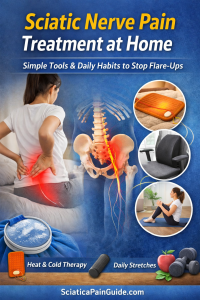
Sciatic Nerve Pain Treatment at Home: Simple Tools and Daily Habits That Help Stop Flare-Ups

Sciatica Can Turn Everyday Activities Into A Struggle
What are the best strategies for sciatic nerve pain treatment at home? A sudden sharp pain shooting down the leg, burning in the lower back, tingling in the foot, or numbness that makes walking uncomfortable are all common signs. For many people, the hardest moments happen during normal routines — sitting at a desk, driving, sleeping, or simply standing up after resting.
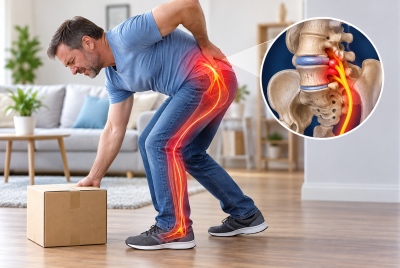
Sciatic nerve irritation often begins in the lower spine and travels through the hips, buttocks, and down the leg. When the nerve becomes compressed or inflamed, it can trigger intense discomfort that disrupts work, sleep, and daily life.
The good news is that many people find meaningful relief using sciatic nerve pain treatment at home strategies. With the right tools, targeted stretches, and simple daily habits, it is often possible to calm flare-ups and support the body’s natural recovery process.
This guide explains practical approaches you can start today.
⚡ Quick Answer: Sciatic Nerve Pain Treatment at Home
If you’re looking for sciatic nerve pain treatment at home, the most effective strategies usually include:
• Gentle stretching to relieve pressure on the sciatic nerve
• Using heat or cold therapy to calm inflammation
• Improving posture during sitting and sleeping
• Light daily movement to prevent stiffness
• Support tools such as lumbar cushions or foam rollers
These simple habits can help reduce flare-ups and support healthier spine alignment over time.
🧠 What Causes Sciatic Nerve Pain?
Understanding the cause can make sciatic nerve pain treatment at home more effective.
Sciatica is not a condition itself — it is a symptom of pressure or irritation on the sciatic nerve, the longest nerve in the body.
Common causes include:
Herniated or bulging discs
When a spinal disc shifts or ruptures, it can press against the nerve root.
Spinal stenosis
Narrowing of the spinal canal can compress nerves in the lower back.
Piriformis syndrome
A tight piriformis muscle in the buttock can irritate the sciatic nerve.
Degenerative disc changes
Age-related wear in the spine can affect the nerve space.
Prolonged sitting
Sedentary habits may increase nerve pressure and stiffness.
Because many of these causes are related to posture, muscle tightness, and inflammation, targeted sciatic nerve pain treatment at home methods can play a major role in reducing symptoms.
⚠️ Common Sciatica Symptoms to Recognize
People experiencing sciatica often report symptoms such as:
• Sharp or burning pain down one leg
• Tingling or “pins and needles” sensations
• Lower back stiffness
• Weakness in the leg or foot
• Pain that worsens when sitting
• Difficulty standing or walking long distances
Symptoms may come and go in cycles. Flare-ups can last days or weeks, depending on activity levels and spinal health.
Consistent sciatic nerve pain treatment at home routines often help shorten these episodes.
🌿 Sciatic Nerve Pain Treatment at Home: Tools That Help
Certain home tools can make managing sciatica easier.
Heat therapy
Heat improves blood flow and relaxes tight muscles.
Helpful options include:
• Heating pads
• Warm baths
• Infrared heat wraps
Use heat for 15–20 minutes at a time.
Cold therapy
Cold reduces inflammation during acute flare-ups.
Examples include:
• Ice packs
• Gel cold wraps
• Frozen compress packs
Apply cold for 10–15 minutes during intense pain.
Lumbar support cushions
A supportive cushion helps maintain spinal alignment when sitting.
This is particularly useful for:
• Office workers
• Long drives
• Home desk setups
Better posture reduces pressure on the sciatic nerve.
Foam rollers
Foam rolling may help loosen tight muscles around the hips and glutes.
Key areas to target include:
• Glutes
• Hamstrings
• Piriformis muscle
Gentle rolling can support sciatic nerve pain treatment at home by reducing muscle tension.
🧘♀️ Stretches That Support Sciatic Nerve Relief
Stretching is one of the most widely recommended sciatic nerve pain treatment at home strategies.
Always move slowly and stop if pain increases.
Knee-to-chest stretch
This stretch helps relieve lower back pressure.
Steps:
-
Lie on your back
-
Pull one knee toward your chest
-
Hold for 20 seconds
-
Repeat 3 times per side
Piriformis stretch
This stretch targets a common source of sciatic irritation.
Steps:
-
Lie on your back
-
Cross one ankle over the opposite knee
-
Pull the bottom thigh toward the chest
-
Hold for 20–30 seconds
Seated spinal stretch
Helpful for people who sit often.
Steps:
-
Sit upright in a chair
-
Cross one leg over the other
-
Twist gently toward the raised knee
-
Hold for 15 seconds
Daily stretching can significantly improve sciatic nerve pain treatment at home results.
💪 Daily Habits That Help Prevent Sciatica Flare-Ups
Long-term relief often comes from daily habits.
The following strategies support ongoing sciatic nerve pain treatment at home.
Move every 30–45 minutes
Prolonged sitting increases spinal pressure.
Try:
• Standing breaks
• Short walks
• Gentle back extensions
Improve sleeping posture
Your sleep position can influence nerve pressure.
Helpful adjustments:
• Place a pillow between your knees when side sleeping
• Use a pillow under your knees when lying on your back
• Avoid stomach sleeping if possible
Strengthen core muscles
Strong core muscles support the spine.
Helpful exercises include:
• Bird dog exercise
• Glute bridges
• Pelvic tilts
Core strength reduces strain on the lower back.
Maintain a healthy weight
Extra body weight can increase spinal load.
Balanced nutrition and light physical activity may help reduce recurring symptoms.
👩💼 Real-Life Scenario: Managing Sciatica During a Workday
Consider Sarah, a 42-year-old office worker who began experiencing sharp pain down her leg after long hours at her desk.
She started implementing several sciatic nerve pain treatment at home strategies:
• Using a lumbar support cushion
• Standing every 30 minutes
• Performing a 5-minute stretching routine twice daily
• Applying heat therapy after work
Within a few weeks, her flare-ups became less frequent, and sitting became more comfortable.
While results vary, consistent daily habits often make a noticeable difference.
✅ Self-Assessment Checklist
Use this quick checklist to evaluate your habits.
Ask yourself:
1. Do I sit for long periods without standing breaks?
2. Is my desk posture slouched or unsupported?
3. Do I stretch my hips and lower back daily?
4. Do I exercise my core muscles regularly?
5. Do I use heat or cold therapy during flare-ups?
If several answers are “no,” improving these areas may enhance your sciatic pain treatment routine.
⚖️ Expectation vs Reality: Treating Sciatica at Home
Many people expect instant results.
But real improvement often looks different.
Expectation
• Pain disappears overnight
• One stretch fixes everything
• A single treatment solves the issue
Reality
• Relief often comes gradually
• Multiple strategies work best together
• Consistency matters more than intensity
Effective sciatic nerve pain treatment at home usually involves a combination of posture improvements, movement, and targeted exercises.
🩺 When to Consider Medical Care
While home strategies can help many people, certain symptoms require medical attention.
Seek professional care if you experience:
• Severe or worsening leg weakness
• Loss of bladder or bowel control
• Persistent numbness
• Pain lasting longer than several weeks
Healthcare providers may recommend:
• Physical therapy
• Anti-inflammatory medications
• Imaging tests such as MRI
• In rare cases, surgery
Home care works best when combined with appropriate medical guidance.
❓ FAQs About Sciatic Nerve Pain Treatment at Home
What is the fastest sciatic nerve pain treatment at home?
The fastest relief often comes from a combination of gentle stretching, heat therapy, and short walking breaks to reduce nerve pressure.
Can walking help sciatic nerve pain?
Yes. Light walking may improve circulation and reduce stiffness, making it a useful part of sciatic nerve pain treatment at home routines.
How should I sleep with sciatic nerve pain?
Sleeping on your side with a pillow between your knees can help keep the spine aligned and reduce nerve irritation.
Is sitting bad for sciatica?
Long periods of sitting can worsen symptoms. Taking frequent breaks and using lumbar support helps support sciatic nerve pain treatment at home.
How long does sciatic nerve pain usually last?
Mild cases may improve within a few weeks. Persistent cases may require medical evaluation and structured therapy.
🌟 Conclusion
Living with sciatica can feel frustrating, especially when pain interferes with everyday activities like sitting, walking, or sleeping.
But small, consistent steps can make a meaningful difference.
Using practical sciatic nerve pain treatment at home strategies — such as stretching, posture improvements, heat therapy, and supportive tools — may help reduce flare-ups and support spinal health over time.
Start with simple habits today:
• Add daily stretches
• Take frequent movement breaks
• Improve your sitting posture
• Use heat or cold therapy during flare-ups
Over time, these small changes can help many people move more comfortably and regain confidence in daily life.
Disclaimer
This article is for informational purposes only and does not constitute medical advice. Always consult a qualified healthcare professional before beginning new treatments or exercise routines, especially if you have existing medical conditions or severe symptoms.
 Explore more:
- What Happens If Sciatica Is Left Untreated?
- Sciatica Pain After Exercise: Why It Happens?
- Why Your Mattress May Be Triggering Sciatica