Why Driving Makes Sciatica Worse: Simple Ways To Sit, Drive & Travel With Less Pain
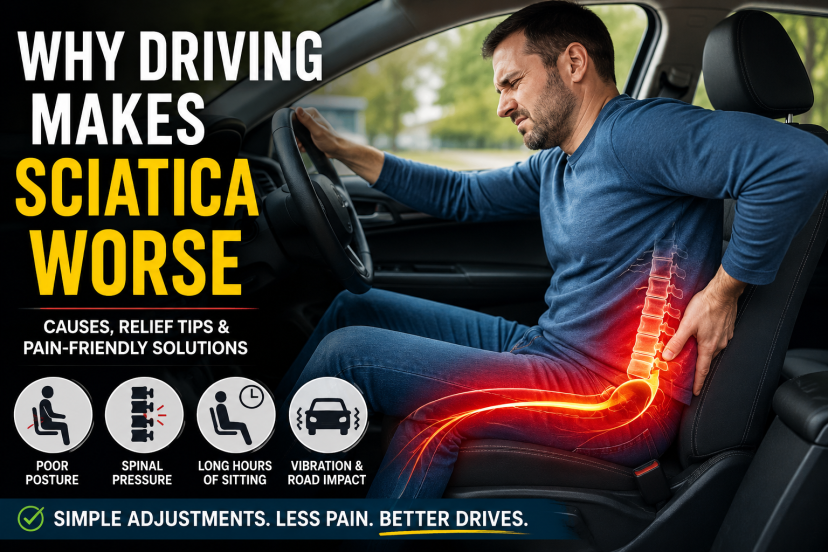
Why driving makes sciatica worse? Living with sciatica can make even short drives feel exhausting. What starts as mild discomfort can quickly turn into burning pain, tingling, numbness, or stabbing sensations that travel from your lower back into your leg. For many people, driving becomes one of the biggest daily pain triggers — especially during commuting, road trips, or sitting in traffic.
If you’ve ever stepped out of your car feeling stiff, sore, or unable to stand up straight, you’re not imagining it. There are several reasons why driving makes sciatica worse, and many of them are related to posture, pressure on the sciatic nerve, muscle tension, and long periods of sitting.
The good news? Small adjustments can often make a major difference.
In this guide, you’ll learn:
- Why driving can aggravate sciatica
- Common driving mistakes that increase nerve pain
- Best sitting positions for sciatica relief
- Helpful stretches before and after driving
- Natural ways to reduce pain during travel
- When to seek professional help
⭐ Quick Answer: Why Driving Makes Sciatica Worse?
Driving can make sciatica worse because sitting for long periods increases pressure on the lower spine, tightens hip muscles, reduces circulation, and irritates the sciatic nerve. Poor posture, wallet sitting, vibrating seats, and awkward leg positioning can also trigger flare-ups. Improving seat support, posture, movement, and stretching habits may help reduce pain naturally.
Key Takeaways
Most likely cause: Prolonged sitting in the car can increase pressure on the lower back and sciatic nerve, while tight hip muscles, poor posture, and awkward leg positioning may further aggravate symptoms.
Usually serious? Not always. Temporary discomfort during or after driving is common with sciatica, but worsening numbness, significant weakness, or changes in bladder or bowel control require prompt medical attention.
First thing to check: Check your driving position. Make sure your lower back is supported, your hips and knees are comfortably positioned, and you are close enough to the pedals that you do not have to stretch or twist.
Best solution: If you’re trying to understand why driving makes sciatica worse, start by improving your seat position and lumbar support, removing bulky items such as a wallet from your back pocket, and taking regular movement breaks on longer trips. Gentle stretching may also help, while persistent or worsening symptoms should be evaluated by a healthcare professional.
🚗 Why Driving Makes Sciatica Worse
Sciatica happens when the sciatic nerve becomes irritated, compressed, or inflamed. The sciatic nerve runs from the lower spine through the hips and buttocks and down each leg.
Driving creates a “perfect storm” for sciatic nerve irritation because it combines several common triggers at once:
- Prolonged sitting
- Forward pelvic tilt
- Tight hip muscles
- Spinal compression
- Reduced movement
- Vibration from the road
- Poor posture
For many people, symptoms get worse after:
- Commuting to work
- Long road trips
- Rideshare driving
- Truck driving
- Sitting in traffic
- Driving low sports cars
- Using unsupportive car seats
The longer you stay in one position, the more pressure builds around sensitive nerves and spinal discs.
How Sitting Compresses The Sciatic Nerve
When you sit, especially with poor posture, pressure inside the lumbar discs increases significantly compared to standing.
This can:
- Irritate herniated discs
- Tighten the piriformis muscle
- Increase inflammation
- Reduce blood flow
- Aggravate nerve compression
People with:
- Lumbar disc issues
- Spinal stenosis
- Piriformis syndrome
- Degenerative disc disease
- SI joint dysfunction
may notice that driving makes sciatica worse faster than other activities.
🪑 Common Driving Habits That Trigger Sciatica Pain
Many everyday driving habits quietly make symptoms worse without people realizing it.
Slouching While Driving
Slouching rounds the lower back and places more pressure on spinal discs and nerves.
Signs include:
- Shoulders rolling forward
- Chin jutting out
- Hips sliding forward
- Leaning toward the steering wheel
Over time, this position strains the lower spine and hip muscles.
Sitting On A Wallet
This is surprisingly common.
A thick wallet under one hip creates uneven pressure across the pelvis and may irritate the sciatic nerve directly.
Even a small imbalance can worsen symptoms during long drives.
Keeping The Seat Too Far Back
When the seat is too far away:
- Legs overextend
- Hips rotate awkwardly
- Lower back loses support
This often increases tension in the hamstrings and glutes.
Driving With A Tight Grip And Tension
Stress and chronic pain often go together.
Many people unconsciously:
- Clench their jaw
- Tighten their shoulders
- Tense their hips
- Grip the steering wheel hard
Muscle tension can contribute to flare-ups and worsen nerve sensitivity.
🔥 Symptoms That Driving May Be Irritating Your Sciatica
Driving-related sciatica symptoms often appear gradually.
Common signs include:
- Burning pain in the buttock
- Tingling down the leg
- Numbness in the foot
- Sharp pain when exiting the car
- Stiffness after driving
- Weakness in one leg
- Pain after sitting in traffic
- Worsening symptoms during road trips
Some people also notice:
- Pain when pressing the gas pedal
- Discomfort using the brake
- Hip tightness while driving
- Increased pain during stop-and-go traffic
🧍 Best Sitting Position For Sciatica While Driving
Improving your posture may reduce pressure on the sciatic nerve significantly.
✅ Ideal Driving Position For Sciatica Relief
Try these adjustments:
- Sit with hips slightly higher than knees
- Keep a small bend in the knees
- Position the seat closer to the pedals
- Keep shoulders relaxed
- Maintain gentle lumbar support
- Avoid leaning forward
- Keep both hands balanced on the wheel
Your goal is neutral spinal alignment — not perfectly straight, but supported and relaxed.
Helpful Products Many Drivers Use
U.S. drivers commonly use:
- Lumbar cushions
- Coccyx seat cushions
- Wedge cushions
- Heated seat covers
- Lower back braces
- Ergonomic steering wheel covers
Memory foam lumbar supports may help maintain posture during longer drives.
Some people also benefit from:
- Standing desks at work
- Ergonomic office chairs
- Walking pads
- Supportive walking shoes
Because overall daily posture affects driving pain too.
🧘 Stretches That May Help Before Driving
Stretching before getting into the car may reduce stiffness and improve mobility.
Piriformis Stretch
The piriformis muscle can compress the sciatic nerve.
Try this:
- Lie on your back
- Cross one ankle over the opposite knee
- Pull the supporting leg gently toward your chest
- Hold for 20–30 seconds
Hip Flexor Stretch
Tight hips often worsen pelvic tension.
A gentle lunge stretch may help open the front of the hips and reduce lower back strain.
Hamstring Stretch
Tight hamstrings can pull on the pelvis and increase lower back pressure.
Stretch gently — avoid bouncing.
🚶 Why Movement Breaks Matter During Long Drives
One major reason why driving makes sciatica worse is the lack of movement.
Remaining still for long periods decreases circulation and increases stiffness.
How Often Should You Stop?
For long drives, many physical therapists recommend:
- Stopping every 30–60 minutes
- Standing briefly
- Walking for a few minutes
- Stretching lightly
Even short movement breaks may help reduce nerve irritation.
Simple Travel Tips For Road Trips
Here are practical ways to make travel easier:
- Use cruise control when safe
- Alternate drivers if possible
- Avoid overstuffed back pockets
- Place a small towel behind the lower back
- Avoid twisting when exiting the car
- Keep frequently used items within reach
- Hydrate regularly
Small habits add up over time.
💺 Can Certain Cars Make Sciatica Worse?
Yes. Vehicle design can absolutely affect comfort.
Low vehicles often force:
- Deeper hip flexion
- Awkward twisting
- Difficult entry and exit
Many people with sciatica find SUVs, crossovers, and higher seats easier to tolerate.
Features that may help:
- Adjustable lumbar support
- Heated seats
- Smoother suspension
- Wider seats
- Easier seat height access
Long-haul drivers may especially benefit from ergonomic adjustments.
🌿 Natural Relief Strategies For Driving-Related Sciatica
Many people prefer combining lifestyle changes with natural pain management approaches.
Heat Therapy
Heat may help:
- Relax muscles
- Improve circulation
- Reduce stiffness
Heated seat cushions are popular for commuting.
Gentle Walking
Walking can help reduce stiffness after driving and encourage better blood flow.
Short walks throughout the day may help more than staying sedentary.
Anti-Inflammatory Habits
Some people notice symptom improvement with:
- Better sleep
- Bydration
- Stress management
- Healthy body weight
- Anti-inflammatory foods
Foods commonly associated with lower inflammation include:
- Berries
- Leafy greens
- Salmon
- Olive oil
- Nuts
Sleep Position Adjustments
Driving pain often combines with poor sleep posture.
Many people sleep more comfortably by:
- Placing a pillow between the knees
- Sleeping on the side
- Using a supportive mattress
- Avoiding stomach sleeping
🏋️ Can Exercise Help Prevent Driving Flare-Ups?
In many cases, yes.
Strengthening the muscles that support the spine may reduce strain during sitting.
Helpful exercises may include:
- Core stabilization
- Glute strengthening
- Gentle yoga
- Walking
- Pelvic tilts
- Bird dogs
- Bridges
Consistency matters more than intensity.
Avoid pushing through severe nerve pain.
⚠️ When To See A Doctor Or Chiropractor
Sometimes driving-related sciatica needs professional evaluation.
Consider seeking medical care if you have:
- Worsening numbness
- Leg weakness
- Severe pain
- Difficulty walking
- Loss of bladder or bowel control
- Pain lasting several weeks
- Symptoms after an injury
A doctor, physical therapist, or chiropractor may evaluate:
- Disc problems
- Nerve compression
- Spinal alignment
- Muscle imbalances
- Posture mechanics
Treatment options may include:
- Physical therapy
- Guided exercises
- Imaging tests
- Medications
- Injections
- Posture retraining
❓FAQs About Why Driving Makes Sciatica Worse
Can driving cause sciatica?
Driving itself may not directly cause sciatica, but prolonged sitting, poor posture, and spinal compression can contribute to flare-ups and nerve irritation.
Why does my sciatica hurt more after driving?
Sitting for long periods increases pressure on the lower back and sciatic nerve. Tight hips and reduced movement may also worsen inflammation and stiffness.
Is driving bad for a herniated disc?
Long periods of driving can aggravate symptoms related to herniated discs because sitting increases disc pressure and may irritate nearby nerves.
What is the best car seat position for sciatica?
A supportive upright position with lumbar support, relaxed shoulders, and knees slightly lower than hips may reduce pressure on the sciatic nerve.
Are heated seats good for sciatica?
Many people find heated seats helpful because warmth may relax tight muscles and reduce stiffness. However, results vary from person to person.
How do I get out of a car without triggering sciatica?
Try turning your whole body together instead of twisting your spine. Move slowly and use your arms for support when standing up.
Can a lumbar cushion help with sciatica while driving?
Yes. Lumbar cushions may help improve posture, support the lower back, and reduce pressure during long drives.
🌟 Final Thoughts: Small Changes Can Make Driving Easier
If you’ve been wondering why driving makes sciatica worse, the answer usually comes down to pressure, posture, muscle tension, and prolonged sitting.
The encouraging news is that small daily habits often make a meaningful difference over time.
Simple steps like:
- Adjusting your seat
- Improving posture
- Stretching regularly
- Taking movement breaks
- Using lumbar support
- Strengthening supportive muscles
may help reduce flare-ups and make driving more manageable.
Recovery from sciatica is often gradual, not instant. Be patient with your body, stay consistent with healthy habits, and focus on steady progress instead of perfection.
Even small improvements in comfort can make everyday life feel more normal again.
Disclaimer: This article is for informational purposes only and does not replace medical advice, diagnosis, or treatment. Always consult a qualified healthcare professional before starting new exercises, stretches, supplements, or treatment plans for sciatica or nerve pain.
 Explore more:
- Sciatica Foot Drop: Warning Signs
- Can Lifting Heavy Objects Cause Sciatica?
- Can I Work With Sciatica?