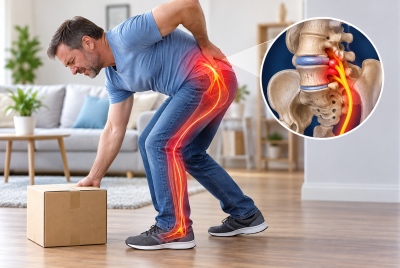
Can I Work With Sciatica? Practical Ways To Stay Comfortable And Productive
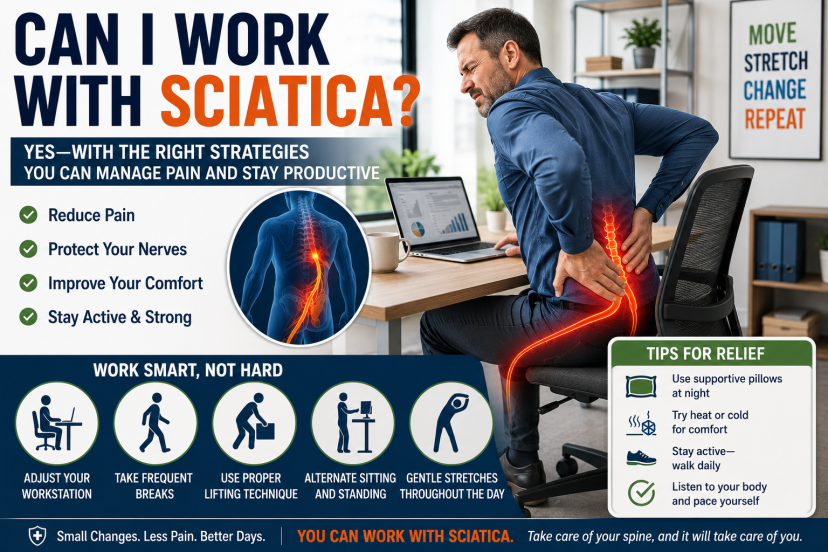
When sciatica flares, getting through a normal workday can suddenly feel like a major challenge. Sitting at a computer may send burning pain down your leg, standing behind a counter can become exhausting, and lifting or bending may make you worry about aggravating your back. It’s understandable to ask, Can I work with sciatica, or would taking time off be better for my recovery?
For many people, sciatica doesn’t automatically mean they need to stop working. Staying reasonably active and making temporary changes to your work routine may be more practical than spending days in bed. The key is matching your activities to your current symptoms and avoiding tasks that repeatedly make nerve pain, numbness, or weakness worse.
Whether you work at a desk, drive, stand all day, or have a physically demanding job, small changes can make a difference. Here’s how to create a more sciatica-friendly workday while giving your body a chance to recover.
💼 Quick Answer: Can I Work With Sciatica?
Yes, many people can work with sciatica, especially when symptoms are mild to moderate, and job duties can be adjusted. Frequent position changes, short walking breaks, an ergonomic workstation, and temporarily modifying heavy lifting may help.
However, severe pain, significant numbness, leg or foot weakness, or difficulty performing essential job duties safely may require medical evaluation, temporary work restrictions, or time away from work.
Key Takeaways
Most likely cause: Work may aggravate sciatica when prolonged sitting, standing, driving, repeated bending, or heavy lifting irritates an already sensitive spinal nerve.
Usually serious? Usually not. Many cases improve with conservative treatment, although new or progressive weakness and certain neurological symptoms need prompt evaluation.
First thing to check: If you’re asking, “Can I work with sciatica?” identify which specific job activities increase your leg pain, numbness, tingling, or weakness.
Best solution: Stay safely active while temporarily modifying aggravating tasks, changing positions frequently, improving ergonomics, and following an appropriate rehabilitation plan.
🧠 Why Sciatica Can Make Working Difficult
Sciatica refers to symptoms caused by irritation or compression involving nerve roots in the lower spine that contribute to the sciatic nerve.
Common causes include a herniated disc, spinal stenosis, and degenerative changes affecting the lower spine.
Symptoms can include:
- Shooting pain through the buttock and leg
- Burning or electric-like sensations
- Tingling or pins and needles
- Numbness in the leg or foot
- Lower-back discomfort
- Leg or foot weakness
Work can become challenging because many jobs require repeating the same positions or movements for hours.
An office employee may sit most of the day. A nurse may spend hours standing and lifting. A delivery driver may combine prolonged sitting with repeatedly entering and exiting a vehicle.
The issue isn’t necessarily that these activities are inherently damaging. It’s that your irritated nerve may currently have a lower tolerance for them.
🪑 Can I Work With Sciatica At A Desk?
Desk jobs may look physically easy, but sitting for hours can be one of the hardest parts of the day for some people with sciatica.
You don’t need to find one perfect posture and maintain it for eight hours.
Instead, focus on movement variety.
Try to:
- Change Positions Frequently: Shift between sitting, standing, and walking.
- Keep Your Feet Supported: Avoid constantly sitting with one leg tucked underneath you.
- Position Your Screen Comfortably: Reduce the need to lean forward for long periods.
- Move Your Chair Close Enough: You shouldn’t have to reach toward your keyboard.
- Take Short Walking Breaks: A few minutes of movement can interrupt prolonged sitting.
Consider setting a reminder to move before your pain becomes severe.
Should You Use A Lumbar Cushion?
A small lumbar cushion or rolled towel can make sitting more comfortable for some people.
Position it around your lower back rather than using an oversized cushion that pushes your entire torso forward.
More support isn’t automatically better.
If the cushion makes your leg symptoms worse, remove it.
Comfort and symptom response are more important than creating a theoretically perfect spinal curve.
🧍 Is A Standing Desk Better For Sciatica?
Standing desks are popular, but they aren’t a cure for sciatica.
Standing may feel significantly better than sitting for some people. Others experience more discomfort when they stand still.
The best approach is often to alternate.
You might sit for a while, stand for part of a task, and then take a short walk.
Avoid making the mistake of replacing eight hours of sitting with eight hours of standing.
If you use a sit-stand desk, adjust it so your keyboard and monitor remain comfortable in both positions.
Movement variety usually matters more than choosing one posture for the entire workday.
🏗️ Can You Work A Physical Job With Sciatica?
When asking can I work with sciatica, your occupation matters.
A desk worker and a warehouse employee face very different challenges.
Construction, landscaping, nursing, warehouse work, moving, maintenance, and similar jobs may involve:
- Repeated lifting
- Carrying heavy objects
- Bending
- Twisting
- Climbing
- Pushing and pulling
- Long periods on your feet
You may still be able to work, but temporary modifications can be helpful during a significant flare.
Modify Heavy Lifting When Possible
Don’t assume you must permanently avoid lifting.
Instead, reduce unusually heavy or repetitive loads while symptoms are highly irritable.
When lifting, keep manageable objects close to your body and avoid combining a heavy lift with unnecessary twisting.
For large or awkward objects, use mechanical assistance or ask a coworker for help.
If your leg is weak or unstable, don’t attempt tasks where sudden weakness could cause a fall or workplace injury.
🚗 Driving For Work With Sciatica
Professional drivers, delivery workers, sales representatives, and anyone with a long commute may struggle because driving combines prolonged sitting with limited movement.
Adjust your seat so you aren’t reaching for the steering wheel or pedals.
Try a modest lumbar cushion if it improves comfort.
During longer drives, get out and walk when breaks are practical and permitted.
Most importantly, consider whether you can control the vehicle safely.
If sciatica causes significant weakness or numbness in the leg or foot you use for the pedals, driving may not be safe. Don’t simply push through neurological weakness because you need to finish your shift.
Seek medical advice about your ability to drive safely.
🚶 Movement Breaks Can Make Work More Comfortable
One of the simplest answers to can I work with sciatica is to rethink how long you remain in one position.
You don’t necessarily need a 20-minute stretching routine every hour.
Brief movement can be enough.
Walk to get water. Stand during a phone call. Take the longer route to the restroom. Change positions between tasks.
If your job keeps you standing, occasionally sit or walk instead of remaining stationary.
The goal is to avoid letting one position dominate your entire day.
Don’t Wait Until Pain Becomes Severe
Learn your personal pattern.
If your symptoms typically increase after 45 minutes of sitting, don’t wait until minute 60 to move.
Try standing or walking after 30–40 minutes.
Preventing a major increase in symptoms can be easier than calming an already irritated nerve.
🤸 Gentle Exercises And Stretches At Work
You don’t need to turn your workplace into a gym.
Gentle movement may include:
- Short walks
- Comfortable standing movements
- Gentle hip mobility
- Light posture changes
- Exercises prescribed by your physical therapist
Be careful with aggressive hamstring stretches.
Sciatica can create a sensation of tightness along the back of the leg, but that doesn’t always mean the hamstring needs harder stretching. An irritated nerve may respond poorly to aggressive stretching.
Stop an exercise if it causes pain, numbness, or tingling to travel farther down your leg or if weakness increases.
🌿 Natural Ways To Manage Sciatica During The Workday
Home remedies won’t eliminate every cause of sciatica, but simple strategies may help you remain comfortable enough to continue normal activities.
Walk Regularly
Walking is one of the easiest forms of movement to add to your day.
Start with distances that are comfortable and build gradually.
Several five-minute walks may be easier to tolerate than one long walk after work.
Use Heat Or Cold For Temporary Relief
Some people find heat soothing when muscles around the lower back or buttocks feel tight.
Others prefer a cold pack during an acute flare.
Use a cloth barrier to protect your skin and follow product instructions.
Pace Your Activities
If Monday is a relatively good day, don’t immediately try to compensate for everything you couldn’t do during the weekend.
Doing too much too quickly can exceed your current tolerance.
Increase activity gradually as symptoms improve.
🏋️ How Physical Therapy Can Help You Keep Working
Physical therapy can be especially useful when your occupation repeatedly triggers sciatica.
A therapist can look at the actual demands of your job and help identify practical ways to perform them.
Treatment may include:
- Core and hip strengthening
- Leg strengthening
- Mobility exercises
- Movement and lifting training
- Walking progression
- Nerve mobility exercises when appropriate
- Ergonomic recommendations
- Gradual return to demanding job tasks
The goal isn’t simply reducing pain while you’re lying on a treatment table.
Good rehabilitation should help you become more capable of performing the activities you need in everyday life.
🧰 Lumbar Cushions, Back Braces And Other Work Products
Americans can find countless “sciatica relief” products online and in major pharmacies and retailers.
Some may improve comfort, but keep expectations realistic.
A lumbar cushion can make desk work or driving more comfortable for certain people.
A sit-stand desk may make changing positions easier.
A supportive chair can be useful, particularly if your existing chair is damaged or difficult to adjust.
Back braces may have limited short-term uses, but wearing one throughout every workday isn’t generally a substitute for appropriate movement and rehabilitation. Ask your healthcare provider whether a brace is suitable for your condition and job.
Be skeptical of supplements advertised as fast “sciatic nerve repair.” Supplements don’t correct mechanical nerve compression, and some can interact with medications.
🛌 What You Do After Work Matters Too
If you’re managing sciatica while working, recovery doesn’t end when your shift does.
Avoid immediately collapsing onto the couch for the entire evening if prolonged sitting is one of your triggers.
A short, comfortable walk after work may help you transition out of the position you’ve maintained during the day.
Prioritize adequate sleep.
Side sleepers may find a pillow between the knees comfortable, while back sleepers may prefer support beneath the knees.
If work was particularly demanding, give yourself a reasonable recovery period rather than adding an intense workout simply because it’s on your schedule.
Consistency usually matters more than intensity.
🛡️ How To Prevent Work From Triggering Sciatica Flares
You can’t eliminate every flare-up, but you can make your workday more adaptable.
Try these habits:
- Break Up Long Sitting Periods: Stand or walk periodically.
- Avoid Staying Still Too Long: This includes prolonged standing.
- Build Strength Gradually: Appropriate strength training may improve your tolerance for work demands.
- Use Sensible Lifting Techniques: Keep loads manageable and ask for help with awkward items.
- Improve Your Workstation: Make frequently used equipment easy to reach.
- Wear Practical Footwear: Particularly if you spend most of the day standing or walking.
- Increase Workload Gradually: Especially when returning after time away.
Don’t aim for a workday where your spine never bends or your posture never changes.
Your body is designed to move.
🩺 When To See A Doctor Or Chiropractor
If you’re repeatedly wondering can I work with sciatica because pain is interfering with your job, consider getting professional guidance.
Contact a healthcare provider if pain is severe, progressively worsening, repeatedly prevents you from completing normal activities, or isn’t improving with reasonable conservative care.
Get prompt medical evaluation for new or increasing leg or foot weakness, foot drop, significant numbness, or difficulty walking.
Seek urgent medical attention for new bowel or bladder control problems, numbness around the groin or saddle region, or severe or rapidly progressing weakness.
If you consider chiropractic care, tell the chiropractor about any weakness, numbness, previous spinal conditions, or neurological symptoms. Chiropractic treatment isn’t appropriate for every cause of sciatica.
A healthcare provider may also recommend temporary work restrictions when certain tasks aren’t safe during recovery.
If you’re planning to speak with a healthcare professional, you can also use our Sciatica Doctor Visit Checklist to organize your symptoms, questions, medications, and other important details before your appointment. Together, these free tools can make it easier to spot patterns and give your healthcare professional a clearer picture of what you’ve been experiencing.
❓ FAQs About Working With Sciatica
1. Should I Go To Work With Sciatica?
Many people can continue working with mild or moderate sciatica, particularly when they can modify aggravating tasks. Severe symptoms, significant weakness, or safety concerns may require medical evaluation or temporary work restrictions.
2. Can Sitting At Work Make Sciatica Worse?
Prolonged sitting can aggravate symptoms in some people. Try changing positions regularly, taking brief walking breaks, and experimenting with lumbar support.
3. How Long Should I Sit At Work With Sciatica?
There is no universal limit. If symptoms usually begin after a certain amount of time, change sitting positions before reaching that point. Some people find moving every 30–60 minutes practical.
4. Should I Take Time Off Work For Sciatica?
Not everyone needs time off. It depends on symptom severity and job demands. Temporary restrictions or modified duties may be sufficient for some people, while severe symptoms may make time away necessary.
5. Is Standing Or Sitting Better For Sciatica?
Neither is universally better. Some people prefer standing, while others tolerate sitting better. Alternating between sitting, standing, and walking is often more practical than remaining in one position.
6. Can I Lift At Work If I Have Sciatica?
Possibly, depending on your symptoms and the weight involved. During a significant flare, temporarily reducing heavy or repetitive lifting may help. New weakness or instability requires additional caution.
7. Can My Doctor Give Me Work Restrictions For Sciatica?
Yes. When medically appropriate, a healthcare provider may recommend temporary restrictions involving lifting, prolonged sitting or standing, driving, or other job-specific activities while you recover.
🎯 Final Thoughts On Can I Work With Sciatica?
So, can I work with sciatica? In many cases, yes.
You don’t necessarily need to choose between working through severe pain and staying in bed until every symptom disappears. A middle ground is often possible.
Modify activities that clearly aggravate your nerve symptoms. Break up prolonged sitting and standing. Use sensible ergonomics. Take short walking breaks. Reduce demanding lifting temporarily when necessary, and gradually rebuild your tolerance as symptoms improve.
If your work involves physical labor or driving, pay particular attention to weakness and numbness because these symptoms can create safety concerns.
Sciatica recovery isn’t always perfectly linear. One difficult workday doesn’t mean you’ve undone your progress.
Be patient and consistent. Small improvements—sitting a little longer, walking more comfortably, completing your shift with fewer symptoms—can all represent meaningful progress toward returning to normal life.
Medical Disclaimer: This article is for general educational and informational purposes only and is not a substitute for professional medical advice, diagnosis, treatment, or individualized occupational guidance. Your ability to work safely depends on your symptoms, medical condition, and job duties. Consult a qualified healthcare professional about persistent, severe, or worsening symptoms. Seek urgent medical attention for new bowel or bladder problems, saddle-area numbness, or significant or rapidly worsening weakness.
 Explore more:
- Sciatica Foot Drop: Warning Signs
- Can Being Overweight Cause Sciatica?
- Sciatic Nerve Pain Treatment at Home