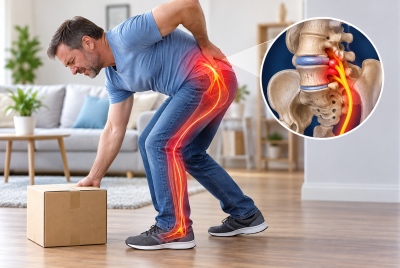
Can Sciatica Cause Foot Weakness? Signs Your Nerve Needs Attention

Maybe you’ve noticed your foot doesn’t feel quite right when you walk. Your toes may catch the floor, pushing off feels harder, or one foot seems weaker than the other when you climb stairs. When these changes appear alongside shooting leg pain, tingling, or numbness, it’s reasonable to wonder: Can sciatica cause foot weakness?
Yes, it can. Sciatica develops when nerve roots in the lower spine become irritated or compressed. Because these nerves help control muscles throughout the leg and foot, significant nerve involvement can sometimes affect strength as well as sensation.
Foot weakness deserves more attention than ordinary muscle soreness. It doesn’t automatically mean permanent nerve damage, but new or worsening weakness shouldn’t simply be treated at home for weeks while you wait for it to disappear.
Below, we’ll explain why sciatica can affect your foot, what warning signs to watch for, and how movement, physical therapy, and practical daily habits may support recovery.
⚡ Quick Answer: Can Sciatica Cause Foot Weakness?
Yes, sciatica can cause foot weakness when an irritated or compressed spinal nerve affects signals traveling to muscles that control the ankle, foot, or toes. You may have difficulty lifting your foot, raising your toes, pushing off the ground, or walking normally.
Mild weakness may improve as nerve irritation resolves. However, new, significant, or worsening weakness—especially foot drop—should be evaluated promptly by a healthcare professional.
Key Takeaways
Most likely cause: Compression or irritation of a lower spinal nerve root from a herniated disc, spinal stenosis, or another lower-back condition may interfere with signals controlling foot muscles.
Usually serious? Not always, but true muscle weakness is more concerning than pain alone, particularly if it appears suddenly or progressively worsens.
First thing to check: If you’re asking whether sciatica can cause foot weakness, notice whether you’re actually losing function—for example, having difficulty lifting your toes, walking on your heels, or pushing off with your foot.
Best solution: Avoid repeatedly aggravating the nerve, remain safely active, and seek appropriate medical evaluation and physical therapy when genuine weakness is present.
🧠 Why Can Sciatica Cause Foot Weakness?
Sciatica isn’t a disease by itself. It’s a collection of symptoms caused by irritation or compression involving nerve roots that eventually contribute to the sciatic nerve.
These nerve roots carry information in both directions.
Some signals allow you to feel sensations such as touch, temperature, and pain. Others tell muscles in your legs and feet when and how strongly to contract.
When a nerve is irritated, you might initially notice:
- Shooting or burning leg pain
- Tingling or pins-and-needles sensations
- Numbness
- Buttock discomfort
- Lower-back pain
When nerve function is more significantly affected, muscle weakness may also appear.
Common Causes Of Sciatica-Related Foot Weakness
Several lower-back conditions can potentially affect nerves controlling the foot.
Herniated Disc: Disc material can irritate or compress a nearby nerve root.
Spinal Stenosis: Narrowing around spinal nerves can reduce available space and contribute to nerve compression.
Degenerative Changes: Age-related changes involving spinal discs and joints may narrow the spaces through which nerves travel.
Spondylolisthesis: Movement of one vertebra relative to another can sometimes contribute to nerve irritation.
The exact pattern of weakness depends on which nerve root is involved and how severely it is affected.
🦶 What Does Foot Weakness From Sciatica Feel Like?
One reason people ask can sciatica cause foot weakness is that weakness doesn’t always feel dramatic.
Your foot may simply feel “off.”
You might notice that one shoe seems to catch the floor more often. Walking upstairs feels different. You may have trouble standing on your toes or keeping the front of your foot lifted.
Potential signs include:
- Difficulty lifting the front of your foot
- Trouble raising your toes
- Reduced ability to push downward through your foot
- Difficulty walking on your heels
- Difficulty standing or walking on your toes
- Your foot slapping the floor while walking
- Frequent tripping
- Reduced ankle stability
- One foot tiring unusually quickly
These symptoms are different from your foot merely feeling tired after a long day.
Is It True Weakness Or Does Your Foot Just Feel Weak?
Pain can change the way you move.
If putting weight through your leg hurts, your brain naturally encourages you to protect that side. You may shorten your stride or avoid pushing through the painful foot.
After several days of this, the leg can feel weak even if the nerve is still activating the muscles normally.
True neurological weakness means the muscle cannot generate its normal force even when you’re trying.
A healthcare professional can compare strength between sides and test your reflexes, sensation, walking pattern, and specific movements.
🚨 Can Sciatica Cause Foot Drop?
Yes, nerve compression associated with sciatica can sometimes contribute to foot drop.
Foot drop means you have difficulty lifting the front part of your foot toward your shin. As you walk, the toes may drag, or the foot may slap the floor.
Some people compensate by lifting their knee higher than usual so the foot clears the ground.
Foot drop has several possible causes besides sciatica, including problems involving other nerves, muscles, or the nervous system.
For that reason, don’t assume foot drop is “just sciatica.”
New or worsening foot drop deserves prompt medical evaluation.
Trying a new pillow, supplement, massage device, or stretching routine isn’t an appropriate substitute for determining why you’ve lost strength.
🚶 Is Walking Safe With Sciatica And Foot Weakness?
Walking can be beneficial for many people with sciatica, but foot weakness changes the safety equation.
If you have mild symptoms and can walk normally, short, comfortable walks may help you remain active and reduce stiffness.
If your foot drags, your ankle feels unstable, or you’re frequently catching your toes, falling becomes a concern.
Choose flat, predictable surfaces rather than uneven trails. Use stair railings, avoid rushing, and consider professional guidance if your walking pattern has noticeably changed.
You shouldn’t need to “push through” significant weakness.
If your ability to walk is deteriorating, get evaluated.
🪑 Sitting, Work And Driving With Foot Weakness
If prolonged sitting aggravates your sciatica, try breaking up your day with regular changes of position.
You don’t need a perfect posture.
Instead, alternate between sitting, standing, and walking when possible. An adjustable standing desk can make this easier for office workers, while a small lumbar cushion may improve comfort in certain chairs.
Be Especially Careful When Driving
When asking can sciatica cause foot weakness, consider how weakness affects driving.
Your right foot must quickly and accurately move between the accelerator and brake.
If weakness affects your ability to lift, move, or press with that foot, driving may become unsafe.
The same concern applies to your left foot when operating a manual transmission.
Don’t drive if weakness prevents reliable pedal control or slows your reaction. Seek medical advice before returning to driving if you’re unsure about your ability to operate the vehicle safely.
🌿 Natural Sciatica Relief Strategies At Home
Home care may help manage pain and maintain movement, but it should not delay medical evaluation of new or progressive weakness.
For uncomplicated sciatica symptoms, practical strategies can include:
Take Short, Comfortable Walks
Rather than spending hours in bed, take manageable walks throughout your day when you can do so safely.
Start small.
If 10 minutes is comfortable, you don’t need to turn it into a 45-minute workout immediately.
Use Heat Or Cold For Comfort
Some people prefer heat for tight lower-back or buttock muscles, while others find a cold pack soothing during a painful flare.
Protect your skin with a cloth barrier and limit exposure.
Neither option directly fixes nerve compression, but temporary pain relief may make gentle movement easier.
Change Positions Frequently
If sitting triggers symptoms, don’t wait until the pain becomes severe before standing.
Likewise, if prolonged standing bothers you, sit or walk for a while.
Variety is often more practical than trying to maintain one supposedly perfect posture.
🏋️ Physical Therapy For Sciatica And Foot Weakness
Physical therapy may be particularly useful after your condition has been appropriately evaluated.
A physical therapist can determine which muscles are weak and whether pain, nerve dysfunction, reduced activity, or movement habits are contributing.
Treatment may involve:
- Foot And Ankle Strengthening: Exercises appropriate to the affected muscles.
- Hip And Leg Strengthening: Supporting overall lower-body function.
- Core Exercises: Building strength and control around the trunk.
- Walking Retraining: Improving your gait when weakness has changed how you walk.
- Balance Training: Reducing fall risk when foot control is impaired.
- Mobility Exercises: Maintaining comfortable movement.
- Gradual Activity Progression: Helping you safely return to normal routines.
Avoid aggressively stretching the painful leg because it “feels tight.” Irritated nerve tissue doesn’t necessarily need stronger stretching.
Stop an exercise if it produces clearly worsening weakness, numbness, or pain traveling farther down your leg.
🧰 Can Lumbar Cushions, Back Braces Or Supplements Help?
Products may improve comfort, but none should be considered a direct treatment for unexplained foot weakness.
A lumbar cushion may make prolonged sitting or driving more comfortable if your symptoms respond well to additional lower-back support.
A standing desk can make it easier to change positions throughout the workday.
Back braces may have limited short-term uses for some conditions, but wearing a brace continuously isn’t generally a replacement for movement, rehabilitation, and appropriate strengthening.
Be cautious with supplements marketed for “sciatic nerve repair.”
Certain vitamin deficiencies can affect nerve health, but taking extra vitamins doesn’t automatically repair a nerve compressed by a spinal problem. High doses of some supplements can also cause problems or interact with medication.
Discuss supplements with a physician or pharmacist before taking them for nerve symptoms.
⏳ Will Foot Weakness From Sciatica Go Away?
People who discover sciatica can cause foot weakness often have one immediate concern: “Will my strength come back?”
It may.
When nerve irritation or compression improves, nerve function and muscle strength can sometimes recover. However, recovery depends on factors including the cause, severity, and duration of nerve involvement.
Nerve-related strength may recover more slowly than pain.
For example, your shooting leg pain might improve while your foot still feels weaker than normal.
Don’t judge recovery based entirely on pain intensity.
Pay attention to function:
- Are you tripping less often?
- Can you lift your toes more easily?
- Is walking becoming smoother?
- Is stair climbing improving?
- Does your foot feel more reliable?
If strength is worsening instead of improving, seek medical attention.
🛡️ Everyday Habits That Support Sciatica Recovery
You don’t need to organize your entire life around protecting your back.
Instead, build simple habits that keep you active without repeatedly triggering symptoms.
Try to:
- Break Up Sitting: Move periodically during desk work and long trips.
- Walk Regularly: Use distances you can safely tolerate.
- Build Strength Gradually: Avoid sudden jumps in exercise volume.
- Lift Sensibly: Keep manageable loads close and avoid unnecessary twisting.
- Avoid Prolonged Bed Rest: Maintain comfortable activity unless advised otherwise.
- Prioritize Sleep: Give your body adequate time for recovery.
- Follow Your Rehabilitation Plan: Consistency is usually more useful than occasional intense exercise.
These habits may also help prevent the cycle of inactivity, weakness, and fear of normal movement that sometimes develops after painful sciatica episodes.
🩺 When To See A Doctor Or Chiropractor
Foot weakness is one symptom you shouldn’t casually ignore.
Arrange prompt medical evaluation if weakness is new, clearly worsening, affecting your walking, causing frequent trips or falls, or making it difficult to lift your foot or toes.
Seek urgent medical attention if you develop rapidly progressing weakness, new bowel or bladder control problems, or numbness around your groin, inner thighs, or saddle region. These symptoms may indicate serious nerve compression.
A physician may examine your strength, reflexes, sensation, and walking pattern and determine whether further investigation is necessary.
If you’re considering chiropractic care, tell the chiropractor about any weakness, numbness, foot drop, or other neurological changes before treatment. Significant or progressive neurological weakness warrants appropriate medical assessment.
❓ FAQs About Sciatica And Foot Weakness
1. Can Sciatica Make Your Foot Feel Weak?
Yes. Sciatica may affect nerve signals controlling muscles in the ankle, foot, or toes. However, pain can also make a foot feel weak even when neurological strength remains relatively normal.
2. Which Part Of The Foot Can Sciatica Affect?
The location varies depending on which nerve root is irritated. Sciatica may produce symptoms along different areas of the leg, ankle, heel, top of the foot, sole, or toes.
3. Can Sciatica Cause Foot Drop?
Yes, significant nerve root problems can sometimes contribute to foot drop. Because foot drop has multiple possible causes, new difficulty lifting the front of your foot should be promptly evaluated.
4. How Long Does Foot Weakness From Sciatica Last?
There is no single recovery timeline. Mild weakness may improve as nerve irritation settles, while more significant nerve involvement can require longer recovery and rehabilitation.
5. Can Sciatica Cause Weakness In The Toes?
Yes. Depending on the nerve involved, some people have difficulty lifting or controlling certain toe movements. New or progressive weakness should be medically assessed.
6. Can Physical Therapy Help Sciatica Foot Weakness?
Physical therapy can help strengthen affected muscles, improve balance and walking mechanics, and guide your return to activity. Treatment should be individualized after appropriate evaluation of neurological weakness.
7. Should I Walk If Sciatica Is Making My Foot Weak?
Walking may be appropriate when weakness is mild, and you can walk safely. If your toes drag, your ankle gives way, or you’re frequently tripping, seek professional evaluation before attempting longer walks or demanding exercise.
📌 Conclusion: Can Sciatica Cause Foot Weakness?
So, can sciatica cause foot weakness? Yes. Because spinal nerves help control muscles in your feet and legs, significant nerve irritation or compression can sometimes make lifting your foot, moving your toes, pushing off, or walking normally more difficult.
The important distinction is between a foot that feels weak because you’re in pain and a genuine loss of muscle strength.
Don’t panic if your leg feels tired during a sciatica flare. But don’t ignore clear changes in function either.
Continue safe, comfortable movement when appropriate, break up prolonged sitting, and gradually rebuild activity. Physical therapy can help restore strength, balance, and confidence when rehabilitation is appropriate.
Most importantly, get new or worsening weakness evaluated promptly.
Sciatica recovery may require patience. Focus on gradual improvements in walking, strength, comfort, and everyday function rather than expecting everything to return to normal overnight.
Medical Disclaimer: This article is provided for general educational and informational purposes only and is not a substitute for professional medical advice, diagnosis, or treatment. Foot weakness has many possible causes and should be evaluated by a qualified healthcare professional, particularly when new, significant, or worsening. Seek urgent medical care for rapidly progressing weakness, new bowel or bladder control problems, or numbness around the groin or saddle region.
 Explore more:
- Why Driving Makes Sciatica Worse
- Can Lifting Heavy Objects Cause Sciatica?
- What Pillow Helps Sciatica? Best Sleep Positions