What Should I Avoid Doing With Sciatica? 10 Mistakes That Can Make Pain Worse
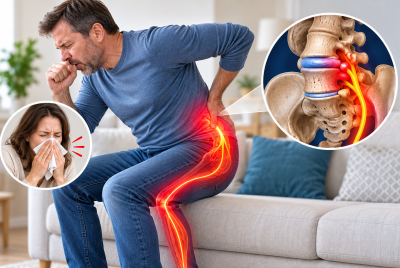
When sciatica flares, even ordinary activities can suddenly become difficult. Sitting through a workday, getting out of the car, bending to pick something up, or trying to sleep comfortably may send burning or shooting pain from your lower back into your buttock and leg. It’s natural to wonder, what should I avoid doing with sciatica while your irritated nerve settles down?
The answer isn’t to stop moving or protect your back from every activity. In fact, too much rest can sometimes leave you stiffer and less confident about movement. Instead, the goal is to identify activities that repeatedly aggravate your symptoms while continuing gentle, comfortable movement.
Small changes to sitting, lifting, exercise, sleep, and daily routines can make sciatica easier to manage. Below are the most common mistakes to avoid—and practical alternatives that can help you stay active without unnecessarily irritating your sciatic nerve.
⚡ Quick Answer: What Should I Avoid Doing With Sciatica?
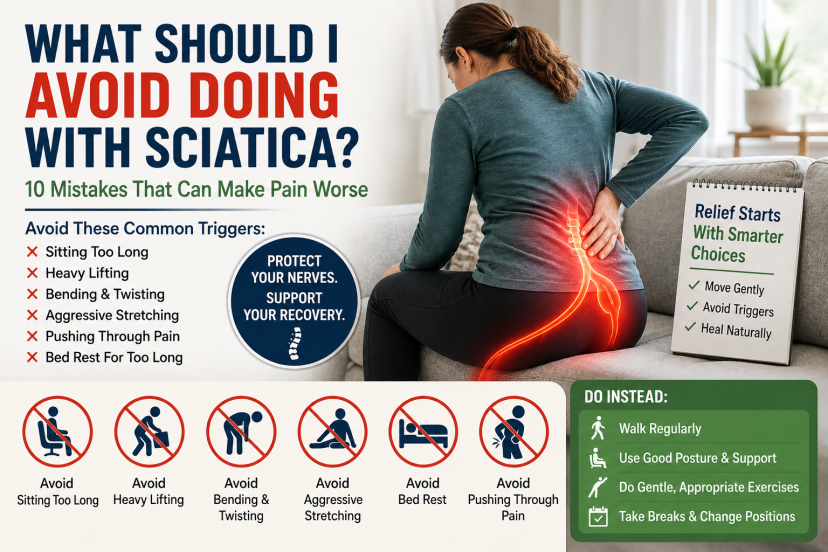
If you have sciatica, avoid prolonged sitting, heavy lifting with poor technique, repeated bending and twisting, aggressive stretching, pushing through worsening nerve pain, and extended bed rest. You should also avoid any activity that consistently causes pain, numbness, or tingling to travel farther down your leg.
You don’t necessarily need to stop exercising. Gentle walking, appropriate exercises, frequent position changes, and physical therapy can often help you remain active while your symptoms improve.
Key Takeaways
Most likely cause: Sciatica usually develops when a nerve root in the lower spine becomes irritated or compressed, often because of a herniated disc, spinal stenosis, or age-related spinal changes.
Usually serious? Most cases are not emergencies and may improve with conservative care, although significant weakness and certain neurological symptoms require prompt evaluation.
First thing to check: If you’re wondering what should I avoid doing with sciatica, notice which positions or movements make pain, tingling, or numbness travel farther down your leg.
Best solution: Stay gently active, reduce activities that clearly aggravate symptoms, improve your posture and movement habits, and use individualized exercises or physical therapy when needed.
🚫 1. Avoid Sitting For Hours Without Moving
Long periods of sitting are one of the most common daily-life sciatica triggers.
Sitting keeps your hips flexed and your lower back relatively still. Depending on what’s causing your symptoms, prolonged sitting may increase discomfort in your lower back, buttock, or leg.
This can be particularly difficult for office workers, truck drivers, frequent travelers, and anyone spending hours at a computer.
Instead of trying to find one “perfect” sitting posture, change positions regularly.
Try to:
- Stand Up Regularly: Take short movement breaks throughout your workday.
- Walk Briefly: Even a few minutes around the office or home can help reduce stiffness.
- Use Lumbar Support: A small lumbar cushion or rolled towel may make sitting more comfortable.
- Adjust Your Chair: Keep your feet supported and avoid constantly leaning toward your computer.
A standing desk may also help you alternate positions, but don’t simply replace eight hours of sitting with eight hours of standing.
Movement variety matters more than maintaining one position all day.
🏋️ 2. Avoid Heavy Lifting With Poor Technique
If you’re asking what should I avoid doing with sciatica, careless lifting deserves a place near the top of the list.
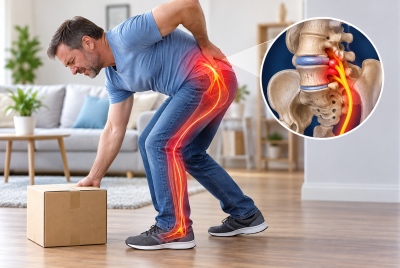
Lifting a heavy laundry basket, bag of soil, suitcase, or box while bending and twisting can aggravate an already sensitive lower back.
That doesn’t mean you can never lift again.
During a flare, however, consider reducing heavy or repetitive lifting. When you do lift something, keep the load reasonably close to your body, use your hips and knees, and avoid twisting while carrying it.
For heavier objects, ask someone for help or divide the load into smaller portions.
Your long-term goal should be to gradually regain strength and confidence rather than permanently avoiding normal movement.
🪑 3. Avoid Slouching In Soft Chairs And Couches
There’s no single posture that guarantees sciatica relief, but sinking into a soft couch for hours can be uncomfortable for many people.
Deep sofas may leave your hips considerably lower than your knees and make it harder to change position.
If this triggers your symptoms, choose a firmer chair temporarily and support your lower back.
You can also experiment with a small lumbar cushion.
Most importantly, don’t obsess over sitting perfectly straight every minute. Even “good posture” can become uncomfortable when maintained too long.
Your best posture is often your next posture.
Shift, stand, walk, and move throughout the day.
🌀 4. Avoid Repeated Bending And Twisting During A Flare
Housework can be surprisingly demanding when you have sciatica.
Vacuuming, unloading a dishwasher, making beds, gardening, cleaning a bathtub, and picking things off the floor may involve repeated bending and twisting.
These movements aren’t inherently dangerous, but repeating a movement that clearly worsens your nerve symptoms isn’t helpful.
If bending triggers your pain:
- Raise frequently used objects to waist height.
- Kneel or squat when comfortable instead of repeatedly bending from your waist.
- Break housework into shorter sessions.
- Move your feet instead of twisting your torso while carrying something.
- Take a short walking break if symptoms begin increasing.
As your condition improves, gradual exposure to normal bending can be important. The goal isn’t to become afraid of movement.
🧘 5. Avoid Aggressive Hamstring And Sciatic Nerve Stretching
Stretching feels like the obvious solution when the back of your leg feels painfully tight.
But sciatic nerve pain isn’t always caused by a muscle that simply needs to be stretched.
What feels like a tight hamstring can sometimes involve increased sensitivity of the sciatic nerve. Aggressively pulling your leg toward you may increase symptoms rather than relieve them.
This is especially important when deciding what should I avoid doing with sciatica during an acute flare.
Don’t force a stretch simply because you feel tight.
A useful rule is to stop or modify an exercise if it causes burning, tingling, numbness, or shooting pain to travel farther down your leg.
A physical therapist can determine whether gentle stretching, strengthening, mobility work, or nerve-gliding exercises are more appropriate for your symptoms.
🛏️ 6. Avoid Staying In Bed All Day
When every movement hurts, staying in bed may sound like the safest choice.
A short period of rest after a severe flare may feel necessary, but prolonged bed rest generally isn’t the preferred approach for uncomplicated sciatica.
Too much inactivity can contribute to stiffness, reduced conditioning, and loss of strength.
Instead, balance rest with manageable activity.
You might walk around your house for several minutes, rest, and then repeat the process later. As symptoms settle, gradually increase your normal daily activity.
Don’t measure success by how hard you push yourself.
Consistency matters more.
Five comfortable walks throughout the day may be more useful than one long walk that leaves your leg throbbing for hours afterward.
🏃 7. Avoid Exercising Through Worsening Nerve Pain
Exercise can play an important role in sciatica recovery, but “no pain, no gain” isn’t a useful rule for irritated nerve symptoms.
Muscle effort and mild stiffness are different from increasing neurological symptoms.
Be cautious if an exercise causes:
- Shooting pain farther down your leg
- Increasing numbness
- Stronger pins-and-needles sensations
- New weakness
- Symptoms that remain significantly worse afterward
Some people tolerate walking, swimming, or stationary cycling well, while others find certain activities aggravating.
There isn’t one universal list of exercises everyone with sciatica must avoid.
Your symptoms and underlying condition matter.
🚗 8. Avoid Long Drives Without Breaks
Driving combines several common sciatica triggers: prolonged sitting, limited movement, hip flexion, and road vibration.
If you need to drive, adjust your seat so you aren’t reaching for the pedals or steering wheel. A modest lumbar cushion may provide additional support.
For longer journeys, plan regular stops when practical.
Getting out and walking for several minutes can give your lower back and hips a break from the same seated position.
Also remove bulky items from your back pockets before driving. Sitting on a wallet or phone can tilt your pelvis and create unnecessary pressure.
If sciatica causes significant leg weakness or numbness that interferes with safely operating the pedals, don’t drive until you’ve been medically evaluated.
👟 9. Avoid Going From No Activity To Too Much Activity
Sciatica symptoms often fluctuate.
After several painful days, you may wake up feeling dramatically better and immediately try to catch up on everything you’ve missed.
You clean the house, walk three miles, mow the lawn, and reorganize the garage.
Then the pain returns that evening.
This doesn’t necessarily mean activity damaged your nerve. You may simply have exceeded your current tolerance.
Increase activity gradually.
For example, if you comfortably walk for 10 minutes, build from there instead of suddenly attempting an hour-long hike.
A gradual approach can help you discover how much activity your body currently tolerates without creating a cycle of doing too much and then resting for days.
😴 10. Avoid Sleeping In A Position That Repeatedly Aggravates Symptoms
There is no medically required sleeping position for everyone with sciatica.
Some people prefer sleeping on their side with a pillow between their knees. Others feel better lying on their back with a pillow under their knees.
Experiment.
The best sleeping position is generally one that allows you to rest without noticeably increasing your symptoms.
Your mattress also matters primarily in terms of comfort and support. You don’t necessarily need to purchase an expensive “sciatica mattress.”
Before replacing your bed, experiment with your sleep position, pillow placement, and nighttime routine.
🌿 What Should You Do Instead For Natural Sciatica Relief?
Understanding what should I avoid doing with sciatica is useful, but recovery shouldn’t become a long list of restrictions.
Focus equally on what you can do.
Keep Walking When Comfortable
Walking is accessible, free, and easy to adjust.
Start with short distances that don’t significantly worsen your symptoms. Several short walks may be easier than one long session.
Use Heat Or Cold For Comfort
A heating pad may help some people relax tight muscles around the lower back or buttocks.
During an acute flare, others prefer an ice or cold pack.
Use a cloth barrier to protect your skin and limit exposure. Heat and cold can provide temporary symptom relief but don’t necessarily correct the underlying cause.
Try Appropriate Exercise
A physical therapist may recommend exercises based on how your symptoms respond to different movements.
Depending on the individual, rehabilitation may include:
- Gentle mobility exercises
- Core strengthening
- Hip and leg strengthening
- Movement retraining
- Nerve mobility exercises
- Gradual return to normal activity
Personalized exercise is more useful than randomly choosing “sciatica stretches” online.
💼 Everyday Products: What May Help And What To Avoid
Many U.S. retailers sell lumbar cushions, back braces, standing desks, seat cushions, massage devices, and supplements marketed toward people with back or nerve pain.
A lumbar cushion or adjustable office chair can sometimes make prolonged sitting more comfortable.
A sit-stand desk can make changing positions easier.
Back braces may have specific short-term uses, but routinely wearing one isn’t a substitute for appropriate movement and strengthening. Ask your healthcare provider whether a brace is suitable for your situation.
Be especially skeptical of supplements promising to “repair the sciatic nerve” or cure sciatica quickly. Evidence for many nerve-support supplements is limited, and supplements can interact with medications.
Discuss supplements with a doctor or pharmacist, especially if you take prescription medication.
🩺 When To See A Doctor Or Chiropractor For Sciatica
If you’re constantly changing your life because you’re worried about what should I avoid doing with sciatica, it may be time for a professional evaluation.
See a healthcare professional if your pain is severe, keeps returning, progressively worsens, interferes substantially with daily life, or isn’t improving with conservative self-care.
You should also be evaluated if numbness is spreading or you develop noticeable leg or foot weakness.
Seek urgent medical attention for new bowel or bladder control problems, numbness around the groin or saddle region, rapidly worsening weakness, or other major neurological changes. These can be signs of serious nerve compression.
If you choose chiropractic care, make sure the provider knows your complete symptom history. Sciatica has multiple possible causes, and spinal manipulation isn’t appropriate for every condition.
❓ FAQs About What To Avoid With Sciatica
1. What Is The Number One Thing To Avoid With Sciatica?
There isn’t one activity everyone must avoid. However, repeatedly doing something that clearly causes nerve pain, tingling, or numbness to spread farther down your leg is a good reason to modify that activity and seek guidance if symptoms persist.
2. Is Sitting Bad For Sciatica?
Sitting isn’t inherently harmful, but prolonged sitting may aggravate symptoms in some people. Change positions regularly, take walking breaks, and experiment with lumbar support.
3. Should I Avoid Walking With Sciatica?
Usually not. Gentle walking is often a practical way to remain active. Start with manageable distances and reduce the duration if walking significantly worsens your symptoms.
4. What Exercises Should I Avoid With Sciatica?
Avoid exercises that consistently produce worsening shooting pain, numbness, tingling, or weakness. Because different conditions can cause sciatica, an exercise that’s uncomfortable for one person may help another.
5. Should I Avoid Bending Over With Sciatica?
Not permanently. During an acute flare, repeated bending may aggravate some people’s symptoms. Modify painful activities temporarily and gradually return to normal movement as your tolerance improves.
6. Is Bed Rest Good For Severe Sciatica?
Brief rest may be necessary when pain is intense, but prolonged bed rest generally isn’t recommended for uncomplicated sciatica. Gentle movement and gradual activity are usually preferable when tolerated.
7. Can Stretching Make Sciatica Worse?
Yes. Aggressive stretching can aggravate symptoms in some people, particularly when the nerve is sensitive. Stop a stretch if it causes pain, tingling, or numbness to travel farther down your leg.
🌟 The Bottom Line: What Should I Avoid Doing With Sciatica?
So, what should I avoid doing with sciatica? The most useful answer isn’t “avoid everything that involves your back.”
Instead, temporarily reduce the specific movements and positions that repeatedly make your nerve symptoms worse. Avoid prolonged sitting, careless heavy lifting, aggressive stretching, extended bed rest, and pushing through worsening neurological symptoms.
At the same time, keep moving within your tolerance.
Take short walks. Change positions frequently. Build activity gradually. Improve your workstation and driving setup. Consider physical therapy when you need more individualized guidance.
Sciatica recovery can take patience, and occasional flare-ups don’t necessarily mean you’re back at the beginning. Small improvements in walking, sleeping, sitting, and everyday movement are meaningful progress.
Be consistent, listen to your symptoms, and give your body time to rebuild its tolerance for normal life.
Medical Disclaimer: This article is for general educational and informational purposes only and does not replace professional medical advice, diagnosis, or treatment. Sciatica can have different underlying causes and may require individualized assessment. Consult a qualified healthcare professional about persistent, severe, or worsening symptoms. Seek urgent medical attention for new bowel or bladder problems, saddle-area numbness, or significant or rapidly worsening leg weakness.
 Explore more:
- Why Driving Makes Sciatica Worse
- Can Sciatica Cause Foot Weakness?
- What Pillow Helps Sciatica? Best Sleep Positions