Sciatica And Office Work In Germany: How To Sit Pain-Free (Simple Fixes That Work)
🇩🇪 Quick Answer
To sit pain-free with sciatica in Germany, use proper posture, an ergonomic chair, regular movement breaks, and lumbar support. German physiotherapy guidelines emphasize movement and correct sitting habits to reduce nerve pressure.
😣 Sitting All Day And Your Sciatica Is Getting Worse?
You sit down to work…
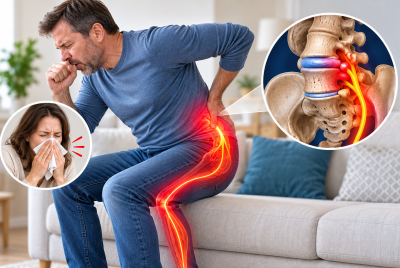
And within minutes, the pain starts:
- Tightness in your lower back
- Burning down your leg
- Tingling or numbness
If you work in an office in Germany — or from home — this is extremely common.
👉 Long sitting hours + poor posture = one of the biggest sciatica triggers
The good news?
👉 Small changes in how you sit can dramatically reduce pain
🧠 Why Sitting Makes Sciatica Worse
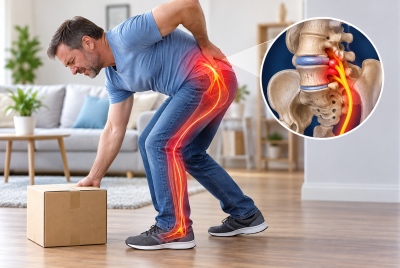
Sciatica is caused by pressure on the sciatic nerve.
When you sit:
- Your lower back compresses
- Discs in your spine take more load
- Blood flow decreases
👉 In Germany, physiotherapists often say:
“Sitting is fine — but sitting too long is the problem.”
🪑 How Germans Sit To Reduce Sciatica Pain
Germany has a strong focus on ergonomics and workplace health.
Many offices follow these principles:
- Adjustable chairs
- Proper desk height
- Encouraged movement breaks
- Standing desk options
👉 Even small improvements can make a big difference
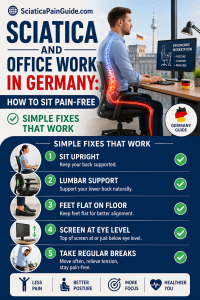
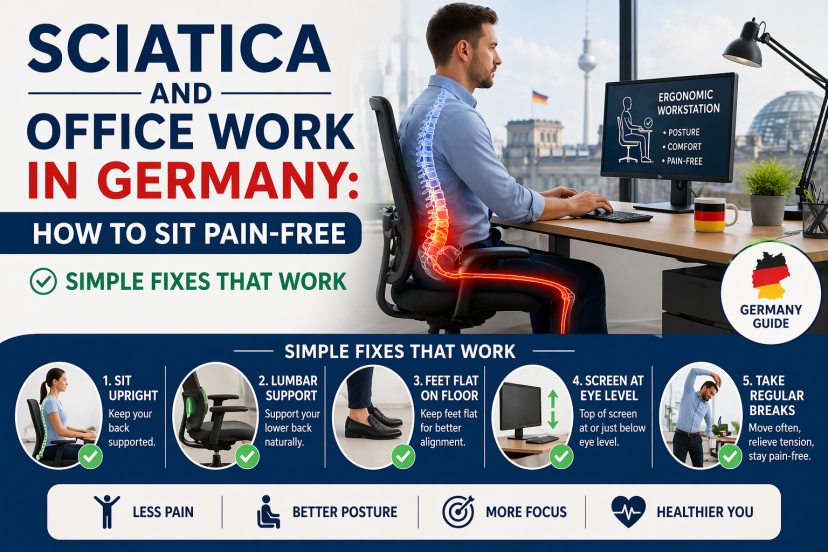
🧩 The Perfect Sitting Position (Step-by-Step)
✅ Follow this setup:
- Sit with your back fully supported
- Keep feet flat on the floor
- Knees at hip level or slightly lower
- Maintain a neutral spine (not slouched)
- Keep shoulders relaxed
👉 Think: upright but relaxed
🪑 Chair Setup (Very Important)
What Germans typically use:
- Adjustable office chair
- Lumbar support (built-in or cushion)
- Seat height aligned with the desk
👉 Key tip:
Your hips should be slightly higher than your knees
💻 Desk & Screen Position
- Screen at eye level
- Keyboard close to your body
- Elbows at ~90° angle
👉 Prevents leaning forward (a major sciatica trigger)
⏱️ The #1 Rule In Germany: Don’t Sit Too Long
Even perfect posture won’t help if you sit for hours.
Recommended:
- Stand up every 30–60 minutes
- Walk for 2–5 minutes
- Stretch lightly
👉 Movement reduces nerve pressure instantly
🚶 Movement Habits That Reduce Sciatica
Common habits in Germany:
- Walking meetings
- Standing desks
- Short movement breaks
- Cycling to work (when possible)
The goal: keep your body active throughout the day
🧘 Simple Office Exercises (2–3 Minutes)
Try these during work:
- Gentle lower back stretch
- Hamstring stretch (standing)
- Pelvic tilts (seated or standing)
👉 These relieve pressure on the sciatic nerve
♨️ Extra Relief Tips
- Use a heating pad after work
- Avoid sitting for long before bed
- Do light stretching in the evening
📊 Real-Life Scenario
Daniel, 39, Berlin — Software Developer
- Sitting 8–10 hours daily
- Sciatica pain is worsening over time
What he changed:
- Adjusted chair and screen height
- Took breaks every 45 minutes
- Started walking daily
👉 Pain reduced within 3 weeks
👉 Able to work comfortably again
⏳ How Fast Can You See Results?
| Timeframe | What Happens |
|---|---|
| 1–3 days | Slight relief with posture changes |
| 1–2 weeks | Less pain during work |
| 3–6 weeks | Significant improvement |
✅ Self-Check: Is Your Setup Causing Sciatica?
- You slouch or lean forward
- Your feet don’t touch the floor
- You sit for hours without breaks
- Pain improves when you stand
👉 If yes → your setup needs adjustment
⚖️ Expectation vs Reality
Expectation:
“I need a new chair or an expensive setup.”
Reality: Small changes + movement matter more than expensive equipment
🚫 Common Office Mistakes
- Sitting too long without breaks
- Slouching forward
- Using non-adjustable chairs
- Ignoring early pain signals
🧩 Simple Daily Routine
- Morning: Light stretching (5–10 min)
- Work: Break every 30–60 min
- Midday: Short walk
- Evening: Heat therapy + mobility
❗ When To See A Doctor
- Pain becomes severe
- Numbness or weakness appears
- Sitting becomes unbearable
- No improvement after a few weeks
👉 Start with your Hausarzt (GP)
❓ FAQs: Sciatica and office work in Germany
1. Can sitting cause sciatica?
Yes, long sitting increases pressure on the sciatic nerve.
2. What is the best chair for sciatica in Germany?
An adjustable ergonomic chair with lumbar support.
3. How often should I take breaks?
Every 30–60 minutes is recommended.
4. Are standing desks helpful?
Yes, standing desks reduce sitting time and can help improve posture.
5. Can I work with sciatica?
Yes, with proper setup and movement habits.
🧠 Final Thoughts – Sciatica and office work in Germany
Sciatica and office work don’t have to go together.
In Germany, the focus is simple:
- Move more
- Sit better
- Fix posture
And the result?
Many people reduce or even eliminate pain — without medication
⚠️ Disclaimer
This article is for informational purposes only and does not replace professional medical advice. Always consult a qualified healthcare provider in Germany.
 Explore more:
- How Germans Manage Sciatica Without Medication
- Is Sciatica Treatment In Germany Worth It?
- Sciatica Treatment In Germany