What Are The Symptoms Of Sciatica Pain? A Complete Guide To Pain, Tingling, Numbness And Weakness

Sciatica Symptoms: A Head-To-Toe Guide To Where You May Feel Pain And How Symptoms Can Change
If you’ve developed an unusual combination of lower-back pain, buttock pain, leg pain, tingling, numbness, or weakness, you may be wondering: what are the symptoms of sciatica pain, and do my symptoms fit the pattern?
Sciatica can be confusing because it doesn’t feel exactly the same for everyone.
One person may have a burning sensation that begins in the buttock and shoots down the back of the thigh. Another may have relatively little back pain but persistent calf pain and tingling in the foot. Someone else may notice numb toes, an aching buttock, or weakness that makes walking feel different.
What connects these experiences is the nerve pathway.
Sciatica refers to symptoms associated with irritation or compression involving the sciatic nerve or, more commonly, nerve roots in the lower spine that contribute to it. The symptoms can involve the lower back, buttock, and leg, and may extend into the foot or toes. Pain, numbness, and tingling are characteristic features, while muscle weakness can occur in more serious cases.
This guide takes a different approach from a simple list of symptoms. We’ll follow sciatica from the lower back all the way to the toes, looking at what you may actually feel, where you may feel it, how symptoms can change with everyday activities, and which changes deserve medical attention.
Medical Disclaimer: This article is for general educational and informational purposes only. It is not intended to provide medical advice, diagnosis, or treatment and should not replace advice from a qualified healthcare professional.
Quick Answer: What Are The Symptoms Of Sciatica Pain?
The most common symptoms of sciatica pain include pain that travels from the lower back or buttock into one leg, along with possible burning, shooting, electric-shock-like, or aching sensations. Some people also experience tingling, pins and needles, numbness, or muscle weakness.
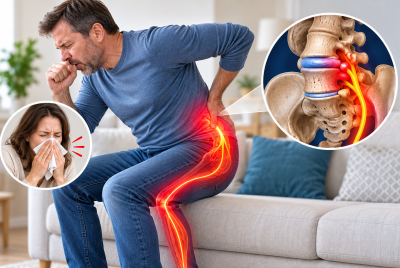
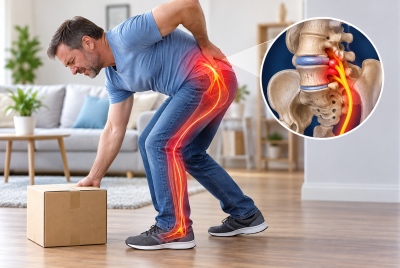
Symptoms can occur anywhere along the sciatic nerve pathway and may extend through the thigh and calf into the foot or toes. Sciatica usually affects one side of the body. Symptoms may worsen with certain movements or positions, including prolonged sitting, bending, coughing, or sneezing.
New or worsening muscle weakness, severe or worsening symptoms affecting both legs, numbness around the genitals or anus, or new bowel or bladder problems require urgent medical evaluation.
Key Takeaways
Most likely symptom pattern: Sciatica commonly causes pain that begins around the lower back or buttock and travels into one leg. Tingling, numbness, or weakness may occur along the same general pathway.
Usually serious? Most sciatica symptoms are not signs of a medical emergency. However, significant or worsening weakness, symptoms involving both legs, saddle-area numbness, and bowel or bladder changes require prompt or emergency medical attention.
First thing to check: When asking what the symptoms of sciatica pain are, notice where your symptoms start, where they travel, which side is affected, and whether you have pain alone or also tingling, numbness, or weakness.
Best solution: Track meaningful changes rather than trying to diagnose the affected nerve yourself. Persistent, severe, worsening, or neurologically concerning symptoms should be evaluated by a qualified healthcare professional.
Sciatica Symptom Map: From Your Lower Back To Your Toes
Sciatica is easier to understand when you stop thinking about it as simply “back pain.” Imagine a pathway beginning around the lower spine and continuing through:
Lower back → buttock → thigh → calf → foot → toes
The sciatic nerve connects the lower-back region with the hips, buttocks, legs, and feet. Because it has sensory and motor functions, problems involving the nerve pathway can affect both what you feel and, in more significant cases, how muscles function. But your symptoms don’t have to appear at every point along that pathway.
You might experience:
Lower back: mild ache
Buttock: severe burning pain
Thigh: shooting pain
Calf: tingling
Foot: numbness
Or you might have almost no lower-back discomfort and mainly experience symptoms below the knee. Mayo Clinic notes that one part of the leg may hurt while another area feels numb. That variability is one of the defining characteristics of sciatica. Let’s follow the symptom pathway downward.
Lower-Back Symptoms
Sciatica can begin with lower-back discomfort, but significant back pain isn’t required.
You might experience:
- A dull lower-back ache
- Sharp pain
- Pain when bending
- Pain that seems to move toward one buttock
- A sensation that the back and leg symptoms are connected
- Increased symptoms during certain movements
This is an important distinction.
Ordinary lower-back pain and sciatica aren’t necessarily the same thing.
Lower-back pain can remain localized. Sciatica typically has a radiating nerve-related component involving the buttock or leg.
Cleveland Clinic describes sciatica symptoms as potentially affecting the lower back, buttocks, and legs, while Mayo Clinic notes that the classic pain pathway often extends from the low back through the buttock and down the back of the thigh and calf.
Can You Have Sciatica Without Lower-Back Pain?
Yes. The leg symptoms can be considerably more noticeable than the back symptoms. So if your back feels relatively normal but you have pain traveling from your buttock down your leg, the absence of major back pain doesn’t automatically rule out sciatica.
Buttock Pain
For many people, the buttock is where sciatica becomes unmistakably different from ordinary back soreness.
The sensation may feel:
- Deep
- Burning
- Aching
- Sharp
- Electric
- Like pain is “starting” there before traveling downward
Sometimes the buttock is the most painful area. At other times, it feels more like the beginning of a line of pain continuing into the thigh.
You might notice the discomfort more when:
- Sitting for a long time
- Getting out of a chair
- Driving
- Bending
- Changing position
- Coughing or sneezing
The sciatic nerve passes through the buttock region on its way into the leg, so this location fits the typical symptom pathway. But buttock pain alone doesn’t prove that you have sciatica. Muscles, joints, tendons, and other structures can produce pain in the same general region. The overall symptom pattern matters.
Learn more: Sciatica Buttock Pain Treatment at Home
Can Sciatica Cause Pain Around The Hip?
People frequently describe sciatica as “hip pain,” even though the source of the symptoms may not be the hip joint itself. The distinction isn’t always obvious.
Sciatica-type discomfort around the hip may feel as though it connects with:
- Lower-back pain
- Buttock pain
- Pain traveling into the thigh
- Tingling or numbness farther down the leg
By contrast, Cleveland Clinic notes that hip conditions often cause groin pain and may hurt when bearing weight or moving the hip, whereas sciatic pain commonly begins around the lower back and may travel through the hip region and down the leg.
This is not a reliable home diagnostic test.
Hip disorders and sciatica can overlap, and pain around the pelvis or groin has many possible causes. If the location is unusual or you’re uncertain whether the problem is coming from your hip, back, or another area, a professional evaluation can help distinguish between them.
Sciatica Pain In The Thigh
The thigh is one of the classic places for sciatica symptoms. Pain often travels through the back of the thigh, although the exact distribution can vary depending on which nerve structures are involved.
You may feel:
- Shooting pain
- Burning
- An electric sensation
- Deep aching
- Tingling
- Numbness
- A mixture of several sensations
Some people describe a distinct line running downward. Others experience broader or less clearly defined discomfort.
Does Thigh Pain Have To Reach The Calf?
No. Sciatica symptoms don’t have to travel all the way down your leg. For one person, the symptoms may mainly involve the buttock and thigh. For another, they may continue below the knee. And someone else may notice surprisingly little thigh discomfort but significant calf or foot symptoms. Location is useful information, but it shouldn’t be used alone to identify the exact nerve root or diagnose the cause.
Sciatica Symptoms In The Calf
When symptoms continue below the knee, the calf can become a prominent problem area.
You may notice:
- Burning pain
- Shooting pain
- Aching
- Tingling
- Numbness
- Unusual sensitivity
- Weakness
Lumbar radicular pain, commonly called sciatica, can radiate from the lower back down the leg below the knee and into the calf or foot, with pain, numbness, weakness, or tingling.
Calf symptoms can be especially noticeable when walking or standing. However, not all calf pain is sciatica.
Muscle injuries, circulation problems, and other conditions can also cause calf symptoms. Sudden calf swelling, warmth, redness, or unexplained severe calf pain deserves medical attention rather than being automatically attributed to sciatica.
Think of calf symptoms as one piece of the overall picture.
Sciatica Symptoms In The Foot
Sciatic nerve symptoms can extend surprisingly far from the lower back.
The foot may experience:
- Tingling
- Pins and needles
- Numbness
- Burning
- Pain
- Altered sensation
- Weakness
Cleveland Clinic specifically notes that sciatica symptoms can reach the feet and toes. Foot symptoms sometimes create confusion because they feel so far removed from the spine.
You may naturally assume: If my foot is numb, the problem must be in my foot.
But nerves connect distant areas of the body. Irritation of a nerve root around the lower spine can produce symptoms farther along the pathway.
At the same time, many other problems can cause foot numbness or tingling. That’s why location alone doesn’t establish a diagnosis.
Can Sciatica Cause Numb Toes?
Yes, sciatica can involve the toes.
You might notice:
- One or more toes tingling
- Pins and needles
- Reduced sensation
- Intermittent numbness
- A strange “asleep” feeling
- Symptoms that occur together with leg pain
Persistent numbness should not simply be ignored, particularly when it is increasing or accompanied by weakness. And don’t assume every numb toe is sciatica. Local nerve compression, peripheral neuropathy, and other conditions can also produce toe numbness or tingling.
Learn more: Can Sciatica Cause Numb Toes?
Burning Vs Shooting Vs Aching Sciatica Pain
Sciatica isn’t defined by one particular type of pain. Two people with nerve-related leg symptoms may describe their experiences very differently.
Burning Pain
Burning is a common description of nerve pain. It may feel hot, raw, or as though something is burning beneath the skin even when the skin itself looks normal. Sciatica-related burning may occur in the buttock, thigh, calf, or farther down the leg.
Shooting Pain
“Shooting” is another classic description. You may feel a sudden line of pain traveling down your leg, sometimes very quickly. It can happen during movement or seemingly without much warning.
Electric Or Jolting Pain
Some people describe the sensation as:
- An electric shock.
- A jolt.
- A zap.
Both Cleveland Clinic and Mayo Clinic describe burning, electric-shock-like, or jolting sensations among possible sciatica pain experiences.
Aching Pain
Not every case feels dramatic. Sciatica may also produce a duller ache. The pain can range from relatively mild to severe, so the absence of “electric” pain doesn’t automatically rule out nerve-related symptoms.
Can You Have More Than One Type?
Absolutely. Your symptoms may change during the day.
For example:
Morning: dull buttock ache
After prolonged sitting: burning thigh pain
Standing up: shooting pain toward the calf
Evening: tingling in the foot
Instead of searching for one perfect pain description, pay attention to the broader pattern.
Tingling And Pins And Needles
Tingling is one of the most recognizable sciatic nerve symptoms.
You may describe it as:
- Pins and needles
- Prickling
- Buzzing
- Crawling
- A light electric sensation
- A limb beginning to “fall asleep”
The medical term for these abnormal sensations is paresthesia. Cleveland Clinic describes paresthesia as sensations that can include tingling, burning, prickling, pins and needles, or numbness.
With sciatica, tingling may appear in the:
- Buttock
- Thigh
- Calf
- Foot
- Toes
It may occur alongside pain or without much pain at that moment.
Tingling That Comes And Goes
Intermittent tingling can happen. Perhaps you notice it after sitting for a while, and it becomes less noticeable after changing position. Or it may appear during a flare and settle as symptoms improve.
What matters isn’t simply whether tingling exists, but also whether it is:
- New?
- Persistent?
- Spreading?
- Getting stronger?
- Accompanied by weakness?
Those changes are worth tracking and discussing with a healthcare professional when appropriate.
Numbness From Sciatica
Numbness is different from pain. Instead of feeling more sensation, an area may feel as though it has less sensation than normal.
You might describe it as:
- Reduced feeling
- A patch of “dead” sensation
- Skin feeling different when touched
- A foot or toe feeling partially asleep
- Difficulty clearly feeling temperature or touch
Mayo Clinic notes that sciatica can produce pain in one part of the leg while another area feels numb. That combination can seem strange until you remember that nerves carry different kinds of signals.
Should Numbness Be Tracked?
Yes. Record:
- Where it occurs
- Which side
- When you first noticed it
- Whether it is constant or intermittent
- Whether the area is getting larger or smaller
- Whether you also have weakness
Persistent or worsening numbness deserves medical attention rather than indefinite self-monitoring. And numbness around the genitals, anus, or saddle region is a different situation entirely and requires urgent medical assessment, especially when associated with bowel/bladder changes or bilateral leg symptoms.
Weakness: A Symptom To Take More Seriously
Pain tells you something hurts. Weakness may indicate that a nerve’s motor function is being affected.
Cleveland Clinic explains that the sciatic nerve has both sensory and motor functions: it contributes to sensation and helps muscles in the legs and feet move.
Weakness might show up during everyday activities rather than as an obvious feeling of “weakness.”
For example, you may notice:
- One leg feels less reliable
- Walking feels different
- You catch your toe
- The foot is harder to lift
- Stairs become unusually difficult
- The leg feels as though it may give way
- You struggle with movements that were previously easy
Foot drop is one example of weakness associated with more significant nerve involvement; it can make lifting the front of the foot while walking difficult.
Don’t Test Your Strength Aggressively At Home
You don’t need to invent exercises to “prove” whether your leg is weak. Instead, pay attention to changes you notice during normal activity. If you develop new, sudden, significant, or worsening weakness, seek medical evaluation promptly. Mayo Clinic specifically lists sudden numbness or muscle weakness in a leg as a reason for immediate medical care.
One-Sided Vs Both-Sided Sciatica Symptoms
Classic sciatica usually affects one side.
For example: Right lower back → right buttock → right calf
or: Left buttock → left thigh → left foot
Mayo Clinic states that sciatica usually affects only one side of the body, and Cleveland Clinic similarly says it typically affects one leg at a time.
Can Sciatica Affect Both Legs?
It can, but bilateral symptoms deserve more attention.
The NHS treats sciatica affecting both sides as an emergency warning sign, particularly in the context of severe or worsening weakness/numbness, saddle-area sensory loss, or bowel/bladder changes. If you suddenly develop significant symptoms in both legs, don’t simply assume you’ve developed “double sciatica.” Seek appropriate medical assessment.
Can Sciatica Symptoms Come And Go?
Yes. Sciatica isn’t necessarily constant.
Symptoms may:
- Come and go throughout the day
- Be stronger in the morning
- Increase after sitting
- Flare after certain movements
- Settle when you change position
- Improve for several days and then temporarily return
- Gradually become less frequent during recovery
Nerve pain in general can wax and wane or remain persistent, and sciatica symptoms can range from mild to severe. This variability can make recovery difficult to judge. One bad afternoon doesn’t necessarily mean your overall condition has deteriorated. Likewise, one pain-free morning doesn’t necessarily mean the episode is completely resolved. Look for trends across several days.
Why Sitting, Walking And Bending Can Change Your Symptoms
A particularly useful clue is not just where you hurt, but what happens during normal activities.
Sitting
Prolonged sitting can worsen sciatica for some people. Mayo Clinic specifically identifies sitting for a long time as something that may increase pain.
You may notice:
- Buttock pain increasing
- Pain traveling farther down the leg
- Tingling beginning in the foot
- Difficulty getting comfortable
- A flare when standing after sitting
Learn more:
Walking
Walking can affect people differently. One person may feel better after getting up and moving. Another may notice symptoms increase after a certain walking distance, particularly if spinal narrowing is involved. Lumbar radicular symptoms can worsen with prolonged walking in some cases. Rather than assuming walking is always “good” or “bad,” notice your own response.
Learn more: Is Walking Good for Sciatica Pain?
Bending
Bending may provoke symptoms in some people. Cleveland Clinic notes that sciatica pain may worsen when bending, while lumbar radicular symptoms can be affected by certain lower-back movements. If bending consistently sends pain farther down your leg, that’s useful information to record. It doesn’t tell you the diagnosis by itself.
Coughing And Sneezing
Some people notice a sudden increase in nerve pain when they cough or sneeze. Both Mayo Clinic and Cleveland Clinic include coughing and sneezing among possible symptom aggravators. Mention this pattern during a medical evaluation if it applies to you.
What Your Symptom Pattern Can — And Cannot — Tell You
By now, you may be tempted to create your own diagnosis: My second toe is numb, so it must be this nerve root. Or: My pain stops at my knee, so it can’t be sciatica. Be careful. Your symptom pattern can provide useful clues, but it isn’t a complete diagnostic test.
Your Symptoms Can Tell You:
Where you feel the problem
You can accurately report whether symptoms involve the buttock, thigh, calf, foot, or toes.
What you feel
Pain, burning, tingling, numbness, and weakness are meaningful distinctions.
Which side is affected
Left, right, or both is important information.
How symptoms behave
Do they worsen while sitting? Walking? Bending? Coughing?
How things are changing
Are symptoms spreading, becoming less frequent, or becoming more intense?
Your Symptoms Cannot Reliably Tell You:
- Exactly which spinal structure is responsible
- Whether you have a herniated disc
- How severe a scan abnormality might be
- Whether surgery is needed
- Whether another condition is causing similar symptoms
Healthcare professionals combine your symptom history with a physical and neurological examination and, when appropriate, further testing.
Cleveland Clinic notes that assessment can include observing how you walk, performing a straight-leg raise, and checking strength and flexibility. Imaging and nerve tests may be used in selected circumstances, especially when symptoms are severe or worsening.
The goal isn’t to become your own neurologist. The goal is to become a good observer of your symptoms.
Changes Worth Tracking
You don’t need to write a detailed journal every hour. Once per day is usually plenty for organizational purposes.
Consider recording:
Pain intensity:
0–10 can provide a simple reference.
Pain location:
Lower back? Buttock? Thigh? Calf? Foot? Toes?
Side:
Left? Right? Both?
Tingling:
None? Mild? Moderate? Strong?
Numbness:
Where is it, and has the area changed?
Weakness:
Have you noticed any functional change?
Sitting:
Better, the same, or worse?
Walking:
Easier or harder than several days ago?
Sleep:
Are symptoms disturbing your sleep?
Activities:
What seemed to aggravate or ease symptoms?
Look For Trends, Not Perfect Days
Suppose your pain ratings are:
Monday: 7
Tuesday: 5
Wednesday: 6
Thursday: 4
Friday: 5
Saturday: 3
That isn’t a perfectly straight recovery line. But the broader direction may still be encouraging. Likewise, pain intensity isn’t the only measurement that matters.
Perhaps your pain remains a 4, but:
- You can sit longer
- You are walking more comfortably
- You are sleeping better
- Tingling happens less often
- The pain no longer travels as far down the leg
Those are meaningful observations.
You can use the free Sciatica Symptom & Recovery Tracker: 30-Day printable diary to keep these details together. If you’re preparing to discuss your symptoms professionally, the free Sciatica Doctor Visit Checklist can help you organize the most important information before the appointment.
Warning Signs: When Sciatica Symptoms Need Medical Attention
Most sciatica symptoms don’t indicate an emergency. But certain neurological changes should not be treated as ordinary sciatica discomfort.
Contact A Healthcare Professional About Persistent Or Worsening Symptoms
Medical evaluation is appropriate when symptoms:
- Are persistent
- Are becoming worse
- Are severe
- Significantly interfere with normal activities
- Include persistent numbness
- Include weakness
- Don’t seem to be improving as expected
Cleveland Clinic recommends medical care for moderate-to-severe pain, numbness, tingling, or muscle weakness and advises contacting a healthcare provider if symptoms aren’t improving after a few weeks.
New Or Worsening Weakness
Weakness deserves more attention than an ordinary pain fluctuation. If you suddenly have difficulty lifting your foot, walking normally, or controlling your leg, seek prompt medical assessment.
Saddle-Area Numbness
Seek emergency medical care if you develop loss of sensation or numbness around:
- Your genitals
- The area around your anus
- The inner/saddle region
This is different from ordinary tingling in your foot.
Bowel Or Bladder Changes
Seek emergency medical attention for new problems such as:
- Difficulty starting urination
- Inability to urinate
- New loss of bladder control
- New loss of bowel control
- Not recognizing when you need to have a bowel movement
These symptoms can signal serious compression of the nerves at the lower end of the spinal canal.
Serious Symptoms In Both Legs
Severe or worsening weakness or numbness affecting both legs, particularly alongside saddle numbness or bowel/bladder changes, requires emergency assessment.
Symptoms After Serious Trauma
Sciatica-like pain or neurological symptoms following a serious injury, such as a major traffic accident, should also be medically evaluated urgently.
Don’t wait to complete a 30-day symptom tracker when a warning sign is present.
Frequently Asked Questions About Sciatica Symptoms
1. What Are The Most Common Symptoms Of Sciatica Pain?
The most characteristic symptoms are pain that radiates from the lower back or buttock into one leg, sometimes accompanied by tingling or numbness. Muscle weakness can also occur. The pain may feel burning, shooting, sharp, aching, jolting, or electric-shock-like. Symptoms may extend through the thigh and calf and into the foot or toes. Not everyone experiences every symptom.
2. Can Sciatica Cause Numbness Without Much Pain?
Yes. Sciatica can involve numbness and tingling as well as pain, and different areas of the same leg can experience different sensations. Mayo Clinic notes that one area may hurt while another feels numb. However, numbness has many possible causes besides sciatica. Persistent, increasing, or otherwise concerning numbness should be medically evaluated, particularly if it occurs with weakness.
3. Can Sciatica Symptoms Move Around?
The location and intensity can vary. You may notice symptoms in the buttock one day and find the calf or foot more noticeable at another time. Pain, tingling, and numbness don’t necessarily occupy exactly the same area. What matters is the broader pattern and how it changes over time. If symptoms suddenly spread, become severe, switch to both legs, or are accompanied by significant weakness or bowel/bladder changes, seek appropriate medical attention rather than assuming this is a normal fluctuation.
4. Why Does My Sciatica Feel Worse When I Sit?
Prolonged sitting can worsen sciatica symptoms in some people. Mayo Clinic identifies long periods of sitting as a possible aggravating factor. Your position, underlying cause, length of time sitting, and individual symptom pattern can all influence how you feel. Changing position regularly and avoiding very long uninterrupted sitting periods may be more comfortable for some people, but persistent or severe symptoms should be discussed with a healthcare professional.
5. How Do I Know If My Leg Pain Is Really Sciatica?
You can’t reliably confirm sciatica from one symptom alone. A typical pattern involves pain beginning around the lower back or buttock and radiating down one leg, sometimes accompanied by numbness, tingling, or weakness. But hip disorders, muscle injuries, peripheral nerve problems, vascular conditions, and other issues can cause overlapping symptoms. A healthcare professional can review where your symptoms occur, what they feel like, what affects them, and whether you have changes in sensation, strength, reflexes, or walking. Further testing is sometimes used when clinically appropriate.
Final Thoughts: Pay Attention To The Pattern, Not Just The Pain
When you’re trying to understand what are the symptoms of sciatica pain, it helps to stop thinking of sciatica as one specific pain in one specific place. Think of it as a pattern along a nerve pathway. For some people, that pattern begins with lower-back discomfort and travels through the buttock into the thigh. For others, the most noticeable symptoms are in the calf, foot, or toes. The sensation itself can also change. You might experience aching one day, burning the next, and intermittent tingling later. Pain and numbness can even occur in different parts of the same leg.
What matters is the overall picture:
- Where do your symptoms start?
- Where do they travel?
- Which side is affected?
- Do you have pain, tingling, numbness, weakness—or a combination?
- What happens when you sit, walk, bend, drive, or change position?
- Are your symptoms gradually improving, remaining stable, or becoming worse?
These observations can help you communicate clearly with a healthcare professional, but they shouldn’t be used to diagnose the underlying cause yourself. And among all the signs of sciatica, pay particular attention to neurological changes. New or worsening weakness, severe or worsening symptoms affecting both legs, saddle-area numbness, or new bowel or bladder problems require prompt or emergency medical attention.
For everyday symptoms, consider using your Sciatica Symptom & Recovery Tracker to follow meaningful changes over several weeks. If you’re preparing for an appointment, the Sciatica Doctor Visit Checklist can help you organize the symptom pattern and questions you want to discuss.
Once you understand where and how sciatica can appear, the next useful step is understanding why those symptoms happen, which leads naturally into your next Sciatica 101 core guide: What Causes Sciatic Nerve Pain?
Medical Disclaimer: This article is for general educational and informational purposes only and does not replace professional medical advice, diagnosis, or treatment. Sciatica can have different underlying causes and may require individualized assessment. Consult a qualified healthcare professional about persistent, severe, or worsening symptoms. Seek urgent medical attention for new bowel or bladder problems, saddle-area numbness, or significant or rapidly worsening leg weakness.
Explore more:
- Sciatica Symptom & Recovery Tracker
- Sciatica Doctor Visit Checklist
- What Is Sciatic Nerve Pain? A Complete Beginner’s Guide
- What Causes Sciatic Nerve Pain?