Why Is My Sciatica Worse After Sitting All Day? Causes, Relief, And Desk-Worker Solutions
When Sitting Becomes The Enemy
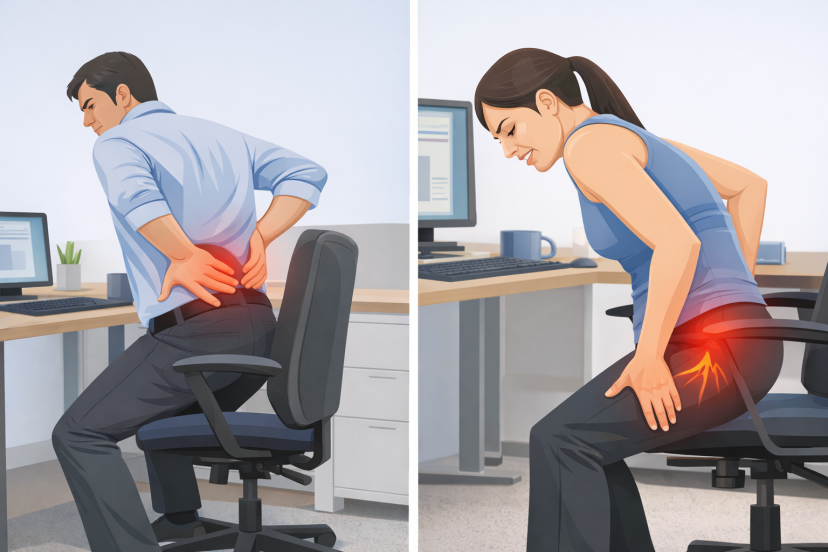
If you’ve ever stood up after a long workday and felt a sharp, burning pain shoot from your lower back down your leg, you’re not imagining it. Many people notice their sciatica worse after sitting all day, especially desk workers, drivers, and anyone with a sedentary routine.
That deep ache, tingling, or electric shock sensation can make it hard to focus, sleep, or even enjoy simple activities. The frustration is real—and so is the impact on daily life.
The good news? Once you understand why sitting makes sciatica flare up, you can take realistic, proven steps to reduce pain and protect your sciatic nerve. This guide breaks it all down and gives you actionable solutions you can start using today.
⭐ Quick Answer: Sciatica Worse After Sitting All Day
If your sciatica is worse after sitting all day, prolonged sitting may be increasing pressure or irritation around the lower back and sciatic nerve. Poor posture, limited movement, tight muscles, and an unsupportive chair can also contribute. Try taking regular movement breaks, changing positions frequently, and improving your sitting posture and workstation setup. Gentle activity may help some people, but persistent, worsening, or severe symptoms—especially weakness, numbness, or bladder or bowel changes—should be evaluated by a healthcare professional.
Key Takeaways
Most likely cause: Prolonged sitting can aggravate an already irritated or compressed sciatic nerve, particularly when combined with poor posture, limited movement, or an unsupportive chair.
Usually serious? Usually not. Sitting-related flare-ups are common, but persistent or worsening pain, significant weakness or numbness, or bladder or bowel changes require medical attention.
First thing to check: If your sciatica is worse after sitting all day, look at how long you remain seated, your posture, chair support, workstation setup, and whether regular movement breaks improve your symptoms.
Best solution: Break up long periods of sitting with comfortable movement, change positions regularly, improve your workstation ergonomics, and stay appropriately active. If symptoms continue or interfere with daily activities, a healthcare professional or physical therapist can help identify the cause and recommend appropriate treatment.
⚡ What Is Sciatica And Why Sitting Matters
Sciatica isn’t a diagnosis—it’s a symptom. It refers to pain caused by irritation or compression of the sciatic nerve, the longest nerve in your body.
Understanding Sciatic Nerve Compression
The sciatic nerve runs from your lower spine, through your hips and buttocks, and down each leg. When something presses on it—such as a disc bulge, muscle tension, or poor posture—you may feel:
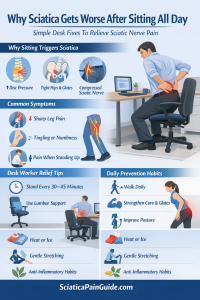
- Sharp Or Burning Leg Pain
- Tingling Or Numbness
- Weakness In The Leg Or Foot
- Pain That Worsens With Sitting
For many people, sciatica sitting too long becomes a daily trigger because prolonged sitting changes how pressure is distributed in the spine.
🪑 Why Sciatica Is Worse After Sitting All Day
Long hours in a chair can be a perfect storm for sciatic nerve irritation. Here’s why sitting aggravates sciatica so often.
Increased Disc Pressure While Sitting
Research shows that sitting places more pressure on spinal discs than standing. Slouching or leaning forward increases that pressure even more, which can worsen disc bulges that irritate the sciatic nerve.
Reduced Blood Flow And Muscle Stiffness
When you sit for hours:
- Hip Flexors Tighten
- Glute Muscles Shut Down
- Blood Flow Slows
This creates muscle imbalance and stiffness that pulls on the lower spine and pelvis, often making sciatica and sedentary lifestyle closely linked.
Piriformis Muscle Tightening
The piriformis muscle sits deep in the buttocks, near the sciatic nerve. Prolonged sitting can cause it to tighten and spasm, directly compressing the nerve.
⚠️ Common Symptoms Of Sitting-Related Sciatica
If your sciatica is worse after sitting all day, you may notice:
- Pain That Builds During The Workday
- Difficulty Standing Up After Sitting
- Relief When Walking Or Lying Flat
- Increased Pain While Driving
- One-Sided Hip Or Leg Discomfort
These patterns are strong indicators that posture and inactivity are playing a role.
🧘♀️ How To Relieve Sciatica Pain From Sitting Too Long
Relief doesn’t require quitting your job or avoiding chairs forever. Small, consistent changes can make a big difference.
Ergonomic Fixes For Desk Workers
Adjusting your workstation can immediately reduce nerve pressure.
- Chair With Lumbar Support
- Feet Flat On The Floor
- Knees Slightly Lower Than Hips
- Screen At Eye Level
- Back Supported, Not Slouched
Many U.S. office workers find lumbar cushions or ergonomic chairs helpful for reducing pressure during long sitting periods.
Micro-Breaks That Actually Work
One of the most effective ways to reduce sciatica worse after sitting all day is movement frequency, not intensity.
- Stand Every 30–45 Minutes
- Walk For 2–3 Minutes
- Gently Stretch Hips Or Hamstrings
- Avoid Sitting More Than 90 Minutes Straight
These micro-breaks restore circulation and reduce muscle stiffness.
🌿 Stretches That Ease Sitting-Induced Sciatica
Gentle stretching helps counteract the damage of prolonged sitting.
Best Desk-Friendly Sciatica Stretches
- Seated Figure-4 Stretch
- Standing Hamstring Stretch
- Hip Flexor Lunge Stretch
- Gentle Spinal Extension
Hold each stretch for 20–30 seconds and breathe deeply. Avoid bouncing or pushing into pain.
💪 Strengthening Exercises To Prevent Flare-Ups
Weak core and glute muscles allow poor posture to overload the spine.
Key Muscles To Strengthen
- Glute Bridges
- Bird Dogs
- Modified Planks
- Side-Lying Leg Raises
Performed consistently, these exercises support spinal alignment and reduce how sciatica from sitting too long affects you.
🪑 Standing Desks: Helpful Or Hype?
Standing desks can help—but only if used correctly.
Smart Standing Desk Tips
- Alternate Sitting And Standing
- Avoid Standing Still Too Long
- Use Anti-Fatigue Mats
- Maintain Neutral Spine
Standing all day can cause its own problems. Balance is key.
🌙 Lifestyle Changes That Support Nerve Healing
Your daily habits matter just as much as your chair.
🌿 Supportive Habits For Sciatica Relief
- Stay Hydrated
- Walk Daily
- Sleep On A Supportive Mattress
- Avoid Wallets In Back Pockets
- Manage Stress Levels
Chronic tension can worsen nerve pain by increasing muscle tightness.
💊 Natural Relief Options For Sciatic Nerve Pain
Some people find additional support from non-invasive options.
🌱 Common Natural Aids
- Heat Or Ice Therapy
- Magnesium Supplements
- Omega-3 Fatty Acids
- Anti-Inflammatory Diet
Always check with a healthcare provider before starting supplements.
🚑 When To See A Doctor Or Specialist
While many cases improve with self-care, medical evaluation is important if you experience:
- Severe Or Worsening Pain
- Progressive Leg Weakness
- Numbness In The Groin Area
- Loss Of Bladder Or Bowel Control
- Pain Lasting Longer Than 6–8 Weeks
These may signal a more serious condition requiring professional care.
If you’re planning to speak with a healthcare professional, you can also use our Sciatica Doctor Visit Checklist to organize your symptoms, questions, medications, and other important details before your appointment. Together, these free tools can make it easier to spot patterns and give your healthcare professional a clearer picture of what you’ve been experiencing.
❓ FAQs: Sciatica Worse After Sitting All Day
1. Why does my sciatica flare up after sitting at work?
Sitting increases spinal disc pressure and tightens hip muscles, which can compress the sciatic nerve.
2. Is sitting or standing better for sciatica?
Neither is perfect. Alternating between sitting, standing, and walking works best.
3. Can office chairs cause sciatica?
Poorly designed or unsupportive chairs can worsen symptoms, especially without lumbar support.
4. How often should I take breaks to prevent sciatica?
Every 30–45 minutes is ideal to reduce nerve compression.
5. Does driving make sciatica worse?
Yes. Prolonged driving combines sitting pressure and vibration, which can irritate the nerve.
6. Can sciatica go away if I fix my posture?
Posture improvements often reduce symptoms significantly, especially in the early stages.
7. Are standing desks good for sciatica?
They can help when used in moderation and combined with movement.
🎯 Conclusion: Sciatica Worse After Sitting All Day
Small Changes, Big Relief
If your sciatica worse after sitting all day, you’re not broken—and you’re not alone. Modern lifestyles weren’t designed with spinal health in mind, but your body can recover with the right support.
By improving posture, taking regular movement breaks, stretching daily, and strengthening key muscles, you give your sciatic nerve the space it needs to heal. Progress may be gradual, but consistency pays off.
Relief isn’t about perfection—it’s about persistence.
Medical Disclaimer
This article is for educational purposes only and does not replace professional medical advice. Always consult a qualified healthcare provider before starting new treatments or exercises, especially if you have severe or persistent symptoms.
 Explore more:
- Can Sciatica Cause Groin Pain?
- What Is The Best Painkiller For Sciatica?
- Best Sciatica Clinics In Germany